
Last Updated on February 26, 2026 by Dogs Vets
Bringing home a new puppy is one of life’s greatest joys, but those first few nights can feel like a nightmare when your furry friend starts whining in the crate at night. If you’re searching for ways to stop puppy whining in crate or wondering how to handle kennel training a puppy at night, you’re not alone. Millions of new dog owners face this challenge, often due to separation anxiety in puppies or simply the adjustment to a new environment. The good news? With patience, consistency, and the right crate training techniques, you can help your pup settle in for peaceful nights. In this comprehensive guide, we’ll cover common causes, a step-by-step plan, a sample crate training schedule, calming tips, and even real stories from other pet parents to keep things relatable.
Understanding Why Your Puppy Whines in the Crate at Night
Before diving into solutions, it’s crucial to know why puppies whine in their crates. Puppy crying in crate at night often stems from a few key issues:
- Separation Anxiety in Puppies: Pups are used to sleeping with their littermates and mom, so being alone feels scary. This can lead to persistent whining or even panic-like behaviors.
- Unmet Needs: They might need to potty, be hungry, thirsty, or uncomfortable (too hot, cold, or cramped).
- Lack of Positive Association: If the crate feels like a punishment, your puppy will resist it.
- Adjustment Period: New environments trigger stress, and whining is their way of communicating.
Recognizing these causes helps you address the root problem rather than just the symptoms. For instance, if it’s true separation anxiety, ignoring the cries entirely might not work—instead, gradual desensitization is key.
Setting Up the Perfect Crate Environment
A cozy crate is the foundation of successful training. Start by choosing the right size—big enough for your puppy to stand, turn, and lie down, but not so large they can use one end as a bathroom. Line it with soft bedding, like a washable blanket or crate pad, and place it in a quiet spot in your bedroom initially (this reduces feelings of isolation).
Pro tips for a den-like feel:
- Cover the crate with a breathable blanket to block light and create a cave effect.
- Add a shirt with your scent or a stuffed toy that mimics a heartbeat (like a Snuggle Puppy) to comfort them.
- Include safe chew toys to keep them occupied.
This setup turns the crate into a safe haven, reducing puppy whining in crate from the start.
Step-by-Step Guide to Stop Puppy Whining in the Crate
Crate training a puppy at night doesn’t happen overnight, but following these steps can make a huge difference. Aim for positive reinforcement—treats, praise, and play—to build good associations.
- Introduce the Crate During the Day: Leave the door open and encourage exploration with treats inside. Feed meals in the crate to link it with good things.
- Practice Short Sessions: Close the door for a few seconds, then minutes, while you’re nearby. Reward calm behavior and gradually increase time.
- Establish a Bedtime Routine: Tire your pup out with play, take them for a final potty break, and use a cue like “crate time” before settling them in.
- Handle Nighttime Whining: For mild fussing, ignore it for 2-5 minutes—it often stops as they self-soothe. If it escalates, check for needs without making a fuss; a quiet “settle” can help.
- Build Independence Gradually: Over weeks, move the crate farther from your bed or to another room once they’re comfortable.
- Use Calming Aids if Needed: White noise machines, pheromone diffusers, or herbal calming treats can ease anxiety without drugs.
Consistency is everything—stick to the plan, and most puppies adapt within 3-7 days.
Sample Crate Training Schedule for Puppies
A structured routine helps prevent puppy crying in crate by setting expectations. Here’s a sample 8-week-old puppy schedule tailored for nighttime success. Adjust based on your pup’s age and breed (e.g., smaller breeds need more frequent potty breaks).
| Time | Activity | Notes |
|---|---|---|
| 7:00 PM | Dinner in Crate | Feed inside to build positive vibes. |
| 8:00 PM | Playtime & Training | Tire them out mentally and physically. |
| 9:00 PM | Last Potty Break | Ensure they’re empty before bed. |
| 10:00 PM | Bedtime in Crate | Dim lights, add calming toy. |
| 2:00 AM | Quick Potty (if needed) | Set an alarm for young pups; phase out as they age. |
| 6:00 AM | Morning Wake-Up | Potty, breakfast, praise for quiet night. |
Download a customizable version of this puppy crate training schedule [here] (link to your blog’s PDF resource) to track progress. This routine minimizes accidents and whining by aligning with their natural sleep cycles.
Additional Tips for Calming a Whining Puppy
Beyond the basics, these extras can supercharge your efforts to stop puppy whining at night:
- Exercise Before Bed: A tired puppy is a quiet puppy. Avoid overstimulation right before crate time.
- Avoid Reinforcing Bad Behavior: Don’t rush to comfort every whine, as it teaches them crying gets attention. Instead, reward silence.
- Crate Games: Toss treats inside during the day to make entering fun.
- Monitor for Health Issues: Persistent whining could signal pain—consult a vet if it doesn’t improve.
- White Noise or Music: Soft sounds mask household noises that might startle them.
For stubborn cases, consider professional training if separation anxiety persists.
Real Stories from Puppy Parents: What Worked for Them
Hearing from others can be motivating. On social media, pet owners share their triumphs over puppy whining in crate at night. One user recounted covering the crate with a blanket and adding a scented shirt, noting their pup settled after just a few nights. Another emphasized comforting the pup without making it a habit, sleeping nearby initially to ease the transition. A heartwarming tale involved a therapy dog who whined until cuddling up with his owner, highlighting the bond-building aspect. These anecdotes show that persistence pays off—your pup will get there too!
What about you? Share in the comments: What’s your top tip for kennel training a puppy at night?
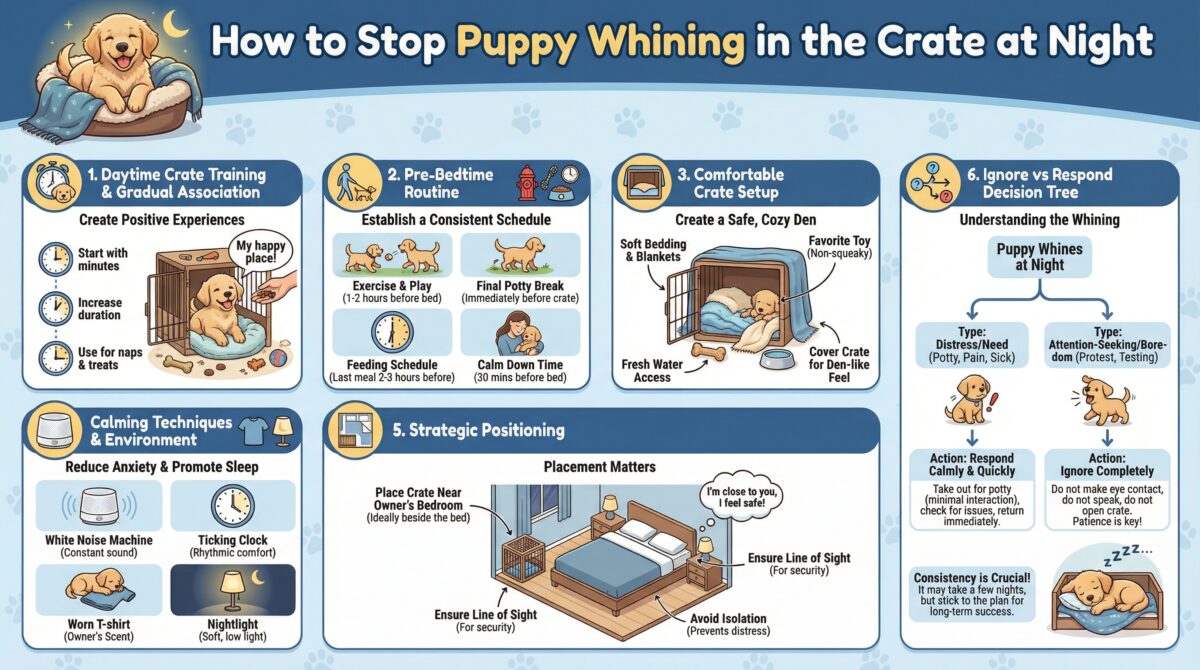
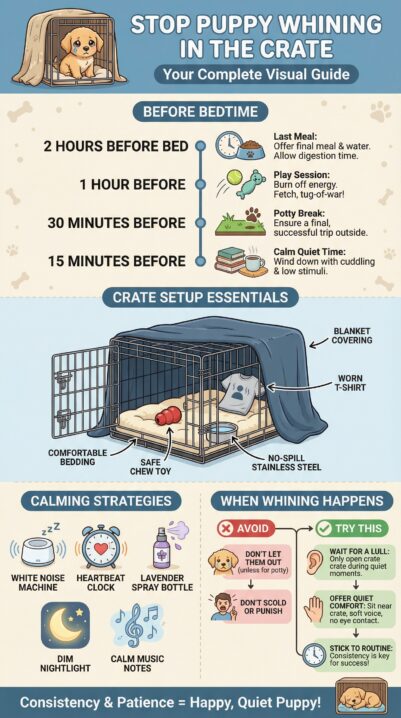
Infographic: Visual Guide to Stopping Puppy Whining in the Crate
To make these steps even easier to follow, here’s a helpful infographic summarizing the key tips for crate training your puppy at night and reducing whining.
Frequently Asked Questions About Puppy Whining in the Crate
Here are answers to some of the most common questions new puppy owners have about stopping whining in the crate at night. These address key concerns like timing, methods, and when to seek help.
- How long does it typically take for a puppy to stop whining in the crate at night?
Most puppies adjust within 3-7 days with consistent training, but it can take up to 2 weeks for some, especially if separation anxiety is involved. Patience and sticking to a routine are key to faster results. - Should I let my puppy cry it out in the crate?
For mild whining, yes—ignoring it for short periods (2-5 minutes) helps them learn to self-soothe. However, if it’s escalating to distress, check for needs like potty breaks to avoid reinforcing fear. Never use the “cry it out” method as punishment. - What if my puppy whines because they need to go potty during the night?
Young puppies (under 12 weeks) can only hold it for a few hours, so set alarms for nighttime potty breaks. Gradually extend the time as they grow. Always take them out calmly without play to prevent them from associating whining with fun. - Can I use treats to help stop my puppy’s whining in the crate?
Absolutely! Positive reinforcement works wonders. Reward quiet behavior with treats during daytime practice sessions, and toss one in the crate at bedtime. Avoid giving treats in response to whining, as that could encourage the behavior. - When should I consult a vet or trainer about my puppy’s whining?
If whining persists beyond 2 weeks, is accompanied by signs of illness (like lethargy or diarrhea), or seems like severe anxiety (panting, destructive behavior), see a vet to rule out health issues. A professional trainer can help with stubborn cases.
Wrapping Up: Sweet Dreams for You and Your Pup
Stopping puppy whining in the crate at night takes time, but with this step-by-step guide, you’re equipped to tackle it head-on. Remember, crate training benefits everyone—it aids housebreaking, prevents destructive behaviors, and gives your dog a secure space. Be patient, celebrate small wins, and soon you’ll both enjoy restful nights. If you’ve tried these tips, let us know in the poll below or share your story—we love hearing from our dog-loving community!
Quick Poll: What helped most with your puppy’s crate whining?
- Ignoring mild cries
- Calming aids like heartbeat toys
- Consistent routine
- Other (comment below!)
For more puppy tips, check out our guides on best puppy breeds for families or raw dog food benefits. Sweet dreams!