Last Updated on May 11, 2026 by Dogs Vets
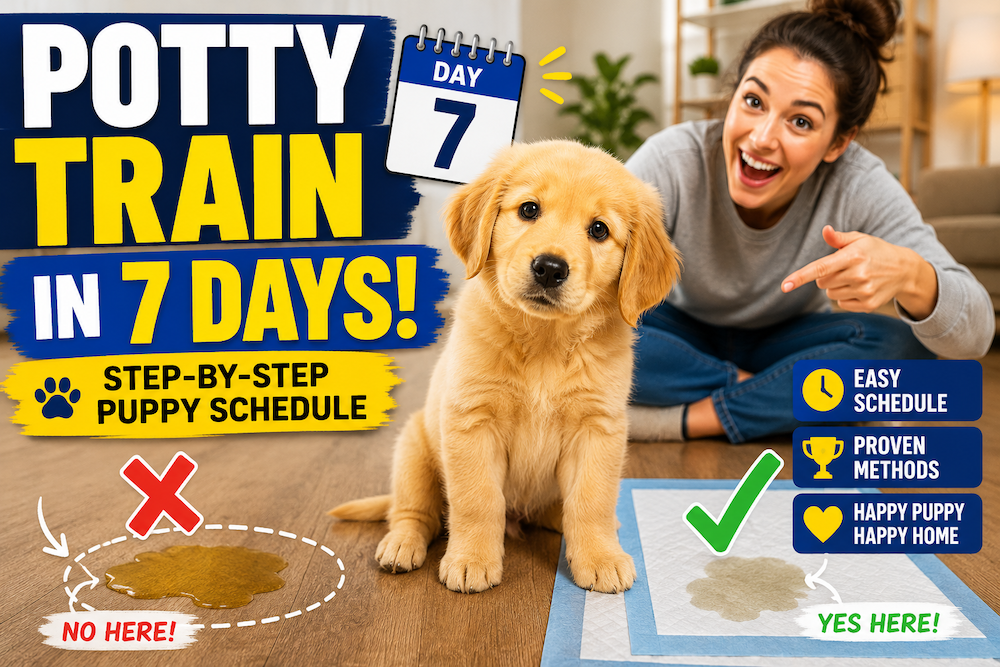
Bringing home a new puppy feels like a dream—those tiny paws, endless zoomies, and sweet little face. Then comes the first accident on your favorite rug, and suddenly you’re questioning every life choice that led you here. I’ve been through it more than once, and I can tell you this: potty training is tough in the beginning, but it doesn’t have to drag on forever.
With a solid routine, close supervision, and plenty of patience, you can make serious headway in just one week. Your puppy won’t be perfectly reliable by day 8 (they’re still babies with small bladders), but you’ll establish habits that make the whole process much smoother. Here’s the practical plan that has worked for many first-time owners I’ve talked to.
Getting Started: Tools and Mindset
Puppies can generally hold their bladder for roughly one hour per month of age, plus one. An 8-week-old might manage 2–3 hours at most during the day. Nighttime is even shorter at first.
Essentials you’ll want:
- A crate that’s just big enough for them to stand, turn around, and lie down comfortably.
- High-value treats (small bits of chicken, hot dog, or cheese work wonders).
- Enzymatic cleaner to fully remove accident smells.
- A leash and a consistent outdoor potty spot.
- Notebook or notes app to track patterns.
Golden rules:
- Always take them out on leash to the same spot.
- Use one clear cue like “Go potty.”
- Reward the second they finish, not when they get back inside.
- No punishment ever. It backfires and creates sneaky pee-ers.
For more on choosing the right crate, check out this AKC guide on crate training.
Your 7-Day Potty Training Schedule
Day 1: Arrival Day – Set the Foundation
Start the moment you walk in the door. Take them straight outside to the potty spot. From here on:
- Every 30–45 minutes while awake.
- 10–15 minutes after eating, drinking, playing, or napping.
- Right after waking up and last thing before bed.
Keep your puppy tethered to you, in a crate, or in a small puppy-proofed area so you can catch signs early. Celebrate successes like it’s the best thing that’s ever happened.
Days 2–3: Build the Routine
You’ll start seeing patterns. Most puppies need to go right after meals, so stick to scheduled feeding times (usually 3–4 meals a day for young pups). Introduce short crate periods when you can’t supervise. Many owners add a potty bell on the door around this time—some puppies pick it up surprisingly fast.
Days 4–5: Increase Slightly and Stay Vigilant
If accidents are dropping, you can stretch to every 45–60 minutes during quiet times, but always err on the side of too many trips. Feed on schedule so output stays predictable. This is often when puppies begin “holding it” a little longer.
Days 6–7: Strengthen Habits and Test Freedom
By now you should see clearer signals and fewer accidents. Try short supervised freedom in one room at a time as a test. Keep the crate as the safe default. Most young puppies still need at least one overnight potty trip (set an alarm around 2–4 AM).
For a detailed visual timeline, the AKC Puppy Potty Training Timeline is excellent.
Learning Your Puppy’s Signals
Puppies almost always give clues:
- Intense sniffing or circling
- Restlessness or sudden stopping during play
- Whining, pacing, or heading toward the door
- Looking anxious or heading behind furniture
The moment you spot it, scoop them up and go outside. Better an extra trip than another cleanup.
Dealing with Accidents
If you catch them in the act, a calm “uh-oh” and quick trip outside is fine. If it’s already done, just clean it thoroughly with enzymatic cleaner. Yelling or rubbing their nose in it only makes things worse. Consistency from everyone in the household is crucial—mixed messages slow progress dramatically.
5 Common Potty Training Questions (and Honest Answers)
1. Can I really potty train my puppy in 7 days?
You can make excellent progress and dramatically reduce accidents in a week, but full reliability usually takes 4–12 weeks (sometimes longer). The 7-day plan builds strong foundations fast.
2. What if my puppy keeps having accidents at night?
This is very common. Most young puppies need a middle-of-the-night potty break for the first few weeks. Take them out calmly without much play, then right back to the crate.
3. Should I use puppy pads or paper training?
Pads can confuse the “outside only” message for many puppies. If you must use them (e.g., high-rise living), transition off them as quickly as possible.
4. My puppy seems scared to go outside—any tips?
Some puppies are overwhelmed by new environments. Stay calm, use treats, and keep sessions short at first. Make the potty spot consistent and low-distraction. If fear persists, talk to your vet or a positive reinforcement trainer.
5. How do I know if accidents are a medical issue?
Frequent accidents, straining, blood, or sudden regression after progress warrant a vet visit. Urinary tract infections or parasites can mimic training problems.
Final Encouragement
Some days will feel like two steps forward and one giant puddle back. That’s normal. Stay consistent, celebrate the wins (even the tiny ones), and remember your puppy isn’t being stubborn—they’re just learning. In a couple of months, you’ll barely remember the stressful early days.
If you’re still struggling after a couple of weeks, don’t hesitate to reach out to a certified trainer or your veterinarian.
Have you potty trained a puppy before? What worked best for you, or what was your biggest struggle? Share in the comments below—I read them all and often feature real owner experiences or expert tips in future posts.
This article is for general guidance only. Always consult your veterinarian for health-related concerns with your puppy.
Ready to guest post on similar puppy topics? I’m always looking for experienced trainers, breeders, and vets to contribute. Drop me a line!