Last Updated on May 12, 2026 by Dogs Vets
Bringing home a new puppy is thrilling, but many new owners underestimate how crucial the first few months are for shaping their dog’s personality and confidence. Proper socialization can mean the difference between a friendly, adaptable dog and one who’s anxious, reactive, or fearful around new people, dogs, or situations.
The good news? You don’t need to overwhelm your puppy. With thoughtful, positive exposures during their key developmental windows, you can set them up for a lifetime of good behavior. Here’s a practical socialization checklist that puppy trainers and owners swear by.
Understanding the Critical Socialization Windows
Puppies have a prime socialization period between 3 and 16 weeks of age, with the most important window being roughly 3 to 12 weeks. During this time, their brains are highly receptive to new experiences. What they learn now sticks with them for life.
After 16 weeks, the window starts closing and new things can feel more threatening. That’s why starting early (once your puppy is fully vaccinated or with safe, controlled exposures) is so important.
For a deeper dive into the science, check out this excellent AKC article on puppy socialization.
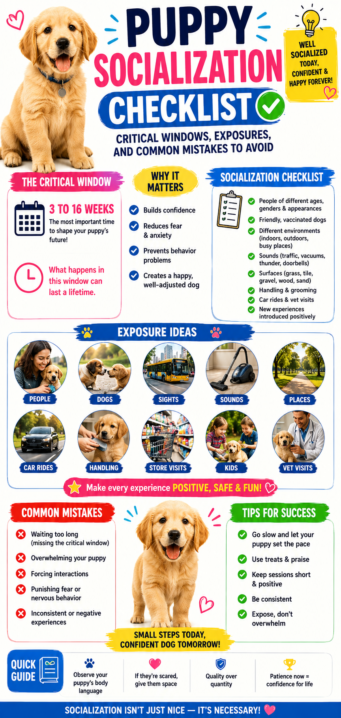
Puppy Socialization Checklist: What to Expose Them To
Aim for positive, controlled experiences every day. Keep sessions short and fun — end on a high note before your puppy gets tired or overwhelmed. Always pair new things with treats, play, and praise.
People Exposure:
- Different ages (babies, toddlers, teenagers, elderly)
- Various appearances (beards, hats, glasses, hoods, different skin tones, uniforms)
- People with canes, walkers, wheelchairs, or crutches
- Gentle handling by trusted friends and family (ears, paws, mouth, tail)
Dog & Animal Exposure:
- Well-mannered, vaccinated adult dogs (in controlled settings)
- Puppies of different sizes and breeds
- Brief, positive sightings of cats, birds, or squirrels (from a distance at first)
Sounds & Environments:
- Household noises (vacuum, blender, doorbell, hairdryer)
- Outdoor sounds (traffic, kids playing, thunderstorms — use recordings if needed)
- Different walking surfaces (grass, concrete, gravel, wood floors, metal)
- Car rides of increasing length
Objects & Situations:
- Umbrellas, balloons, plastic bags
- Strollers, bikes, skateboards
- Being gently restrained or picked up
- Visiting new places (pet-friendly stores, parks, friends’ houses)
Body Handling & Grooming Prep:
- Touching paws and nails (prepare for trimming)
- Brushing, light collar/harness handling
- Examining teeth and ears
Pro Tip: Keep a socialization journal. Note what your puppy experienced and how they reacted. This helps track progress and spot any areas needing extra work.
Common Socialization Mistakes to Avoid
- Overwhelming them: Flooding a puppy with too many new experiences at once can create fear instead of confidence.
- Only positive people/dogs: If your puppy only meets super gentle people, normal kids or rowdy dogs later can feel scary.
- Waiting too long: Many owners delay until after all vaccinations (around 16 weeks). Safe, controlled exposure (e.g., carrying your puppy in busy areas or inviting vaccinated friends over) should start earlier.
- Bad experiences: Forced interactions or letting an off-leash dog scare your puppy can create lasting fears.
- Skipping alone time: Teach gentle separation early to prevent severe separation anxiety later.
5 Common Puppy Socialization Questions (and Honest Answers)
1. Can I socialize my puppy before they’re fully vaccinated?
Yes — but smartly. Avoid dog parks and busy pet stores. Instead, invite healthy, vaccinated dogs and people to your home or carry your puppy in low-risk public areas. The risk of under-socialization is often higher than controlled exposure.
2. My puppy seems scared of new things. What should I do?
Never force them. Go at their pace, use high-value treats, and create positive associations. If fear is intense, consult a positive reinforcement trainer or behaviorist early.
3. How many new experiences does a puppy need per week?
Aim for quality over quantity. One or two well-planned positive exposures daily is better than rushing through a long checklist and stressing them out.
4. Is puppy class necessary for good socialization?
A good puppy class is excellent because it provides controlled play and learning, but it’s not the only way. You can socialize successfully without classes if you’re proactive.
5. What if I adopted an older puppy — is it too late?
It’s never too late, but you’ll need to work more gradually. The prime window is smaller, but consistent, positive exposure throughout their first year still makes a big difference.
Final Thoughts
Socialization isn’t about creating a fearless dog — it’s about building a confident, resilient one who trusts you when new things appear. The effort you put in during these early weeks pays off for years.
Stay patient, keep experiences positive, and don’t be afraid to seek professional guidance if your puppy shows strong fear responses.
Have you started socializing your puppy yet? What’s been the biggest challenge or the funniest moment so far? Share your experiences in the comments — I read every one and often feature reader stories or expert tips in future posts.
Trainers, behaviorists, or breeders reading this — I’m always open to high-quality guest posts on puppy development and socialization. Feel free to reach out!
This article is for informational purposes only. Always consult your veterinarian and a qualified trainer for personalized advice, especially regarding your puppy’s health and vaccination status.
Let me know if you want any changes or the next article ready!