Last Updated on May 11, 2026 by Dogs Vets
Choosing the right food for your new puppy feels overwhelming. With so many options shouting “premium,” “human-grade,” or “all-natural,” it’s hard to know what will actually support healthy growth without breaking the bank or risking your pup’s health.
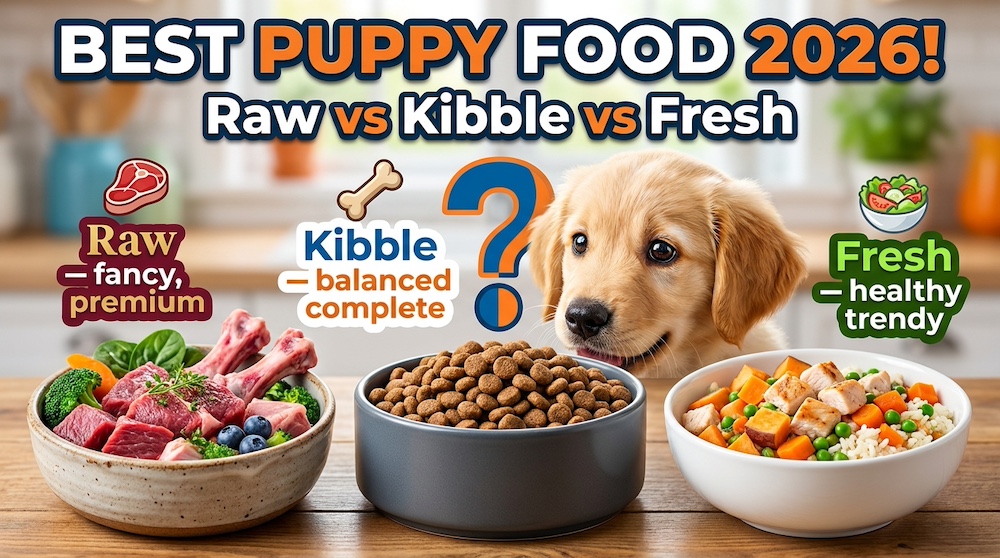
In 2026, the big three categories remain kibble (dry food), fresh (gently cooked), and raw. There’s no single “best” food for every puppy — it depends on your budget, lifestyle, puppy’s health needs, and how much time you have. Here’s a practical, no-hype breakdown based on what vets, nutritionists, and real owners are seeing right now.
Key Things Every Puppy Needs
Puppies grow incredibly fast, so their food must support:
- Strong bone and joint development (careful calcium/phosphorus balance, especially in large breeds)
- Brain and eye development (DHA from fish or other sources)
- Immune system support
- Steady energy without digestive upset
Always look for foods labeled “complete and balanced” for growth (or all life stages) according to AAFCO standards. This is the baseline safety net.
For more on standards, check the AAFCO official site.
Kibble (Dry Food) – The Reliable Everyday Choice
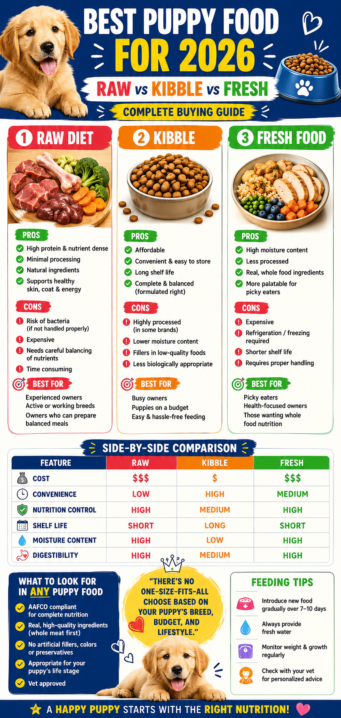
Pros:
- Affordable and convenient
- Good dental benefits from crunching
- Long shelf life and easy to store
- Many high-quality options with proven feeding trials
Cons:
- Highly processed (high-heat extrusion can reduce nutrient bioavailability)
- Lower moisture content (may need extra water added)
- Some lower-quality ones contain more fillers
Best for: Most puppies, busy households, budget-conscious owners, and large-breed pups needing controlled growth formulas.
2026 Recommendations: Look at Purina Pro Plan Puppy, Hill’s Science Diet Puppy, or Royal Canin formulas. These big brands often have extensive research behind them.
Read the AKC guide on puppy nutrition for more context.
Fresh (Gently Cooked) Food – The Rising Middle Ground
Pros:
- Higher digestibility and nutrient retention than kibble
- Better moisture content (helps with hydration)
- Often uses higher-quality, named ingredients
- Very palatable — great for picky eaters
- Lower risk than raw while keeping many “fresh food” benefits
Cons:
- More expensive
- Shorter shelf life (needs refrigeration)
- Subscription models can feel limiting
Best for: Puppies with sensitive stomachs, allergies, picky appetites, or owners who want premium nutrition without raw risks.
Popular options in 2026 include brands like The Farmer’s Dog, Spot & Tango, or Ollie. Many owners mix fresh with kibble for balance.
Raw Diets – High Reward, Higher Responsibility
Pros:
- Minimal processing — retains natural enzymes and nutrients
- Often leads to shinier coat, smaller stools, and high palatability
- Biologically appropriate for some advocates
Cons:
- Significant bacterial risks (Salmonella, E. coli, etc.) — especially dangerous for puppies with developing immune systems
- Potential nutritional imbalances if not properly formulated
- Messy, expensive, and time-consuming
- Vets generally advise against raw for puppies due to safety concerns
Best for: Very few puppies. Most experts recommend waiting until adulthood (and even then with caution) or choosing freeze-dried raw as a safer middle option.
For detailed comparison, see this PetMD article on raw vs fresh.
How to Choose the Right One for Your Puppy
- Talk to your vet — especially for large breeds that need specific calcium levels.
- Check the label — Look for AAFCO “growth” statement, named meat ingredients first, and named nutritionist contact.
- Consider your lifestyle — If you travel a lot, kibble wins. If you want convenience with quality, fresh subscription services shine.
- Transition slowly — Over 7–10 days to avoid tummy upset.
- Monitor your pup — Energy, coat, stools, and growth rate tell you if it’s working.
Many owners do best with a mixed approach — quality kibble as the base with fresh toppers.
5 Common Puppy Food Questions (and Straight Answers)
1. Is raw food really better for puppies?
Most veterinarians say no for puppies due to bacterial risks and potential imbalances. Fresh gently-cooked food often gives similar benefits with far better safety.
2. How much should I spend on puppy food?
Quality matters more than price. Expect to spend more per day on fresh than kibble, but you may feed less volume and see fewer vet bills later. Start with what fits your budget consistently.
3. Can I feed my puppy the same food as my adult dog?
No. Puppies need higher calories, protein, fat, and specific calcium/phosphorus ratios for growth. Use puppy-specific formulas until at least 12 months (or 24 for large breeds).
4. Are grain-free foods better?
Not necessarily. Unless your puppy has a diagnosed grain allergy, grains can be a healthy part of the diet. Some grain-free formulas have faced scrutiny in the past.
5. How do I know if the food is working?
Look for steady (not rapid) growth, healthy energy, shiny coat, good stools, and clear skin. Excessive scratching, loose stools, or poor weight gain means it’s time to switch.
Final Thoughts for 2026
The “best” puppy food is the one your puppy thrives on and you can afford long-term. For most families, a high-quality kibble (possibly mixed with fresh) offers the best balance of nutrition, safety, and practicality. Fresh foods are excellent upgrades for many, while raw requires serious commitment and caution.
Whatever you choose, prioritize AAFCO-compliant foods from reputable companies and stay in touch with your vet as your puppy grows.
What food are you currently feeding your puppy, or what are you leaning toward? Share your experiences in the comments — I read every one and often feature owner stories or expert tips.
Nutritionists, vets, or breeders with strong opinions on puppy diets — I’m open to quality guest posts on this topic!
This article is for informational purposes only. Always consult your veterinarian before making significant changes to your puppy’s diet, especially regarding raw feeding or specific health concerns.