Last Updated on March 31, 2026 by Dogs Vets
Pet food labels can feel like a trap. One minute you’re just trying to buy a bag of kibble, and the next you’re reading about “grain-free,” “limited ingredient,” “vet-formulated,” and wondering if you’ve been feeding your pet wrong this whole time.
We all stood in that aisle. Overthinking everything. Thus, it’s best to consult vets at Virginia Beach animal hospital before introducing any new pet food to your pet.
So let’s slow this down and talk about it like normal people—not marketing teams.
What is a grain-free diet for pets?
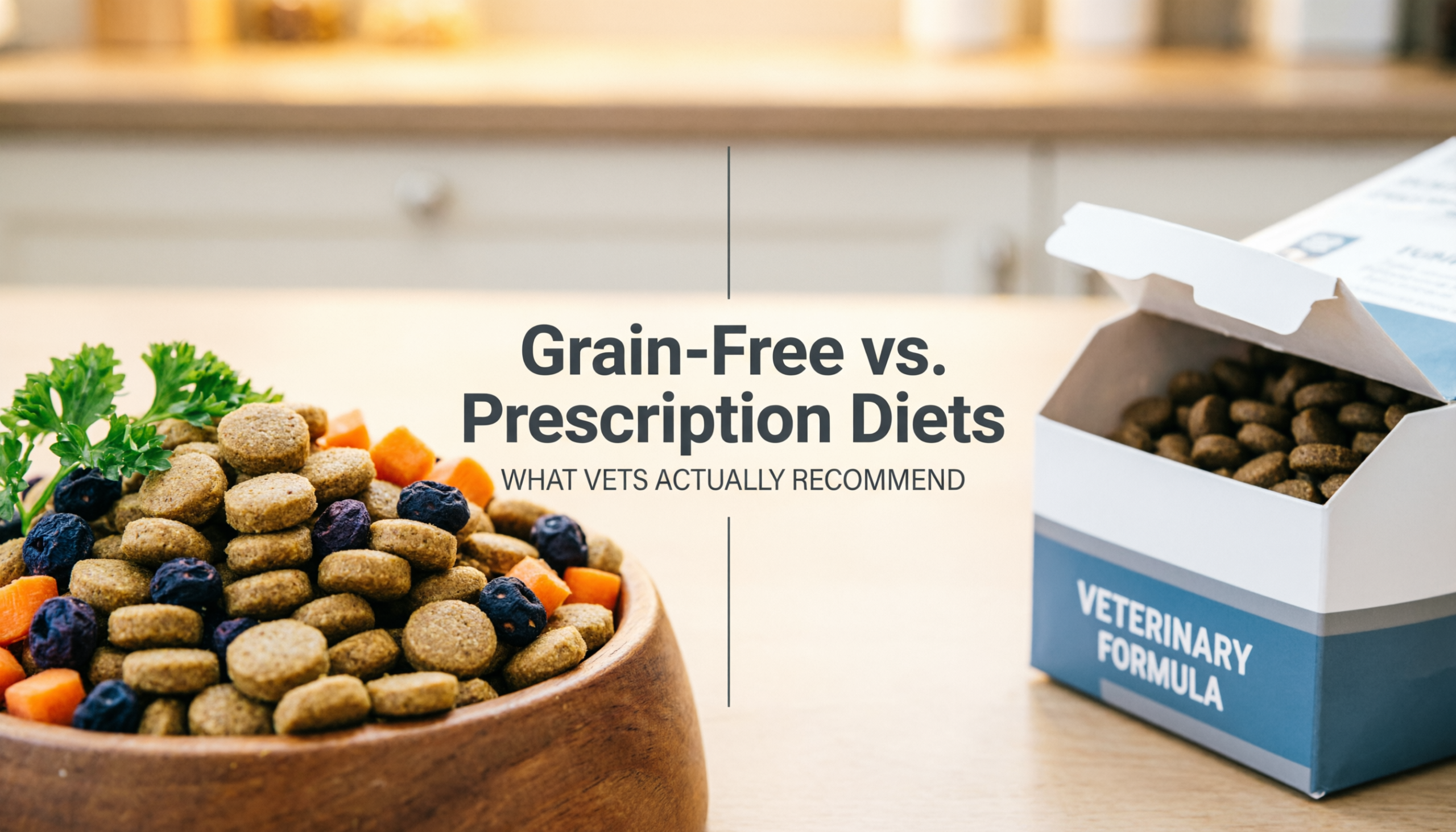
A grain-free diet is exactly what it sounds like—pet food made without grains like wheat, corn, rice, or barley. Instead, it uses ingredients like potatoes, peas, or lentils to provide carbohydrates.
It sounds healthier, right? Cleaner. Simpler. But here’s where it gets a little messy… grains aren’t actually “bad” for most pets. That idea mostly came from human food trends, not veterinary necessity.
Most dogs and cats digest grains just fine. In fact, grains can be a solid source of nutrients and energy. So removing them doesn’t automatically make a diet better—it just makes it different.
What does a prescription diet for pets mean?
A prescription diet is food that’s specifically designed to help manage a medical condition—things like kidney disease, allergies, urinary problems, or digestive issues. These aren’t just “premium” foods with a fancy label.
They’re formulated based on clinical research. And yeah, that’s why you can’t just grab them off the shelf without a vet’s recommendation.
Think of it this way: if regular pet food is everyday nutrition, prescription diets are more like targeted therapy. They’re part of treatment, not just feeding.
What does the difference between grain-free and prescription diets really come down to?
It comes down to intention. Grain-free diets are usually chosen by owners—sometimes based on trends, sometimes based on trial and error. Prescription diets are chosen by vets to address a specific health issue.
One is optional. The other is purposeful.
And honestly, mixing the two up is where a lot of confusion starts.
What does veterinary research say about grain-free diets?
This is where things get a little uncomfortable. Some studies have linked certain grain-free diets—especially those high in peas and lentils—to a heart condition in dogs called dilated cardiomyopathy (DCM).
Now, it’s still being researched. Nothing is 100% black-and-white yet. But vets are cautious, and that caution comes from seeing real cases—not just theory.
So while grain-free isn’t automatically dangerous, it’s also not something to jump into blindly.
What does veterinary guidance say about prescription diets?
Veterinarian Virginia Beach VA rely on prescription diets because they’re predictable. They know exactly what’s in them, how they work, and what outcomes to expect.
For example, a kidney diet reduces strain on the kidneys. A urinary diet changes mineral balance to prevent stones. These aren’t random benefits—they’re very intentional.
And when your pet is dealing with a health issue, that kind of precision matters more than anything printed on a trendy bag.
What does it mean if your pet has a food allergy?
Here’s something that surprises a lot of people—true food allergies in pets are usually caused by proteins (like chicken or beef), not grains.
So switching to grain-free doesn’t always solve the problem. Sometimes it just… changes the ingredients without fixing anything.
That’s why vets often use elimination diets or prescription hypoallergenic foods. It’s not guesswork—it’s a process of narrowing things down properly.
What does switching to grain-free actually do for your pet?
Sometimes people switch to grain-free and see improvements—better coat, less itching, improved digestion. But here’s the catch… it’s not always because grains were the issue.
It could be better ingredient quality overall. Or fewer fillers. Or just a formula that happens to suit that specific pet.
So yeah, improvements can happen. But they’re not guaranteed—and they’re not always for the reason people think.
What does long-term use of prescription diets involve?
Prescription diets are often meant to be long-term, sometimes even lifelong. And that’s where commitment comes in.
You can’t really “cheat” with these diets. Mixing in regular food or switching back too soon can undo the benefits. It’s frustrating at times, I get it—but consistency is what makes them work.
The upside? When they do work, the difference in your pet can be huge.
What does cost vs. value look like here?
Let’s not pretend this part doesn’t matter—both options can be expensive.
Grain-free foods often cost more because they’re marketed as premium. Prescription diets cost more because of the research, formulation, and medical purpose behind them.
But here’s the honest perspective: if a prescription diet prevents repeated vet visits or keeps a chronic condition stable, it often ends up being worth it in ways that aren’t obvious at first.
What does the “right choice” actually depend on?
It depends on your pet. Their age, their health, their history, their quirks—everything.
There’s no universal “best” diet, no matter how convincing the packaging is. What works beautifully for one dog might be completely wrong for another.
And yeah… this is where your vet actually matters more than any label ever will.
FAQs
Is grain-free food better for pets with sensitive stomachs?
Not always. It depends on what’s causing the sensitivity.
Are prescription diets really necessary?
If your vet recommends one, it’s usually for a medical reason—not preference.
Can I try grain-free before seeing a vet?
You can, but it’s better to understand the root issue first.
Do pets need grains in their diet?
Not necessarily, but most pets tolerate and benefit from them.
Can I mix prescription food with regular food?
Only if your vet says it’s okay—otherwise it can reduce effectiveness.
Final Thoughts
If there’s one thing I’ve learned, it’s this—pet food decisions don’t need to be perfect, but they do need to be thoughtful.
Grain-free isn’t magic. Prescription diets aren’t just expensive versions of regular food. They serve completely different roles.
So instead of chasing trends (we’ve all done it), focus on what your pet actually needs. And if you’re unsure? Ask your vet. Not because they’re always right about everything—but because they’re right about your pet more often than anyone else.