Last Updated on February 15, 2026 by Dogs Vets
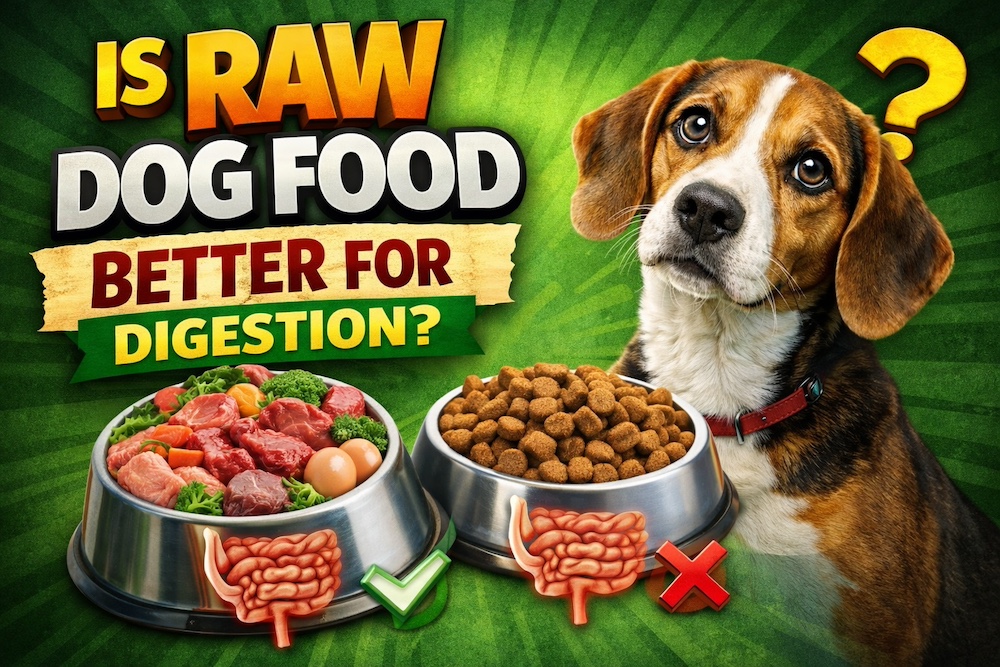
Digestive health plays a central role in a dog’s energy, comfort, and long-term resilience. In recent years, raw dog food has gained attention for its potential to better align with canine biology. But does raw dog food actually support digestion, or is the benefit more situational than universal?
Understanding Canine Digestion Basics
The answer to the above question lies in understanding the basics of canine digestion.
How A Dog’s Digestive System Processes Food?
Dogs are primarily adapted to digest animal-based foods efficiently. Digestion begins in the stomach, where proteins and fats are broken down before nutrients are absorbed in the small intestine. Dogs have a smaller digestive tract than that of humans, which favors foods that are easier to break down and absorb, such as meat-based diets like raw dog food.
The Role of Stomach Acidity and Transit Time
A healthy dog’s stomach is highly acidic, with a pH that can drop to around 1-2, aiding protein digestion and limiting bacterial growth. Total digestive transit time in dogs typically ranges from 8 to 12 hours, significantly faster than in omnivores. With that being said, not every dog’s digestive system is the same.
Why Digestive Efficiency Varies Between Dogs?
Digestive efficiency can vary based on age, gut microbiome balance, prior diet, health status, and individual tolerance to ingredients, which helps explain why dogs respond differently to dietary changes.
What Raw Dog Food Typically Includes?
Let us now understand what exactly raw dog food is.
Common Ingredients in Raw Dog Food Diets
Raw dog food diets generally center on animal-based ingredients such as muscle meat, organ meat, edible bones, and small amounts of vegetables or fruits. Commercial raw formulations often aim for a macronutrient balance close to 60-80% animal protein and fat, reflecting patterns observed in canine ancestral diets. Organs typically make up about 10% of the total formulation to support micronutrient intake.
Differences Between Commercial and Homemade Raw Diets
Commercial raw dog food is usually portioned, pathogen-tested, and formulated to meet established nutritional guidelines, while homemade diets rely heavily on owner knowledge and precision. Studies have shown that a significant percentage of homemade raw diets may be nutritionally imbalanced if not carefully planned.
How Processing Levels Compare to Kibble?
Raw dog food is minimally processed, whereas kibble undergoes high-heat extrusion, often exceeding 120°C, which can alter protein structure and reduce heat-sensitive nutrients.
How Raw Diets May Influence Digestive Enzymes?
We will now go deeper into the effect of raw diets on digestive enzymes in dogs.
Enzymes Naturally Present in Raw Ingredients
Raw animal-based foods naturally contain proteases and lipases enzymes, that break down proteins and fats. Although dogs produce their own digestive enzymes, food-based enzymes may begin acting earlier in the digestive process. This early breakdown may help reduce digestive effort in some dogs consuming raw dog food.
What Cooking and Extrusion Can Change?
Kibble manufacturing typically involves high-heat extrusion, often reaching 120-150°C, temperatures known to denature naturally occurring enzymes. Heat processing can also modify protein structures, potentially influencing how easily digestive enzymes can access them during digestion.
Enzyme Activity Versus Overall Digestive Load
Digestive efficiency depends on more than enzyme presence alone. Moisture content, ingredient density, and macronutrient complexity also matter. Raw diets generally contain 65-75% moisture, compared to roughly 10% in dry kibble, which may lower mechanical digestive demand, though individual tolerance varies.
Raw Food vs. Kibble: Key Digestive Differences
Raw dog food and kibble differ not only in ingredients but also in how those ingredients interact with the canine digestive system. Processing methods, macronutrient structure, and moisture levels can all influence how efficiently food is broken down, absorbed, and tolerated.
Macronutrient Structure and Digestibility
Raw diets typically rely on animal proteins and fats in their natural forms, which can be more easily digested by dogs due to their shorter digestive tracts and carnivore-like physiology. Kibble often contains higher levels of processed carbohydrates and plant proteins, which can be more complex to break down. Studies have reported higher apparent protein digestibility in meat-based diets than in heavily processed formulations.
Fiber, Starch, and Fermentation in the Gut
Kibble commonly includes 30-60% carbohydrates, primarily from starches used to bind pellets during extrusion. Excess starch may increase fermentation in the colon, potentially contributing to gas or loose stools in sensitive dogs. Raw diets generally contain minimal starch, which may reduce fermentative digestive stress for some dogs.
Moisture Content & Affect
Raw dog food typically contains 65-75% moisture, while dry kibble averages around 10%. Higher moisture can support smoother gastric emptying and may help soften stool consistency, supporting overall digestive comfort.
Potential Digestive Benefits Dogs Often Experience After Switching Over to Raw Dog Food
Many dogs experience digestive benefits when they switch to raw diets, as highlighted below.
Stool Quality and Regularity
One of the most frequently noted changes is firmer, smaller stools. Higher protein digestibility and lower indigestible filler content may result in less waste reaching the colon. Studies comparing high-meat diets to carbohydrate-heavy formulations have observed reductions in fecal volume, which may reflect more efficient nutrient absorption.
Gas, Bloating, and Digestive Comfort
Excessive gas is often linked to the fermentation of undigested carbohydrates in the large intestine. Raw diets typically contain minimal starch, which may reduce fermentative gas production in some dogs. Owners often report less bloating and improved post-meal comfort, particularly in dogs previously sensitive to certain grains or legumes.
Appetite, Satiety, and Nutrient Absorption
Raw diets are generally higher in fat and protein density, which can promote satiety. Improved palatability may also encourage more consistent eating patterns, while intact nutrients may support efficient absorption in the small intestine.
Situations Where Raw Feeding May Not Suit Digestion
Raw dog food may not suit every dog in every situation, particularly during periods of digestive instability or improper transition. Moreover, the transition needs to be handled carefully.
Dogs with Sensitive or Compromised Digestive Systems
Dogs with existing gastrointestinal conditions or reduced fat tolerance may require careful formulation when introducing raw diets to avoid digestive upset.
Transition-Related Digestive Disruption
Research published in BMC Veterinary Research found that raw diet transitions can temporarily alter the gut microbiome, potentially causing short-term changes in stool when introduced too quickly.
Individual Tolerance and Ingredient Sensitivities
Digestive responses vary among dogs, underscoring the importance of gradual transitions and thoughtful ingredient selection in raw dog food diets.
Safety, Hygiene, and Digestive Risk Considerations
Raw dog food can support digestion when safety and handling practices are carefully managed, as microbial exposure and food quality directly influence gut health.
Bacterial Load and Gut Stress
Raw diets may contain naturally occurring bacteria. A study found higher bacterial levels in raw pet foods than in cooked diets, though healthy dogs with normal stomach acidity often tolerate this exposure without clinical illness.
Food Handling and Storage Factors
Improper storage, thawing, or cross-contamination can increase the risk of pathogen contamination. Maintaining frozen storage at -18°C or below and following strict hygiene practices helps limit bacterial growth.
Balancing Digestive Support with Food Safety
When sourced responsibly and handled correctly, raw dog food can balance digestive support with safety, minimizing unnecessary digestive stress while preserving nutrient integrity.
Which Dogs May Digest Raw Food More Easily?
Certain dogs tend to adapt to raw dog food with fewer digestive challenges, particularly when baseline health and feeding history are favorable.
Age, Activity Level, and Metabolic Demand
Young to middle-aged, active dogs often have higher metabolic demand and robust digestive capacity, which may support efficient digestion of raw diets.
Dogs with Prior Digestive Stability
Dogs with consistent stool quality and no history of chronic gastrointestinal issues typically transition more smoothly to raw feeding.
The Importance of Gradual Dietary Change
Introducing raw food gradually over 7-10 days helps support microbiome adaptation and reduces the likelihood of temporary digestive disruption.
A Balanced Perspective on Raw Dog Food and Digestion
Raw dog food may support digestion for many dogs when it is thoughtfully formulated, properly handled, and introduced with care. Also, it’s definitely better for digestion.
However, digestive health depends on more than just food choices; factors such as gut microbiome balance, activity level, age, and overall health also interact with diet. While raw diets often align closely with canine digestive physiology, no single approach suits every dog. Viewing raw dog food as one component of a broader nutritional and lifestyle framework helps place digestion in context, supporting long-term health without relying on one-size-fits-all assumptions.
Sources:
https://pmc.ncbi.nlm.nih.gov/articles/PMC6271318/?
https://www.mdpi.com/2076-2615/15/3/293
https://www.sciencedirect.com/science/article/pii/S2405654518303081
https://pubmed.ncbi.nlm.nih.gov/28245817
https://bvajournals.onlinelibrary.wiley.com/doi/10.1136/vr.104535