
Last Updated on July 2, 2026 by Dogs Vets
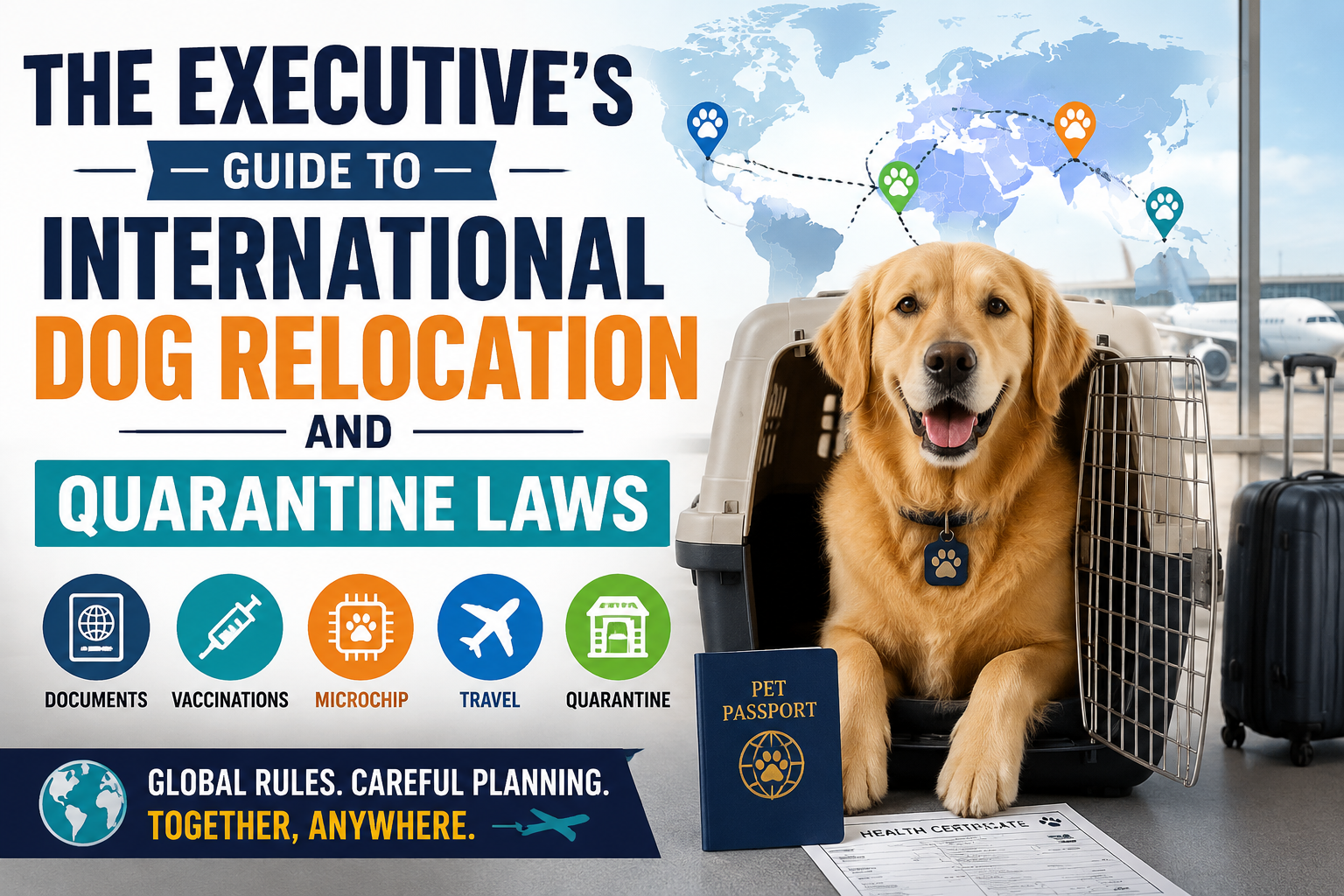
In an era where global business calls executives from boardrooms in New York to tech hubs in Singapore or energy projects in the Middle East, the modern high-flyer often faces a deeply personal dilemma: how to bring a beloved four-legged family member along for the journey. For the globe-trotting professional, relocating a dog across borders is far more complex than packing a suitcase. It is a high-stakes logistical challenge involving health certifications, microchipping, rabies protocols, and strict quarantine rules that vary wildly from country to country. One misstep can mean weeks or months of separation—or worse, denial of entry.
This guide, crafted with the thoroughness of a National Geographic expedition into the hidden rules governing our most loyal companions, equips executives with the knowledge to navigate international dog relocation smoothly in 2026. Whether you’re heading to the 2026 FIFA World Cup host cities or a long-term assignment abroad, understanding these laws ensures your canine partner joins the adventure rather than watching from afar.
The Growing Challenge of Pet Relocation in a Globalized World
Pet travel has surged alongside human mobility. Millions of dogs cross borders annually as families and professionals move for work, with executives in finance, tech, and energy sectors leading the trend. Yet regulations remain fragmented. The CDC in the U.S., DEFRA in the UK, and equivalents worldwide enforce rules primarily focused on rabies control—a disease eradicated in many nations but still a global threat.
Key factors complicating relocation:
- Rabies Vaccination & Titers: Most countries require proof of vaccination and, in many cases, a blood titer test showing adequate antibodies.
- Microchipping: An ISO-standard microchip is mandatory almost everywhere for identification.
- Quarantine Periods: Range from zero (for low-risk countries with proper documentation) to 6 months or more.
- Breed & Age Restrictions: Some nations ban “dangerous” breeds or have age limits.
- Airline & Cargo Rules: Direct flights preferred; cargo holds stressful for dogs.
Failing compliance can result in return flights at owner expense, extended quarantine, or euthanasia in extreme cases.
Step-by-Step: Preparing Your Dog for International Travel
1. Start Early—Months in Advance
Begin planning 4–12 months ahead. Research destination requirements via official government sites (e.g., USDA APHIS for U.S. exports).
2. Health Certification & Documentation
- Veterinary health certificate (endorsed by government vet).
- Rabies vaccination (valid, not too recent).
- Titer test (EU, Japan, Australia often require).
- Parasite treatments (ticks, worms) per country rules.
3. Microchip & Identification
Ensure the chip is implanted before rabies vaccination and registered internationally.
4. Choose the Right Transport Method
- In-Cabin: Best for small dogs; check airline weight limits (usually under 8–10 kg including carrier).
- Cargo: For larger breeds; select pet-friendly airlines with climate-controlled holds.
- Ground/Escorted Services: Specialized pet relocation companies handle paperwork and transport.
5. Quarantine Considerations
- No-Quarantine Destinations (with docs): EU countries (under Pet Travel Scheme), Canada, Mexico (for U.S. dogs).
- Short Quarantine: Japan (up to 180 days if incomplete docs), Hawaii (120 days).
- High-Risk Rules: Australia, New Zealand, and UK have stringent biosecurity.
For 2026 World Cup travel to the U.S., Canada, or Mexico, intra-North American moves are relatively straightforward for vaccinated dogs, but international arrivals require CDC import rules.
Country-Specific Insights for Executives
United States (World Cup Host): CDC requires rabies vaccination and health certificate. No quarantine for dogs from low-risk countries if compliant. Microchip recommended.
European Union: Pet Passport system. Rabies titer 30 days before travel if from non-EU. Strict on certain breeds.
United Kingdom: Post-Brexit rules similar to EU but with additional checks. Tapeworm treatment required for some entries.
Australia/New Zealand: Extremely strict. Long quarantine possible; only certain routes allowed. Advance permits essential.
Middle East & Asia: Varies—Singapore has short quarantine; UAE is pet-friendly with proper docs.
Latin America: Often aligned with U.S./Canada rules for regional travel.
Cost Breakdown: What to Budget
- Vet Visits & Tests: $300–$1,500.
- Airline Fees: $100–$1,000+ one way.
- Relocation Services: $1,000–$5,000 for full-service.
- Quarantine: $1,000–$10,000+ depending on duration.
- Total: $2,000–$15,000+ for complex moves.
Pet insurance with travel coverage or dedicated relocation policies can offset some risks.
Pro Tips from the Field
- Work with a reputable pet relocation specialist (e.g., IPATA members).
- Book direct flights to minimize stress.
- Acclimate your dog to the carrier months ahead.
- Consider temperature restrictions—avoid extreme heat/cold cargo holds.
- For executives: Leverage corporate relocation packages that sometimes include pet support.
The emotional toll of separation can be as challenging as the logistics. Many executives report that successfully relocating their dog strengthens family bonds and reduces relocation stress.
In the vast network of global travel, our dogs remind us of home. With careful planning, the journey becomes part of the adventure rather than an obstacle.
At dogsvets.com, we support pet parents navigating international moves. Share your relocation stories below. Safe travels!
References & Further Reading
- CDC: Bringing Pets into the United States (2026 guidelines) — https://www.cdc.gov/importation/bringing-an-animal-into-the-united-states/index.html
- USDA APHIS Pet Travel Resources — Official export/import rules.
- EU Pet Travel Scheme & UK DEFRA Guidelines.
- IPATA (International Pet and Animal Transportation Association) for specialists.