Last Updated on May 28, 2026 by Dogs Vets
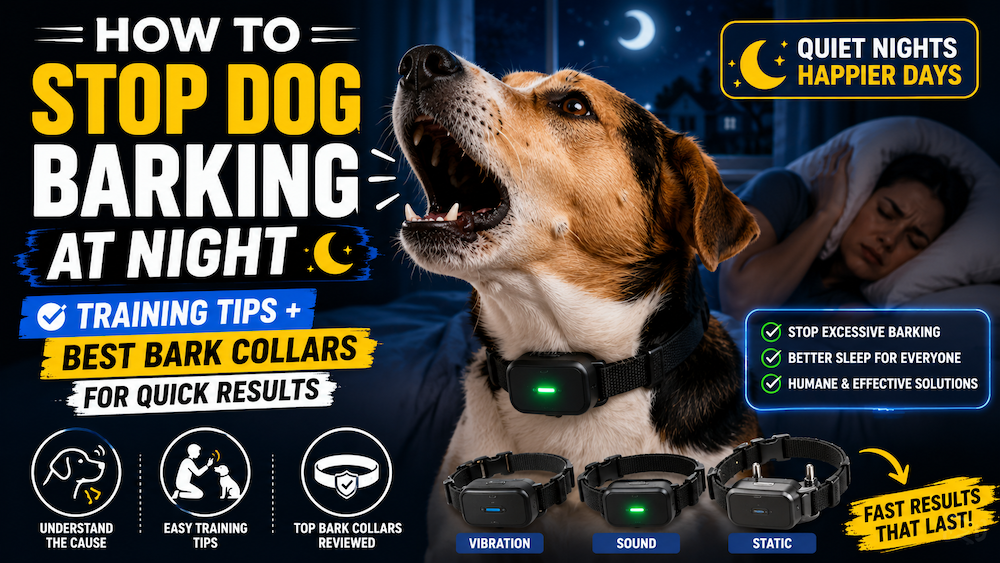
If you’ve ever been woken up at 2 AM by nonstop barking, you already know how frustrating nighttime dog barking can be. Whether it’s your own dog barking in the backyard or your puppy crying and barking indoors, sleep disruption quickly becomes stressful for everyone in the house — including your neighbors.
The good news?
Night barking is usually fixable.
With the right combination of dog training, environmental adjustments, and modern anti-barking tools, most dogs can learn to stay calm and quiet during the night. In this guide, we’ll break down exactly why dogs bark at night, how to stop the behavior naturally, and which bark collars actually work for fast results.
If you’re desperately searching for a solution, this article may finally help you get peaceful sleep again.
Why Dogs Bark at Night
Before you can stop nighttime barking, you need to understand the cause.
Dogs bark for many different reasons, and nighttime barking often points to an unmet need or behavioral trigger.
Here are the most common causes:
1. Loneliness or Separation Anxiety
Dogs are social animals. Many dogs bark at night simply because they feel isolated or anxious when separated from their owners.
This is especially common in:
- Puppies
- Newly adopted dogs
- Dogs sleeping outdoors
- Dogs with attachment anxiety
2. Boredom and Lack of Exercise
A dog with excess energy is much more likely to bark at night.
If your dog spends most of the day inactive, they may become restless once the house becomes quiet.
High-energy breeds like:
- Huskies
- German Shepherds
- Border Collies
- Belgian Malinois
often need significantly more physical and mental stimulation than owners realize.
3. Territorial Behavior
Dogs naturally protect their environment.
At night, outside sounds become more noticeable:
- Passing cars
- Cats
- Other dogs
- People walking outside
- Wildlife sounds
Some dogs bark because they believe they’re defending the home.
4. Medical Issues
Sometimes barking can signal discomfort or health problems.
Older dogs especially may bark due to:
- Pain
- Cognitive decline
- Vision problems
- Hearing issues
- Anxiety disorders
If barking suddenly begins without explanation, consider visiting a veterinarian first.
How to Stop Dog Barking at Night Naturally
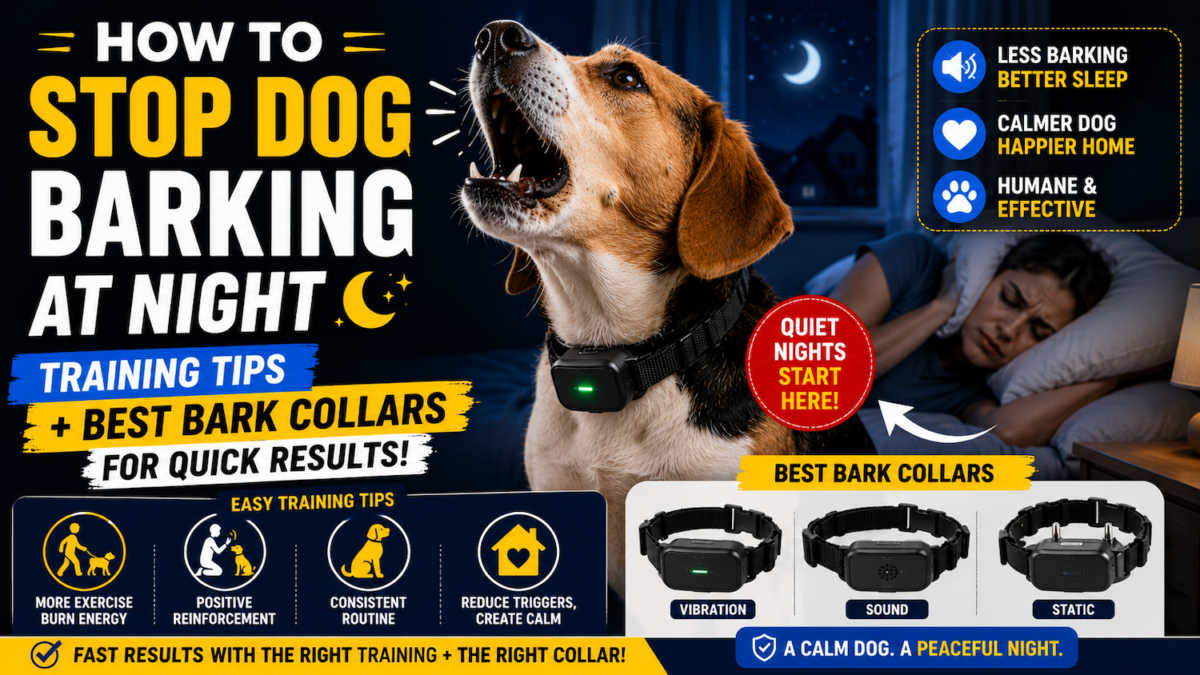
Before using bark collars or anti-barking devices, it’s important to build a strong behavioral foundation.
Here are the most effective training methods.
1. Increase Daily Exercise
One of the fastest ways to reduce nighttime barking is simple:
Make your dog tired.
Dogs that receive enough:
- Walking
- Running
- Playtime
- Mental stimulation
typically sleep better at night.
Try:
- Longer evening walks
- Tug-of-war sessions
- Puzzle toys
- Obedience training
- Fetch games
A mentally exhausted dog is usually a quiet dog.
2. Create a Consistent Bedtime Routine
Dogs thrive on routine.
Create a predictable nightly schedule:
- Final bathroom break
- Calm indoor activity
- Feeding schedule consistency
- Lights dimmed
- Sleep area prepared
Over time, your dog learns that nighttime means rest.
3. Avoid Rewarding Barking
Many owners accidentally reinforce barking behavior.
For example:
- Talking to the dog during barking
- Giving treats to calm them down
- Letting them onto the bed after barking
From the dog’s perspective, barking successfully gained attention.
Instead:
- Reward calm behavior
- Ignore attention-seeking barking
- Reinforce quiet moments with praise
Consistency matters.
4. Block Outside Triggers
If your dog reacts to movement or noise outside:
- Close curtains
- Use white noise machines
- Move the sleeping area
- Reduce visual stimulation
Sometimes eliminating the trigger solves the problem immediately.
5. Use Crate Training Properly
Crates can help dogs feel secure when introduced correctly.
A properly crate-trained dog often:
- Feels safer
- Sleeps more deeply
- Experiences reduced anxiety
However, crates should never be used as punishment.
Make the crate comfortable with:
- Soft bedding
- Favorite toys
- Calm lighting
- Positive reinforcement
Best Bark Collars for Quick Results
Sometimes training alone isn’t enough — especially for persistent barkers.
That’s where modern bark collars can help.
Today’s bark collars are far more advanced and humane than older models.
Many use:
- Sound
- Vibration
- Gentle stimulation
- Ultrasonic correction
instead of harsh punishment.
Here are some of the most recommended options.
1. DogRook Bark Collar
Best for small and medium dogs.
Features:
- No shock technology
- Sound + vibration modes
- Rechargeable battery
- Waterproof design
Many owners prefer this collar because it focuses on humane correction rather than pain.
Great for:
- Sensitive dogs
- Apartment dogs
- First-time bark collar users
Reference:
https://dogrook.com/
2. SportDOG NoBark Collar
Best for stubborn barkers.
Features:
- Multiple correction levels
- Silent partner technology
- Long battery life
- Durable construction
This collar is often recommended for larger breeds and persistent nighttime barkers.
Reference:
https://www.sportdog.com/
3. PATPET Smart Bark Collar
Best budget-friendly option.
Features:
- Lightweight design
- Adjustable sensitivity
- Vibration and beep modes
- USB rechargeable
Ideal for owners wanting affordable results without overly harsh correction.
Reference:
https://www.patpet.com/
4. PetSafe Bark Collar
Best veterinarian-recommended brand.
Features:
- Automatic bark detection
- Adjustable settings
- Comfortable fit
- Safe correction systems
PetSafe has built a strong reputation for reliable pet products.
Reference:
https://www.petsafe.com/
Are Bark Collars Safe?
This is one of the most debated topics among dog owners.
The answer depends on:
- The collar type
- Proper usage
- Your dog’s temperament
- Training consistency
Modern humane bark collars that use vibration or sound are generally considered safer than outdated shock-only models.
However:
- Never leave collars on too long
- Follow manufacturer instructions
- Avoid excessive correction
- Combine collars with training
A bark collar should support training — not replace it.
Mistakes Dog Owners Make When Trying to Stop Barking
Many owners unintentionally make barking worse.
Avoid these common mistakes:
Yelling at the Dog
Dogs may interpret yelling as you “joining the barking.”
This can accidentally encourage the behavior.
Inconsistent Rules
If barking is ignored one night but rewarded the next, dogs become confused.
Consistency is critical.
Lack of Patience
Behavior change takes time.
Some dogs improve within days.
Others may need several weeks.
Ignoring Anxiety
Anxious dogs need emotional support and training, not punishment.
When to Seek Professional Help
If barking becomes extreme, consult:
- A veterinarian
- A certified dog trainer
- A canine behavior specialist
Especially if:
- Barking is aggressive
- Anxiety is severe
- The dog becomes destructive
- Training methods fail
Professional guidance can identify hidden triggers you may miss.
Final Thoughts
Nighttime dog barking can feel overwhelming, exhausting, and emotionally draining — especially when sleep deprivation starts affecting daily life.
But the situation is usually fixable.
In most cases, success comes from combining:
- Better routines
- Daily exercise
- Calm training methods
- Environmental adjustments
- Humane bark control tools
The key is consistency.
Dogs learn through repetition, structure, and patience.
Whether you choose behavioral training alone or decide to use a modern bark collar for faster improvement, the goal should always be creating a calmer, happier, and more secure environment for your dog.
And once the barking finally stops?
You’ll probably appreciate peaceful sleep more than ever before.
Frequently Asked Questions (FAQ)
1. Why does my dog bark every night for no reason?
Dogs rarely bark without a reason. Common causes include boredom, anxiety, territorial behavior, outside noises, or lack of exercise. Identifying the trigger is the first step toward solving the problem.
2. Do bark collars actually work?
Yes, many bark collars can reduce excessive barking when used properly. Modern collars using vibration or sound correction are often effective and considered more humane than older shock-only models.
3. Is it cruel to use a bark collar?
Not necessarily. Humane bark collars designed with vibration or beep correction can be safe when used responsibly. The key is proper fit, moderation, and combining the collar with positive training methods.
4. How long does it take to stop nighttime barking?
Some dogs improve within a few days, while others may require several weeks of consistent training. Results depend on the dog’s personality, breed, anxiety level, and training consistency.
5. What is the best way to calm a barking dog at night?
The best approach usually includes:
- Exercise before bedtime
- Consistent routines
- Removing triggers
- Crate training
- Positive reinforcement
- Using humane bark-control tools if needed
Helpful Reference Links
American Kennel Club (AKC) Dog Training Advice:
https://www.akc.org/
ASPCA Dog Behavior Resources:
https://www.aspca.org/pet-care/dog-care
PetMD Dog Barking Guide:
https://www.petmd.com/
Humane Society Dog Training Tips:
https://www.humanesociety.org/
RSPCA Dog Behavior Information:
https://www.rspca.org.uk/