Last Updated on August 1, 2026 by Dogs Vets
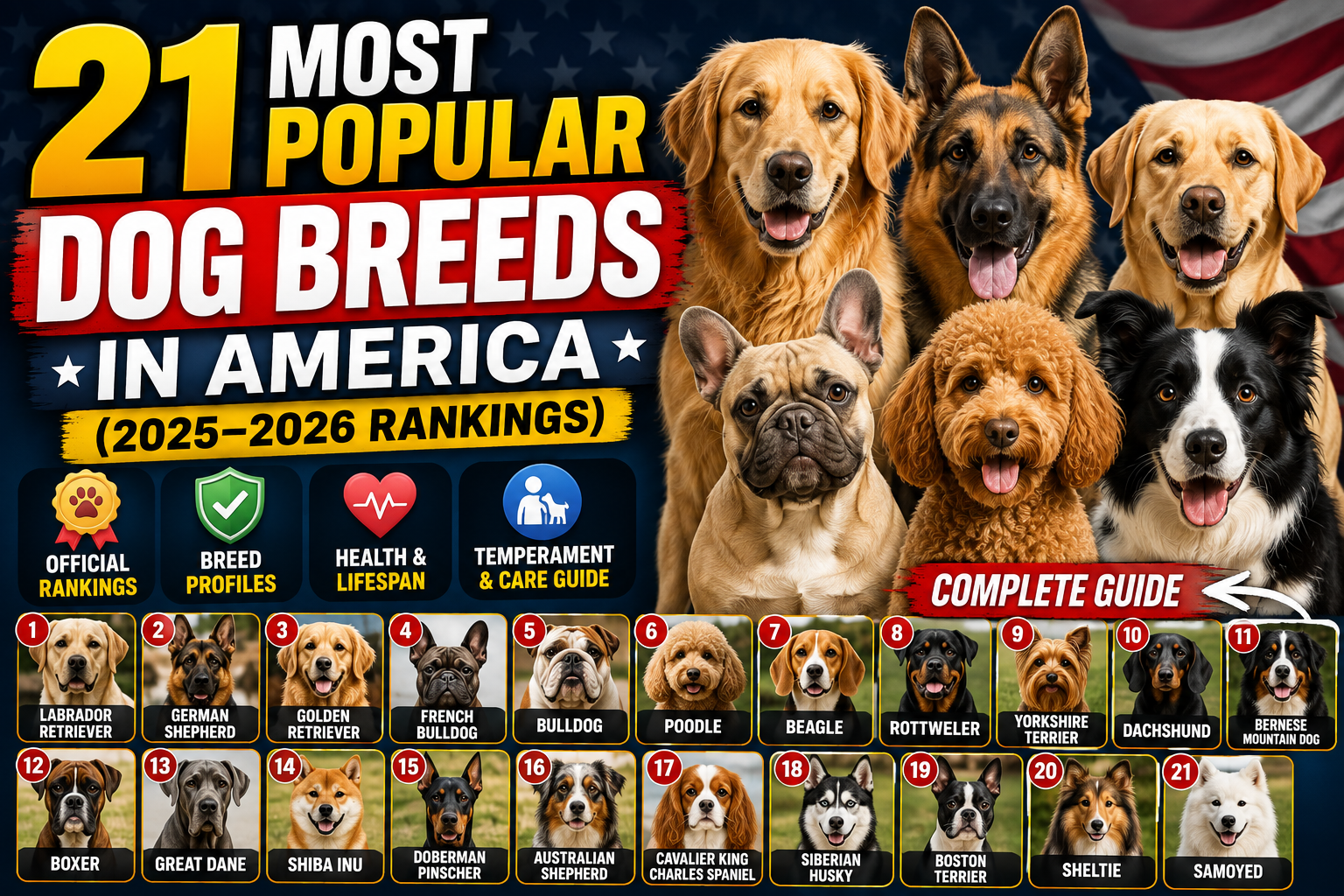
The American Kennel Club (AKC) ranks dog breeds each year based on purebred registration statistics. The 2025 rankings (released in 2026) confirm that the French Bulldog remains the most popular dog in the United States for the fourth consecutive year.
This definitive guide covers the top 21 most popular dog breeds, with detailed profiles, key traits, lifestyle suitability, health considerations, and practical advice to help you choose the right breed.
Official AKC Top 21 Most Popular Dog Breeds (2025)
| Rank | Breed | Size Category | Energy Level | Best For | Shedding |
|---|---|---|---|---|---|
| 1 | French Bulldog | Small | Low–Moderate | Apartments, first-time owners | Low |
| 2 | Labrador Retriever | Large | High | Families, active owners | High |
| 3 | Golden Retriever | Large | High | Families, therapy work | High |
| 4 | German Shepherd Dog | Large | High | Working roles, protection | High |
| 5 | Dachshund | Small | Moderate | Companions, apartments | Low–Mod |
| 6 | Poodle (all sizes) | Toy–Standard | Moderate–High | Allergy-friendly homes | Low |
| 7 | Beagle | Medium | High | Families, scent work | Moderate |
| 8 | Rottweiler | Large | Moderate–High | Experienced owners, guardians | Moderate |
| 9 | German Shorthaired Pointer | Large | Very High | Active/outdoorsy owners | Moderate |
| 10 | Bulldog | Medium | Low | Calm households | Moderate |
| 11 | Cane Corso | Large | Moderate–High | Experienced owners, protection | Moderate |
| 12 | Cavalier King Charles Spaniel | Small | Moderate | Families, lap dogs | Moderate |
| 13 | Yorkshire Terrier | Toy | Moderate | Apartments, companions | Low |
| 14 | Australian Shepherd | Medium | Very High | Active/herding homes | High |
| 15 | Doberman Pinscher | Large | High | Protection, athletic owners | Low–Mod |
| 16 | Pembroke Welsh Corgi | Small–Medium | Moderate–High | Families, herding | High |
| 17 | Miniature Schnauzer | Small | Moderate | Watchdogs, low-shed homes | Low |
| 18 | Boxer | Large | High | Families with older kids | Moderate |
| 19 | Pomeranian | Toy | Moderate | Companions, apartments | High |
| 20 | Bernese Mountain Dog | Giant | Moderate | Families with space | High |
| 21 | Shih Tzu | Toy–Small | Low–Moderate | Companions, apartments | Low |
Detailed Breed Profiles
1. French Bulldog
Compact, affectionate, and highly adaptable. French Bulldogs thrive in apartments and require relatively low exercise. They are excellent companions but are brachycephalic (short-nosed), which can lead to breathing difficulties, heat sensitivity, and higher veterinary costs. Ideal for owners who want a low-maintenance, people-oriented dog.
2. Labrador Retriever
America’s long-time favorite before the Frenchie took the top spot. Labs are friendly, intelligent, highly trainable, and excellent with children. They need substantial daily exercise and mental stimulation. Common health concerns include hip/elbow dysplasia and obesity.
3. Golden Retriever
Known for their gentle temperament and loyalty. Goldens excel as family dogs, service dogs, and therapy dogs. They require regular grooming due to their dense double coat and need consistent exercise. Prone to hip dysplasia, cancer, and ear infections.
4. German Shepherd Dog
Intelligent, loyal, and versatile. Widely used in police, military, and service work. They form strong bonds with their handlers but require experienced training and significant exercise. Common issues include hip dysplasia and degenerative myelopathy.
5. Dachshund
Bold and curious with a big personality in a small body. Available in standard and miniature sizes and three coat types. They are prone to intervertebral disc disease (back problems) due to their long body, so stairs and jumping should be limited.
6. Poodle
Available in Standard, Miniature, and Toy sizes. Highly intelligent, low-shedding, and highly trainable. Excellent for owners concerned about allergies. Require regular professional grooming.
7. Beagle
Friendly, curious, and food-motivated. Beagles are excellent family dogs and skilled scent hounds. They have a strong prey drive and distinctive bay/howl. Energy: High Best for: Active families with secure fencing Watch for: Tendency to follow scents and become selective listeners; can be vocal.
8. Rottweiler
Confident, loyal, and naturally protective. When properly trained and socialized, Rottweilers are calm and devoted companions. They need experienced, consistent ownership. Energy: Moderate to High Best for: Experienced owners seeking a guardian Watch for: Requires firm, positive leadership and early socialization.
9. German Shorthaired Pointer
Athletic, versatile, and highly energetic. These dogs excel at hunting, running, and outdoor activities. They form strong bonds with their people but need a job or intense daily exercise. Energy: Very High Best for: Active, outdoorsy owners Watch for: Can become destructive if under-exercised or under-stimulated.
10. Bulldog (English Bulldog)
Calm, courageous, and good-natured. Bulldogs are relatively low-energy and make solid companions for less active households. Energy: Low Best for: Calm homes and moderate lifestyles Watch for: Brachycephalic issues (breathing, heat sensitivity), skin folds, and higher veterinary costs.
11. Cane Corso
Powerful, intelligent, and protective. The Cane Corso has risen rapidly in popularity. They are loyal family guardians when raised with strong leadership and socialization. Energy: Moderate to High Best for: Experienced owners Watch for: Needs early training and socialization; not ideal for first-time owners.
12. Cavalier King Charles Spaniel
Gentle, affectionate, and eager to please. Cavaliers are classic companion dogs that adapt well to both apartments and houses. They thrive on human companionship. Energy: Moderate Best for: Families and people seeking a lap dog Watch for: Heart conditions (especially mitral valve disease) and ear infections.
13. Yorkshire Terrier
Spirited, confident, and portable. Yorkies have big personalities in a tiny package. They bond closely with their owners and do well in smaller living spaces. Energy: Moderate Best for: Apartments and companions Watch for: Fragile build; dental issues are common in small breeds.
14. Australian Shepherd
Extremely intelligent, energetic, and work-driven. Aussies need mental and physical challenges. They excel at herding, agility, and advanced training. Energy: Very High Best for: Active owners or those with jobs for the dog Watch for: Can develop problem behaviors without enough stimulation.
15. Doberman Pinscher
Alert, loyal, and athletic. Dobermans are elegant working dogs known for their protective instincts and trainability when handled correctly. Energy: High Best for: Experienced, active owners Watch for: Needs consistent training and socialization; some health concerns (heart, von Willebrand’s disease).
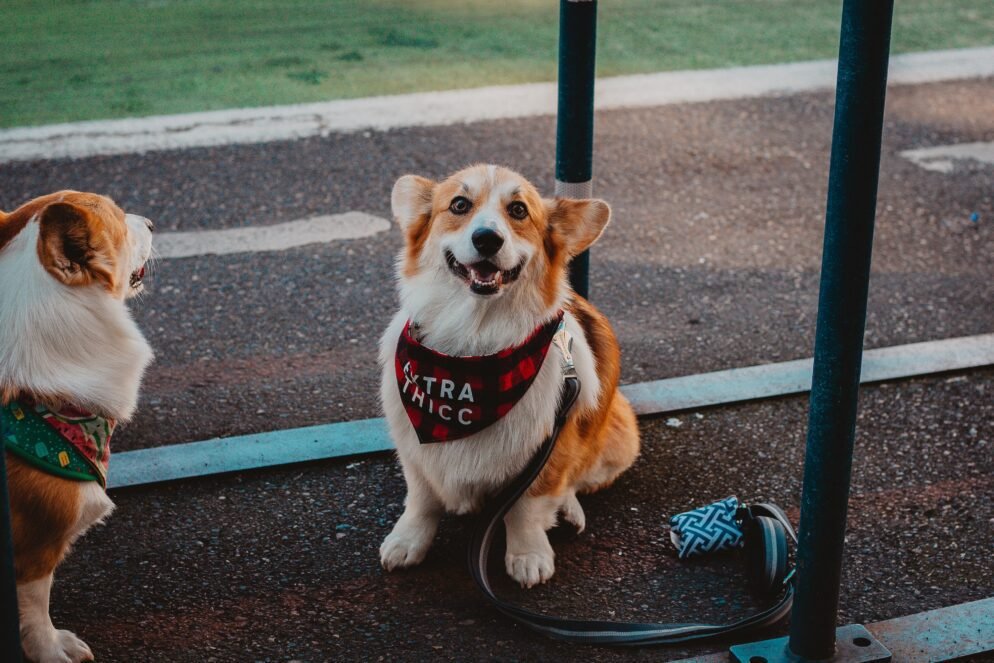
16. Pembroke Welsh Corgi
Intelligent, affectionate, and full of personality. Corgis are herding dogs with a big attitude. They are loyal and generally good with families. Energy: Moderate to High Best for: Families and active homes Watch for: Back issues due to long body; heavy shedders.
17. Miniature Schnauzer
Alert, spirited, and low-shedding. These sturdy little dogs make excellent watchdogs and companions. They are generally good with families. Energy: Moderate Best for: Families and low-shed households Watch for: Can be vocal; requires regular grooming of the wiry coat.
18. Boxer
Playful, patient, and energetic. Boxers are known for their clownish personality and strong bond with children (when properly socialized). Energy: High Best for: Families with older children and active lifestyles Watch for: Can be boisterous as young adults; some cancer predispositions.
19. Pomeranian
Bold, lively, and extroverted. Despite their tiny size, Pomeranians have confident, sometimes bossy personalities. They thrive on attention. Energy: Moderate Best for: Companions and apartments Watch for: Heavy shedding of the double coat; dental care is important.
20. Bernese Mountain Dog
Gentle, calm, and affectionate “gentle giant.” Berners are loyal family dogs with a striking tri-color coat. Energy: Moderate Best for: Families with space and cooler climates Watch for: Relatively short lifespan; higher risk of cancer and joint issues.
21. Shih Tzu
Affectionate, outgoing, and adaptable. Shih Tzus were bred as companion dogs and generally enjoy being with their people. Energy: Low to Moderate Best for: Apartments and companion-focused homes Watch for: Requires regular grooming; brachycephalic features can cause breathing sensitivity.
- Beagle: Friendly scent hound; can be vocal and needs secure fencing.
- Rottweiler & Cane Corso: Powerful guardian breeds that require experienced, consistent ownership and early socialization.
- Cavalier King Charles Spaniel: Gentle and affectionate; watch for heart conditions (mitral valve disease).
- Australian Shepherd & German Shorthaired Pointer: High-drive working dogs that need jobs or intense exercise.
- Bernese Mountain Dog: Gentle giant with a shorter average lifespan; prone to cancer and joint issues.
- Shih Tzu & Yorkshire Terrier: Classic companion breeds that do well in smaller living spaces.
How to Choose the Right Breed from the Top 21
Ask yourself these questions:
- Living situation — Apartment or house with a yard?
- Activity level — Do you want a hiking partner or a couch companion?
- Experience level — First-time owner or experienced handler?
- Grooming tolerance — Are you prepared for high-shedding or high-maintenance coats?
- Budget — Larger and brachycephalic breeds often have higher lifetime veterinary costs.
- Time commitment — High-energy and intelligent breeds need training and mental stimulation.
Pro tip: Popularity does not equal suitability. A breed that ranks high may still be a poor match for your lifestyle.
Health, Cost, and Ownership Considerations
Many of the most popular breeds have well-documented genetic health predispositions. Responsible breeders perform health testing (hips, elbows, eyes, cardiac, genetic panels). Lifetime costs vary widely — expect higher expenses for giant breeds, brachycephalic breeds, and those prone to chronic conditions.
Always meet adult dogs of the breed, spend time with the parents when possible, and consider both breeders and reputable rescues.
Final Recommendation
The top 21 list reflects what Americans are currently choosing, not necessarily what is best for every household. Use the rankings as a starting point, then dig deeper into temperament, exercise needs, grooming, and health before making a decision.
Choosing a dog is a 10–15+ year commitment. Matching the breed to your real lifestyle produces the happiest outcomes for both dog and owner.
Primary Source: American Kennel Club Most Popular Dog Breeds of 2025 (based on registration statistics).