Last Updated on February 26, 2026 by Dogs Vets
Why Your Dog Gets Ear Infections (And Why Your Vet’s Standard Treatment Isn’t Working): Complete Prevention and Treatment Guide Based on 2026 Research
Approximately 20 percent of dogs suffer from some form of ear disease during their lifetime, making dog ear infections one of the most common reasons pet owners visit their veterinarian. Yet despite multiple rounds of antibiotic ear drops, oral antibiotics, and thorough ear cleaning, countless dogs continue to experience recurring ear infections that seem to worsen with each treatment cycle. If you’ve found yourself trapped in this frustrating pattern of temporary relief followed by relentless itching and discharge, you’re not alone—and the problem likely isn’t your dog’s ears at all.
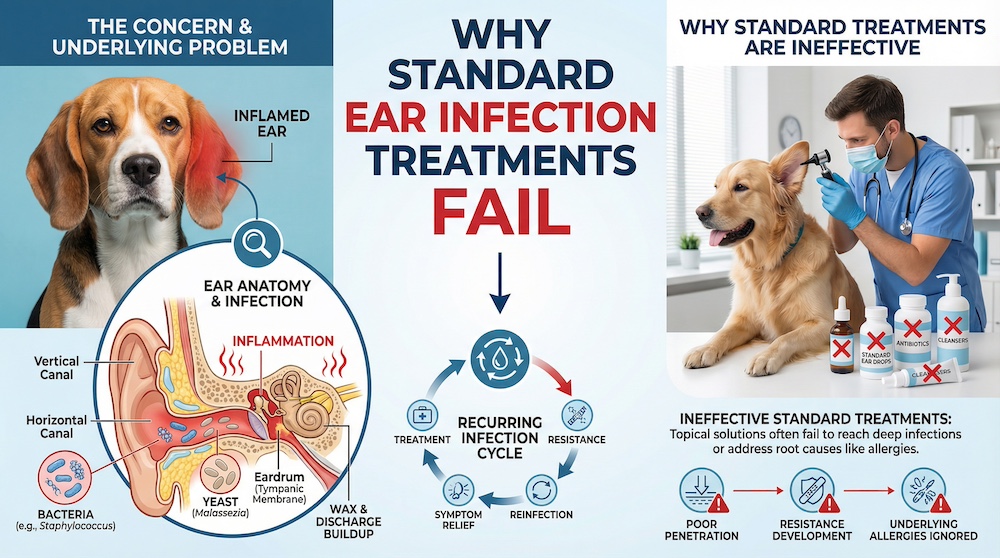
The real issue is that most standard veterinary treatment for dog ear infections addresses only the symptoms, not the underlying causes. This approach creates a dangerous cycle where your dog experiences temporary improvement, only to develop resistant bacteria or yeast overgrowth that becomes progressively harder to treat. Understanding why your dog gets ear infections in the first place is the first crucial step toward actually solving the problem.
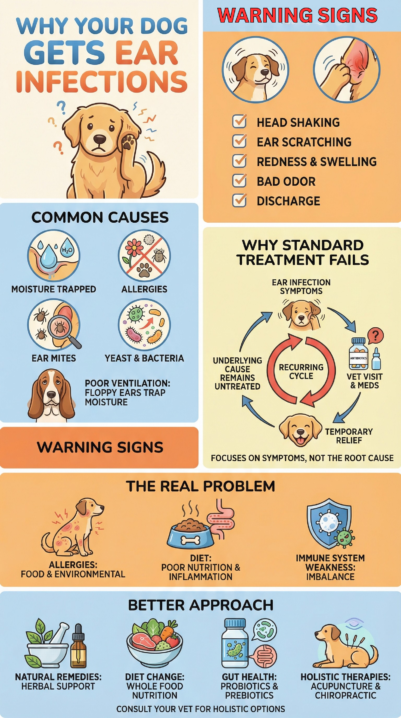
The Failure of Standard Ear Infection Treatment: Why Antibiotics and Ear Drops Aren’t Enough
When you take your dog to the vet for an ear infection, you typically receive the same protocol that’s been used for decades: antibiotic ear drops, anti-inflammatory medication, and possibly oral antibiotics. While this approach seems logical on the surface, it’s fundamentally flawed for dogs with chronic or recurring ear infections.
Here’s why standard dog ear infection treatment often fails:
Antibiotic Resistance Develops Rapidly
Every time your dog receives antibiotic ear drops or oral antibiotics for otitis externa (the medical term for ear canal inflammation), you’re selecting for drug-resistant bacteria. The bacteria that survive antibiotic exposure multiply and become increasingly resistant to future treatment. After multiple courses of antibiotics, your dog’s ear infection may become caused by bacteria that no longer responds to standard medications. This is particularly problematic with resistant rod bacteria, which are increasingly documented in chronic canine ear infections.
The Treatment Ignores Root Causes
Standard ear infection treatment never addresses why the infection developed in the first place. Your dog’s ear environment doesn’t become infected without a reason. Whether it’s an underlying food allergy, environmental allergy, hormonal imbalance, anatomical abnormality, or poor ear ventilation, these root causes continue to exist after your vet’s treatment ends. The moment antibiotic drops stop, the underlying condition remains unchanged, and the infection returns.
Chronic Inflammation Causes Permanent Ear Canal Damage
Repeated infections and prolonged inflammation create permanent structural changes in the ear canal. The canal becomes progressively narrower through fibrosis and scarring, the delicate skin lining thickens, and the ear’s natural protective barriers break down. Once these changes occur, your dog becomes increasingly susceptible to future infections, creating a vicious cycle that becomes harder to break with each recurrence. This explains why some dogs have ear infections that don’t respond to any antibiotic—the structural damage is severe enough that medication can’t penetrate effectively.
Secondary Infections Are Harder to Treat Than Primary Infections
When bacteria establish a secondary infection on top of the primary infection, treatment becomes exponentially more complicated. Poor pre-treatment ear canal cleansing often leaves debris and discharge that antibiotics can’t effectively reach. Additionally, the damaged ear canal environment becomes favorable to multiple organisms simultaneously, requiring combination treatments that are increasingly difficult to balance.
The medical literature is clear on this point: canine chronic and recurrent otitis externa is extremely challenging to treat precisely because traditional approaches only address the symptom (the infection) rather than the cause (the underlying condition creating the infection-prone environment).
The Real Reasons Your Dog Gets Ear Infections: Understanding the Root Causes
To actually solve your dog’s ear infection problem, you need to identify and address the underlying factors creating an environment where bacteria and yeast thrive. According to recent veterinary dermatology research, chronic ear infections in dogs are rarely the primary problem—they’re almost always a symptom of something else.
Food Allergies and Dietary Intolerance
Food allergies represent one of the most common overlooked causes of recurring dog ear infections. When your dog develops a food allergy or intolerance, the inflammatory response extends throughout their entire body, including their ear canals. This inflammation creates the perfect environment for yeast and bacterial overgrowth.
Common food allergens that trigger ear infections in dogs include:
Dairy products are a frequent culprit, despite being present in many commercial dog foods as milk protein or whey. Wheat and grains often cause inflammatory responses, particularly in dogs with genetic predispositions to sensitivity. Beef and chicken, while excellent protein sources, are among the most common food allergens simply because they appear in so many dog diets—exposure and sensitivity increase together. Corn and soy are cheap filler ingredients that trigger inflammation in sensitive dogs. Eggs can cause ear inflammation in allergic individuals. Artificial preservatives and additives including BHA, BHT, and ethoxyquin are known inflammatory triggers.
The challenge with food allergies is that they develop slowly over time through repeated exposure. Your dog may eat chicken for years without problem, then suddenly develop an allergy. Once triggered, the inflammation in the ear canal creates excess wax production and moisture that bacteria and yeast absolutely love.
Environmental Allergies and Seasonal Triggers
Environmental allergies to pollen, mold spores, dust mites, and other airborne allergens frequently manifest as ear infections in dogs. When your dog inhales these allergens, the histamine response triggers inflammation throughout their respiratory tract and extends into their ear canals. This inflammation, combined with the warm, moist ear environment, creates ideal conditions for yeast colonization.
Dogs with environmental allergies to mold often experience worse ear infections during humid months. Dogs allergic to pollen may see ear symptoms correlate with seasonal pollen counts. If your dog’s ear infections follow a seasonal pattern, environmental allergies are almost certainly involved.
Hormonal Imbalances and Metabolic Factors
Hypothyroidism and other hormonal imbalances significantly increase susceptibility to ear infections. When thyroid hormone levels drop, immune function decreases, skin barrier function deteriorates, and the ear canal’s protective mechanisms fail. Dogs with untreated hypothyroidism experience thicker ear canal skin, more cerumen (ear wax) production, and reduced ability to fight off infection.
Cushing’s disease (hyperadrenocorticism) similarly compromises immune function, making ear infections more frequent and harder to resolve. If your dog is middle-aged or older and experiences recurring ear infections despite appropriate treatment, thyroid and adrenal testing should be part of your diagnostic workup.
Anatomical Factors: Breed Structure and Ear Canal Design
Some dogs are genetically predisposed to ear infections based purely on their ear structure. Dogs with floppy ears have ear canals that trap moisture and prevent normal air circulation. Breeds like Cocker Spaniels, Basset Hounds, Poodles, Golden Retrievers, and Labrador Retrievers experience higher rates of ear infection simply because their ear anatomy restricts airflow.
Dogs with hair growing deep inside their ear canals also face challenges. Hair traps moisture and debris, creates a humid microenvironment, and prevents air circulation that would normally keep ears dry. Even routine ear cleaning can’t fully compensate for anatomical disadvantages.
While you can’t change your dog’s ear structure, understanding this factor explains why certain breeds need more aggressive prevention strategies than others.
Moisture and Water Exposure
Dogs who swim frequently, are bathed regularly, or live in humid climates face higher infection risk simply due to moisture accumulation. Water trapped in the ear canal creates the perfect warm, moist environment for yeast and bacterial colonization. Yeast thrives in moisture, which is why dogs with chronic moisture in their ears often develop persistent yeast infections (otitis externa) that respond poorly to standard treatment.
This explains why some water-loving breeds seem to perpetually struggle with ear infections regardless of treatment.
Poor Ear Hygiene and Inadequate Drying Protocols
Ironically, improper ear cleaning or failure to properly dry ears after water exposure can perpetuate infections. Debris left behind in ear canals prevents antibiotic penetration and provides substrate for bacterial and yeast growth. Conversely, over-aggressive cleaning can damage the delicate ear canal skin and strip protective oils.
The goal is appropriate cleaning without damage—a balance many people struggle to achieve.
The Diagnostic Gap: Why Standard Vets Miss the Underlying Problem
Most general veterinary practices diagnose ear infections using visual inspection and perhaps a quick swab to identify whether bacteria or yeast is present. However, this approach misses critical information about what’s actually causing the infection.
A complete diagnostic workup for chronic ear infections should include:
Ear cytology and cultures identify the specific organism causing infection and reveal antibiotic sensitivity. This goes beyond just knowing “your dog has bacteria”—it tells you which antibiotics will actually work. Thyroid testing (TSH and free T4) rule out hypothyroidism, which is present in approximately 40 percent of dogs with chronic ear disease. Allergen testing through blood work or intradermal skin testing identify environmental allergens your dog reacts to. Dietary elimination trials systematically remove potential food allergens to identify sensitivities. Imaging of the ear canal (ultrasound or CT) assesses whether structural damage has occurred and how severe it is. Hearing assessmentevaluates whether chronic infection has caused hearing loss.
Unfortunately, most general veterinary clinics perform none of these advanced diagnostics. They diagnose the infection, prescribe antibiotics, and send you home without ever investigating why the infection developed. This is why conditions persist despite treatment—the root cause remains undiagnosed and untreated.
Breaking the Cycle: A Comprehensive Approach to Solving Chronic Dog Ear Infections
Instead of repeatedly treating ear infections, you need to identify and address the underlying causes creating an infection-prone ear environment. Here’s what a comprehensive approach actually looks like:
Step 1: Identify Food Allergies Through Elimination Diet
If your dog experiences recurring ear infections, starting with an elimination diet is often the most practical first step. An elimination diet involves feeding only novel protein sources and carbohydrates your dog has never eaten before—such as venison and sweet potato, or duck and peas—for 8 to 12 weeks while eliminating all treats and table foods.
If ear symptoms improve or resolve during this period, your dog likely has a food allergy. You can then reintroduce foods one at a time to identify which specific ingredient triggers ear inflammation. This approach is free, evidence-based, and often more effective than medications because it addresses the root cause rather than treating the symptom.
The key to successful elimination diets is absolute compliance—even small amounts of allergenic food can prevent improvement. This is why many elimination diets fail: owners inadvertently reintroduce allergens through treats, table food, or secondary items containing the allergen.
Step 2: Test for Hypothyroidism and Other Hormonal Issues
If your dog is middle-aged or older and experiences persistent ear infections, request thyroid testing. Hypothyroidism is so frequently associated with chronic ear disease that some veterinary dermatologists consider it part of the standard diagnostic workup for any dog with recurrent infections.
Similarly, if your dog shows other signs of hormonal imbalance—weight gain, lethargy, poor coat quality, or chronic skin infections—adrenal and thyroid testing becomes even more important.
Step 3: Pursue Advanced Diagnostics with a Veterinary Dermatologist
If standard treatment has failed or your dog experiences ear infections more than two to three times per year, referral to a veterinary dermatologist is warranted. Dermatologists have advanced diagnostic tools and experience managing difficult cases that general practitioners cannot address.
BluePearl Specialty Hospital and similar centers offer comprehensive ear workups including detailed ear cytology, bacterial and fungal cultures with sensitivity testing, intradermal allergy testing, and imaging to assess ear canal structure. These diagnostics provide the information needed to create targeted treatment plans rather than blanket antibiotic protocols.
Step 4: Treat the Underlying Condition, Not Just the Infection
Once you identify the root cause (food allergy, environmental allergy, hormonal imbalance, or anatomical factor), your treatment plan shifts to addressing that cause.
For food allergies: Commit to a permanent dietary change using a limited-ingredient or novel protein diet. This isn’t a temporary measure—if your dog is allergic to chicken, they can’t eat chicken ever again, even occasionally. Once you identify the allergen, permanent avoidance is often the most effective treatment.
For environmental allergies: Options include immune support supplements, allergen avoidance when possible, and in some cases, allergy immunotherapy (allergy shots) that desensitize your dog’s immune system to specific environmental allergens. Research shows that dogs receiving proper allergy management experience significantly fewer ear infections.
For hormonal imbalances: Thyroid replacement therapy for hypothyroidism often dramatically improves ear health. Thyroid-deficient dogs frequently see complete resolution of chronic ear infections once thyroid hormone levels normalize.
For anatomical factors: Increased frequency of ear cleaning and drying, combined with aggressive management of any allergies, becomes necessary. Some dogs with severe structural problems benefit from surgical intervention if medical management fails.
Step 5: Implement Proper Ear Cleaning and Maintenance Protocols
Regular ear cleaning is crucial for dogs prone to infections, but it must be done correctly. Proper ear maintenance involves:
Choosing the right cleaner: Use a veterinarian-recommended ear cleaner formulated specifically for dogs. Avoid hydrogen peroxide, vinegar, or other home remedies that can damage the delicate ear canal skin. Water-soluble cleaners are generally safer than oil-based products for dogs prone to yeast infections.
Frequency: Most dogs with ear infection history benefit from cleaning once to twice weekly. Dogs with active infections may need daily cleaning during treatment. The frequency should decrease as you address underlying causes.
Technique: Place the cleaner in the ear, massage gently for 30 to 60 seconds, then allow your dog to shake their head naturally. Use cotton balls or soft cloths to wipe away debris—never insert cotton swabs deep into the ear canal where they can cause damage.
Drying: After any water exposure (bathing, swimming, grooming), carefully dry ears with a soft towel or low-heat hair dryer. This is critical for preventing moisture-related yeast overgrowth.
Step 6: Consider Dietary Modifications for Yeast Prevention
For dogs prone to yeast infections, dietary composition matters significantly. Yeast feeds on carbohydrates and sugar, so diets high in refined carbohydrates promote yeast overgrowth.
Consider switching to:
Low-carbohydrate diets that don’t fuel yeast growth as aggressively. Grain-free formulations are often lower in total carbohydrates than grain-based commercial kibbles. Fresh or raw diets provide better nutritional availability and avoid processed ingredients that can trigger inflammation. Many dogs with chronic ear infections improve dramatically when switched to fresh food diets.
Omega-3 rich foods including fish oil supplements have anti-inflammatory properties that reduce ear canal inflammation. Dogs receiving omega-3 supplementation often experience improved skin and ear health.
Natural and Complementary Approaches to Managing Dog Ear Infections
While standard medications have a role, complementary therapies can support ear health and reduce infection recurrence:
Probiotics and microbiome support help maintain healthy bacterial populations in the gut, which influences systemic immunity and skin health. Dogs with ear infections often have disrupted microbiomes from repeated antibiotic use.
Herbal supplements including chamomile (known for anti-inflammatory properties), echinacea (immune support), and calendula (skin healing) may help reduce inflammation when used appropriately. These work best as preventive supplements rather than acute treatments.
Apple cider vinegar in diluted form can help maintain appropriate ear pH, though it should only be used in ears without active infection or damage (vinegar on raw skin causes pain and irritation).
Coconut oil has antimicrobial and anti-inflammatory properties and can be used as a gentle ear cleaner for mild inflammation, though it’s not appropriate for active infections.
Acupuncture has shown some benefit for dogs with allergies, as it may reduce the inflammatory response to allergens and improve immune regulation.
The key to any complementary approach is that it should support, not replace, addressing the underlying cause of infection.
When to Seek Specialist Care: Signs You Need a Veterinary Dermatologist
You should pursue specialty care with a veterinary dermatologist if:
Your dog experiences ear infections more than two to three times annually despite appropriate treatment. Your dog continues scratching, shaking, or whining after completing a course of treatment, suggesting the infection isn’t truly resolved. Visible swelling, unusual discharge color, or strong odor persists despite treatment, indicating resistant or complicated infection. Your dog has already tried multiple medications with limited success, suggesting standard protocols aren’t addressing the root problem. Sedation or imaging is needed to assess deeper ear structures (otitis media or otitis interna), which general practitioners typically cannot safely evaluate.
Veterinary dermatologists have specialized training and advanced diagnostic equipment to identify the specific causes of chronic ear disease and create targeted treatment plans rather than generic protocols.
The Prevention-Based Approach: Stopping Infections Before They Start
Once you’ve resolved your dog’s chronic ear infections through proper diagnosis and treatment, prevention becomes paramount. A prevention-focused approach includes:
Monthly allergy assessment: Watch for early signs of itching, shaking, or head rubbing that might indicate an emerging allergy flare.
Regular ear checks: Inspect your dog’s ears weekly for redness, discharge, odor, or waxy buildup. Early intervention prevents minor issues from becoming serious infections.
Moisture management: Dry ears immediately after any water exposure. Prevent water from entering the ear canal during bathing using cotton balls or specific dog ear covers.
Dietary consistency: Once you identify a diet that works, maintain absolute consistency. Most ear-related relapses occur when owners deviate from the identified safe diet.
Supplement support: Continue omega-3 supplementation and probiotics indefinitely if they’ve helped your dog’s ear health.
Annual bloodwork: For dogs with history of chronic infections, annual thyroid and immune testing helps catch hormonal imbalances early before they trigger ear disease again.
The Bottom Line: Your Dog’s Chronic Ear Infections Are Solvable
Your dog’s recurring ear infections are not a permanent problem requiring endless antibiotic cycles. They’re a symptom indicating that your dog’s immune system is reacting to something (food, environment, hormones, or anatomy) that’s creating an infection-prone ear environment.
By shifting your approach from treating infections to identifying and addressing underlying causes, you can actually solve the problem rather than endlessly managing the symptom. This requires more investigation than standard veterinary care typically provides, but the payoff—a dog with healthy, comfortable ears—is absolutely worth the effort.
Start with the easiest intervention: an elimination diet to rule out food allergies. If that’s not the issue, pursue thyroid testing and advanced diagnostics with a specialist. Once you identify the root cause, commit to addressing it rather than expecting antibiotics to solve a problem that medications can never truly fix.
Your dog doesn’t need more ear drops. They need a diagnosis.
Frequently Asked Questions About Dog Ear Infections
Q1: What’s the Difference Between Normal Earwax and an Infected Ear Infection?
A: Not all brown discharge in your dog’s ears indicates infection. Here’s how to differentiate:
Normal earwax appears as a light yellowish or tan waxy substance in the ear canal. It’s your dog’s ear’s natural protective barrier and is completely normal.
Overproduction of earwax often signals inflammation without infection. This occurs when your dog’s ear canal is irritated by allergies or moisture but hasn’t yet developed a bacterial or yeast infection. Overproduced wax is darker and more abundant than normal.
Infected ears have characteristics that distinguish them from normal wax buildup. Smelly discharge is a key indicator—infected ears develop a distinctive foul odor caused by bacteria or yeast overgrowth. The discharge itself may appear dark brown or black, have a crusty appearance, or contain pus. Your dog will show behavioral changes including constant ear scratching, head shaking, and sometimes whining or yelping when the ears are touched.
The only way to know for certain whether your dog has an infection is through ear cytology—an ear swab examined under a microscope. Your veterinarian can perform this quick test in the clinic. This tells you whether yeast or bacteria are present and identifies which specific organism is causing the problem. This information is crucial because it determines which medications will actually be effective.
Reference: Hear Now Part 2: Frequently Asked Questions About Dog Ear Infections
Q2: Why Didn’t My Dog’s Ear Infection Go Away After Treatment?
A: This is one of the most frustrating experiences for dog owners. You complete a full course of antibiotic ear drops or oral antibiotics, initially see improvement, but then the infection returns within weeks or months. Several factors explain why this happens:
Lack of anti-inflammatory support is one of the most overlooked reasons treatment fails. Many veterinarians focus solely on killing the bacteria or yeast causing the infection. However, ear infections are typically inflammation first and infection second. Even after you kill the pathogenic organisms, the inflammation that caused them to flourish in the first place remains. This ongoing inflammation keeps the ear canal environment favorable for new infections, and it causes pain and discomfort that doesn’t resolve even if the bacteria or yeast is gone.
Resistant bacteria develop when antibiotics don’t completely eliminate the infection. The bacteria that survive antibiotic exposure are naturally more resistant. Each subsequent course of antibiotics selects for even more resistant strains, making each recurrence harder to treat. This is particularly problematic with Pseudomonas bacteria, which frequently develop antibiotic resistance in chronic ear infections.
Uncontrolled allergies remain the most common underlying cause of treatment failure. If your dog has an undiagnosed food allergy or environmental allergy, that allergy continues to trigger inflammation even after you treat the infection. Within weeks, the inflamed ear canal becomes a favorable environment for bacteria and yeast to colonize again. The infection returns not because treatment failed, but because the root cause was never addressed.
Inadequate initial cleaning can also prevent treatment success. Ear canals with large amounts of debris, discharge, or buildup may not allow antibiotic medications to penetrate effectively. Without professional cleaning to remove this material first, ear drops can’t reach all the infected areas.
The solution is to treat both the inflammation and the infection, while simultaneously investigating what’s causing the inflammation in the first place. This is why dogs with properly diagnosed and treated underlying allergies experience lasting relief, while dogs receiving only antibiotic treatment experience recurrence.
Reference: Hear Now Part 2: Frequently Asked Questions About Dog Ear Infections and Frequently Asked Questions About Chronic Ear Infections in Dogs – Oliver Animal Hospital
Q3: Can I Treat My Dog’s Ear Infection at Home with Natural Remedies?
A: This is a common question, especially when antibiotic treatments aren’t working or cost is a concern. While home remedies for dog ear infections are popular online, the truth is that most can do more harm than good.
Why home remedies are risky:
Apple cider vinegar, hydrogen peroxide, oils, and other internet “cures” are frequently recommended on social media and pet forums. However, these substances can actually damage your dog’s ears. Hydrogen peroxide and vinegar are particularly dangerous because they can burn inflamed ear canal tissue. If your dog has an ulcerated (raw) ear canal, these substances cause pain and further irritation. Even diluted versions can strip away the ear’s natural protective oils.
Alcohol-based solutions are similarly problematic. The high alcohol concentration is irritating to inflamed tissue and can cause a burning sensation in damaged ears. Some dogs experience hearing loss after alcohol or high-acid solutions are placed in their ear canals.
Oils and thick substances can trap moisture and debris in the ear canal, actually making infections worse rather than better.
When home care is appropriate:
This doesn’t mean you can’t do anything at home. Maintenance ear cleaning with veterinarian-recommended products is appropriate for dogs that are not actively infected. Keeping ears dry after bathing or swimming prevents moisture-related problems. Dietary changes to address food allergies can be incredibly effective.
When you need veterinary care:
If your dog shows any signs of infection—odor, discharge, scratching, or head shaking—professional veterinary care is essential. Your vet needs to diagnose what’s actually causing the problem through cytology before treatment begins. Early intervention prevents infections from progressing to more serious middle or inner ear infections that can cause permanent hearing loss or balance problems.
Untreated ear infections can progress to otitis media (middle ear infection) or otitis interna (inner ear infection), both of which can cause facial nerve paralysis, hearing loss, and severe balance problems.
The bottom line: Don’t delay professional diagnosis and treatment. Early intervention with proper medication, professional ear cleaning, and investigation of underlying causes is far more effective and less risky than home remedies.
Reference: Hear Now Part 2: Frequently Asked Questions About Dog Ear Infections
Q4: What Are the First Signs of an Ear Infection in Dogs?
A: Recognizing early signs of ear infections allows you to seek treatment before the problem becomes serious. Here are the initial symptoms to watch for:
Behavioral changes are often the first noticeable sign. Your dog may shake their head more frequently than normal or scratch at their ears much more than usual. Some dogs rub their ears on furniture or carpet, trying to relieve discomfort. You might notice your dog whining or yelping when their ears are touched, indicating pain.
Physical signs develop as the infection progresses. Redness inside the ear is one of the earliest visible indicators. You’ll see the normally pink ear canal tissue becoming reddened or inflamed. Some dogs develop swelling inside the ear or along the flap. There may be visible discharge that ranges from clear to yellowish to dark brown. An odor from the ear is a significant indicator—normal ears shouldn’t smell unpleasant.
Ear structure matters: The severity and location of signs depend on what part of the ear is infected.
Otitis externa (outer ear infection) is the most common type. Signs include head shaking, ear scratching, discharge, foul odor, visible redness, swelling, and pain when the ear is touched.
Otitis media (middle ear infection) occurs when infection penetrates the eardrum and extends to middle ear structures. In addition to outer ear signs, your dog may show neurological symptoms. Facial nerve involvement can cause facial drooping on the affected side, drooping of the lower eyelid, or loss of sensation on that side of the face. You might notice the pupil appears smaller on the affected side or the third eyelid (the white membrane in the corner of the eye) appears more prominent.
Otitis interna (inner ear infection) is the most serious and occurs when infection reaches the inner ear structures. Signs include head tilt (your dog holds their head tilted to one side), severe balance problems or lack of coordination, and nystagmus (involuntary rapid eye movements). Dogs with inner ear infections may fall to the side they’re tilted toward or seem unable to walk straight.
Seasonal patterns: If your dog develops ear infections at certain times of year, environmental allergies are likely involved. Spring and fall infections often correlate with pollen seasons. Summer infections in water-loving dogs often correlate with swimming activity.
Early intervention is crucial: The earlier you catch signs and seek treatment, the easier the infection is to treat and the less likely permanent damage will occur.
Reference: Frequently Asked Questions About Chronic Ear Infections in Dogs – Oliver Animal Hospital
Q5: Which Dog Breeds Are Most Prone to Ear Infections, and What Can I Do About It?
A: Certain dog breeds have anatomical characteristics that make them significantly more prone to ear infections. Understanding your dog’s risk helps you implement preventive measures.
High-risk breeds with floppy ears:
Dogs with long, pendulous ears are at highest risk because their ear structure traps moisture and prevents air circulation. These breeds include:
- Basset Hounds
- Beagles
- Bloodhounds
- Afghan Hounds
- Coon Hounds
- Cocker Spaniels
- Springer Spaniels
- Cavalier King Charles Spaniels
The L-shaped structure of the dog ear canal is already problematic compared to human ears, but floppy-eared dogs have the additional disadvantage of having their ear canal covered and enclosed, creating a warm, moist, dark environment that is perfect for bacterial and yeast growth.
Breeds prone to narrow ear canals:
Shar-Peis and other breeds with wrinkled skin often have narrowed ear canals that further restrict air circulation and drainage.
Breeds with hair inside ear canals:
Some breeds, including Poodles, Doodle mixes (Labradoodles, Goldendoodles), and other curly-haired breeds, grow hair deep inside their ear canals. This hair traps moisture and debris and prevents the natural air circulation that keeps ears dry.
What you can do about breed predisposition:
More frequent ear cleaning: Dogs with high-risk ear anatomy need more regular ear cleaning than others—typically once to twice weekly as preventive maintenance, even without active infection. Use veterinarian-recommended cleaners and proper technique.
Careful attention to drying: After any water exposure, dry your dog’s ears thoroughly. This is especially important for water-loving breeds with high-risk anatomy.
Hair management: For dogs with hair inside their ear canals, professional plucking (if done properly) or clipping can improve air circulation. However, this should only be done by groomers experienced with ear hair removal, as aggressive plucking or improper technique can damage the ear canal.
Allergy management: High-risk breeds should be monitored more closely for signs of allergies, which are often the trigger for ear infections in predisposed dogs. Early identification and treatment of allergies prevents many ear infections from developing.
Regular professional evaluation: Dogs from high-risk breeds should have their ears inspected during routine veterinary visits. Catching early inflammation before it becomes infection is key.
Thyroid testing: Hypothyroidism significantly increases ear infection risk, so older dogs from predisposed breeds should have thyroid testing as part of routine wellness care.
Your dog’s breed predisposition doesn’t mean they’re doomed to chronic ear infections. It simply means they need more preventive care and vigilance than dogs with naturally drier, better-ventilated ears.
Reference: Frequently Asked Questions About Chronic Ear Infections in Dogs – Oliver Animal Hospital and Breeds Prone to Ear Infections and Signs to Watch For – Eye Envy Inc.
Reference Links and Sources
Here are the authoritative veterinary sources and references used in this comprehensive guide:
Medical Information and Research:
- American Kennel Club – Dog Ear Infections: Symptoms, Causes, Treatment, and Prevention
- Comprehensive overview from the AKC covering prevalence, symptoms, and treatment options
- VCA Animal Hospital – Ear Infections in Dogs (Otitis Externa)
- Evidence-based information on causes, diagnosis, and treatment protocols
- BluePearl Veterinary Partners – Chronic Ear Infections in Dogs
- Specialty veterinary dermatology perspective on chronic infections and advanced diagnostics
- Morris Animal Foundation – How Owners Can Help With Dog Ear Problems
- Research-backed information on prevention and management
- Today’s Veterinary Practice – The Challenge of Chronic Otitis in Dogs: From Diagnosis to Treatment
- Professional journal perspective on managing difficult cases
Veterinary FAQ and Expert Resources:
- Oliver Animal Hospital – Frequently Asked Questions About Chronic Ear Infections in Dogs
- Comprehensive Q&A from South Austin veterinary practice
- Your Vet Wants You to Know – HEAR Now Part 2: Frequently Asked Questions About Dog Ear Infections
- Expert interview with Merck Animal Health dermatology specialist
- Preventive Vet – Ear Infections Are Very Common
- Prevention-focused guidance on managing ear health
Allergy and Diet Information:
- Pooch and Mutt – Finding the Best Food for Yeast Infections in Dogs
- Dietary approaches to managing ear infections
- Dogs Naturally Magazine – Dog Ear Yeast Infections
- Natural and dietary management approaches
- WebMD Pets – Yeast Infection in Dogs: Causes, Treatment, and Prevention
- Comprehensive overview of yeast-related ear problems
- Spot and Tango – Best Dog Food for Ear Infections in 2026
- Fresh food dietary solutions for ear infection prevention
Treatment and Symptom Information:
- Chewy Health & Wellness – Dog Ear Infections: Causes, Signs, and How to Treat
- Practical information on identification and treatment
- Cornell University College of Veterinary Medicine – How to Clean Your Dog’s Ears
- Proper ear cleaning technique from leading veterinary school
- Eye Envy Inc. – Breeds Prone to Ear Infections and Signs to Watch For
- Breed-specific risk factors and prevention
Alternative and Complementary Treatment:
- Animal Wellness Magazine – 6 Natural Approaches to Treating Ear Infections in Dogs
- Natural remedies and complementary approaches
- NHV Natural Pet Products – Natural Remedies for Ear Infections in Dogs and Cats
- Herbal and natural supplement approaches
- Veterinary Skin and Ear Institute – Food Allergies in Dogs
- Specialist perspective on allergies and secondary infections
Key Takeaways
- Standard treatment fails because it addresses symptoms, not causes – Antibiotics and ear drops provide temporary relief but don’t prevent recurrence when underlying factors remain unaddressed.
- Food and environmental allergies are the most common underlying causes – If your dog has recurring ear infections, allergy diagnosis and management should be your first priority.
- Thyroid dysfunction significantly increases ear infection risk – Middle-aged and older dogs with chronic ear issues should be tested for hypothyroidism, which is present in approximately 40% of dogs with chronic ear disease.
- Breed anatomy matters, but it’s not destiny – Predisposed breeds need more frequent ear cleaning and vigilant allergy management, but chronic infections are preventable.
- Specialist referral to a veterinary dermatologist is worth the investment – Advanced diagnostics reveal the specific causes of chronic infections, allowing targeted treatment rather than blanket protocols.
- Home remedies can cause harm – Vinegar, hydrogen peroxide, and oil-based treatments can damage delicate ear canal tissue. Always work with your veterinarian on safe, effective treatments.
- Early intervention prevents serious complications – Untreated infections can progress to middle or inner ear disease, causing permanent hearing loss or balance problems.
- Your dog’s chronic ear infections are solvable – With proper diagnosis and management of underlying causes, most dogs achieve lasting relief rather than endless treatment cycles.
Your dog doesn’t need more ear drops. They need a diagnosis of the root cause.