Last Updated on April 15, 2026 by Dogs Vets
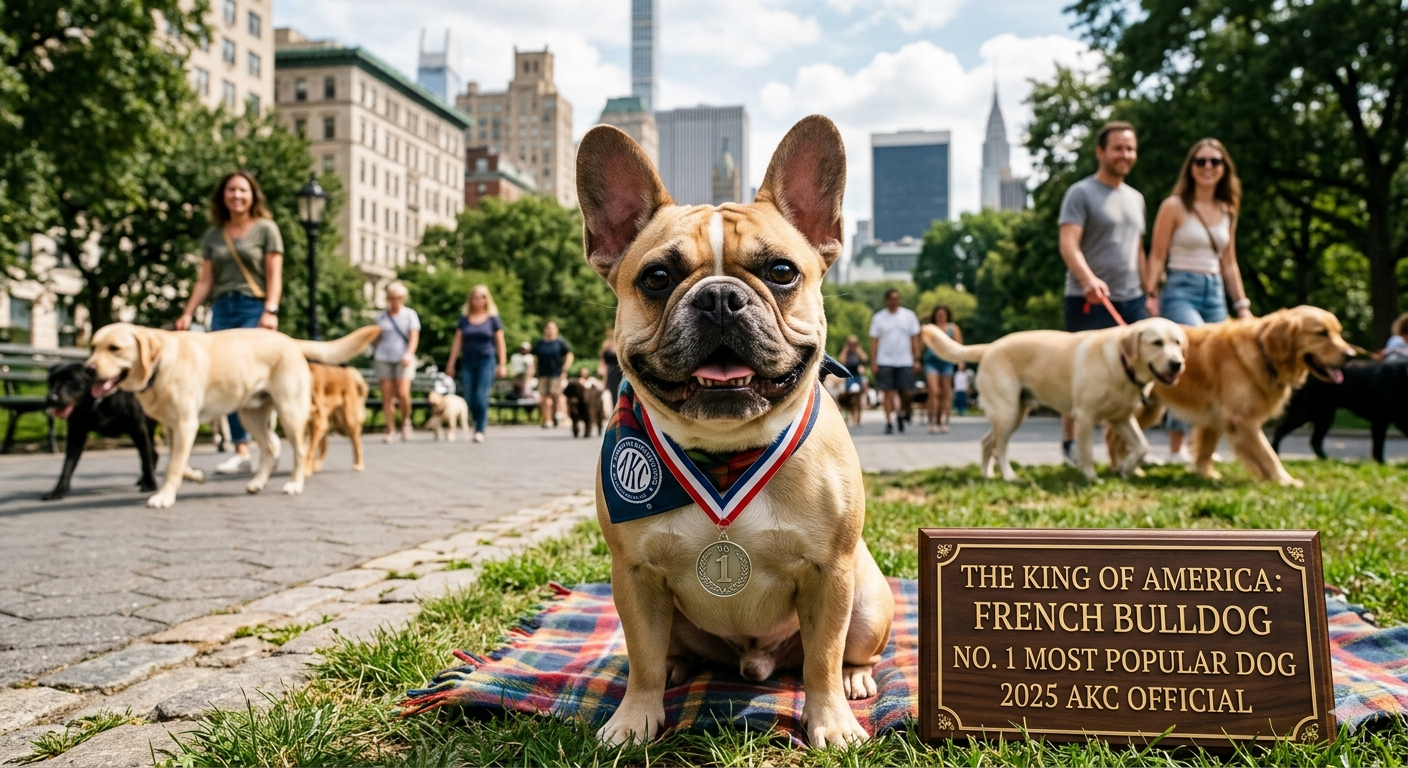
It is official: for the fourth consecutive year, the French Bulldog is the most popular dog breed in America, retaining the top spot in the American Kennel Club’s (AKC) 2025 registration rankings. This compact, affectionate, and charismatic breed has captured the hearts of millions, but its meteoric rise also brings significant responsibilities.
This comprehensive guide covers everything you need to know about the 2025 AKC story, why these dogs are so beloved, essential care tips, and how to be a responsible owner of this unique breed.
Part 1: The 2025 AKC Story: Four Years at the Top
The American Kennel Club (AKC) is the largest purebred dog registry in the world. Each year, they release their registration statistics, which serve as the definitive ranking of breed popularity in the United States.+1
The Current Standing
The AKC’s 2025 data confirms that the French Bulldog is America’s No. 1 dog breed. This is not a fleeting trend; it is the fourth year in a row the Frenchie has held this coveted position, beating out long-time champions and other beloved family dogs.+1
Top 5 AKC Breeds of 2025:
- French Bulldog
- Labrador Retriever (Held the top spot for 31 years before the Frenchie took over in 2022)
- Golden Retriever
- German Shepherd Dog
- Poodle
The Frenchie’s Historical Climb
The French Bulldog’s journey to the top has been remarkably rapid. Looking back, we can see a clear upward trajectory:
- 2012: Ranked No. 14.
- 2021: Ranked No. 2.
- 2022: Officially took the No. 1 spot from the Labrador Retriever.
- 2023, 2024, 2025: Maintained its status as America’s most popular breed.
The AKC notes that the breed’s adaptability, charming temperament, and ability to thrive in various living situations mean its popularity shows little sign of slowing down.
Part 2: Reasons for the French Bulldog’s Massive Popularity
Why are Americans so obsessed with the Frenchie? The breed offers a “complete package” of traits that fit perfectly into modern lifestyles, particularly those in urban and suburban environments.
1. Adaptability to Small-Space Living
This is perhaps the primary driver of their popularity in recent years. Frenchies are the ideal city dog.
- Compact Size: At 20 to 28 pounds, they are sturdy but small enough to live comfortably in apartments or small homes without needing a large yard.
- Low to Moderate Energy: They do not require hours of vigorous exercise like working or sporting breeds. A few short walks and some indoor playtime are usually sufficient.+1
2. Charismatic and Affectionate Temperament
The French Bulldog is a companion dog through and through. They were bred specifically to be loyal and loving pets.+1
- Affectionate: They adore people and often prefer to be as close to their owners as possible (yes, they are lap dogs!).
- Playful and Funny: They are known as the “clowns of the dog world,” with an amusing, playful demeanor that makes them incredibly entertaining to watch.
- Quiet: Unlike many other small breeds, Frenchies are generally not barkers, which is another trait that makes them excellent apartment dwellers.
3. Iconic “Baby-Schema” Looks
Psychologists believe human affection for certain animals is triggered by traits that resemble human babies, known as the “baby schema.” Frenchies are a prime example.
- Expressive Faces: They have large, round, wide-set eyes, short noses, and prominent forehead wrinkles.
- Signature Ears: Their massive, erect “bat ears” give them an alert, curious look.
- Readable Emotions: Owners often find their Frenchies’ expressions incredibly readable, from a happy “smile” to a distinct “scowl.”
4. The Celebrity and Social Media Effect
The breed’s explosion has been heavily fueled by visibility.
- Celebrity Endorsement: High-profile celebrities like Lady Gaga, Dwayne “The Rock” Johnson, and Reese Witherspoon are known Frenchie owners, which turns the dogs into symbols of an aspirational lifestyle.
- Instagram Stardom: Their photogenic faces and amusing antics make them natural stars on social media, further spreading their charm globally.
Part 3: Essential Care Tips for French Bulldogs
While Frenchies are low-maintenance in terms of exercise, they have specific care needs—particularly regarding their health—that every owner must understand.
1. Health and Environmental Management
- Temperature Sensitivity (Critical): As a brachycephalic (flat-faced) breed, French Bulldogs are inefficient at panting to cool themselves down. They are at extremely high risk of heatstroke. They must live in a climate-controlled environment and should never be exercised in hot or humid weather.+2
- Weight Management: Frenchies are prone to obesity, which puts severe pressure on their joints and respiratory system. Monitor their food intake carefully, limit treats, and ensure they get consistent, gentle exercise.+1
2. Grooming Needs
- The Wrinkles: This is non-negotiable. You must clean the folds of skin on their face and around their tail daily.Moisture can become trapped in the wrinkles, leading to painful yeast or bacterial infections. Use pet-safe wipes and ensure the area is dried completely afterward.
- Coats: Their short coats shed moderately and need only weekly brushing to remove loose hair. A monthly bath is usually sufficient.+1
- Nails: Like all dogs, their nails need regular trimming. Because they are less active than some breeds, they may not wear them down naturally.
3. Training and Socialization
- Training: Frenchies are intelligent but can have a distinct stubborn streak. They work best with consistent, positive reinforcement techniques. They may refuse to participate if they decide a command is “boring.” Keep training sessions short and fun.+2
- Socialization: They generally love people but should be exposed to various sights, sounds, and other animals from a young age to ensure they become well-adjusted, confident dogs.
Part 4: The Responsible Ownership Guide
The high demand for French Bulldogs has unfortunately led to irresponsible breeding practices and an uptick in dogs needing rescue. To be a truly responsible owner, you must make informed decisions.
1. The Dilemma of Brachycephalic Health
The same flat-faced traits that make them popular (big eyes, short noses) are the source of their most serious health issues.Responsible ownership requires acknowledging that these dogs have unique medical vulnerabilities.
Major Health Concerns to Watch For:
- Brachycephalic Obstructive Airway Syndrome (BOAS): A combination of narrow nostrils, an elongated soft palate, and other structural abnormalities that make it difficult for them to breathe. Symptoms include loud snoring, noisy breathing, and an inability to handle exercise or heat. BOAS often requires costly surgery.+1
- Intervertebral Disc Disease (IVDD): Like other long-bodied, short-legged breeds (dwarf breeds), Frenchies are at high risk for spinal issues, which can cause severe pain and paralysis.
- Skin, Eye, and Hip Issues: They are prone to allergies, cherry eye, and hip/elbow dysplasia.
2. Where to Get a French Bulldog
Option A: A Responsible AKC Breeder
- The Mark of a Good Breeder: Does not breed for “trendy” or “rare” colors (like merle or blue) that often carry higher health risks. Will gladly show you the health certifications of the puppy’s parents (testing for hips, eyes, and cardiac health). The parents should also have a history of healthy breathing.
- A Responsible Breeder’s Goal: Breeds for the improvement of the breed, prioritizing health and temperament over aesthetics and profit. They will have a waitlist and often want to vet you as a suitable owner.
Option B: Breed-Specific Rescue
- Many French Bulldogs end up in shelters or rescues because previous owners underestimated the cost and effort of caring for their health needs. Adopting from a rescue like the French Bulldog Rescue Network (FBRN) gives a dog a second chance and often means the dog’s health history is already understood.
Where NOT to Get a Puppy:
- Pet stores, websites, or individuals who can ship you a puppy immediately without vetting you. These are almost always the products of puppy mills or irresponsible “backyard breeders” who prioritize speed and profit over the health of the animal.
3. Commitment and Cost
- A Long-Term Promise: Owning a French Bulldog is a 10- to 12-year commitment.
- The True Cost: French Bulldogs are expensive to own. Beyond the high initial cost of the puppy, you must budget for significant ongoing veterinary care. Pet insurance is not optional for this breed; it is an essential financial safety net. A simple surgery for BOAS or IVDD can cost between $4,000 and $10,000.+1
Summary
The French Bulldog’s title as the most popular dog breed in America is a testament to its unparalleled charm and suitability for modern urban life. They are affectionate, funny, and deeply loyal companions. However, being a responsible owner of a Frenchie in 2025 means prioritizing their health above their looks, managing their environment to keep them safe, and budgeting for the specialized care they often require.
FAQ’S
1. Are French Bulldogs difficult to train because of their stubbornness?
Answer: Yes and no. French Bulldogs are intelligent, but they also possess a distinct stubborn streak, often referred to as “the Frenchie attitude.” They will not work for “free.” To train them successfully, you must keep sessions short, fun, and highly rewarding using positive reinforcement. If they don’t see a “what’s in it for me” (usually a treat or toy), they may simply sit down and ignore you. Consistency is essential.
2. Why are French Bulldogs so prone to serious breathing and health problems?
Answer: Their unique look—the large eyes and flat, wrinkled face—is the result of generations of breeding for a specific aesthetic, known as a brachycephalic structure. This structure creates a compressed respiratory system, which leads to Brachycephalic Obstructive Airway Syndrome (BOAS). This combination of structural issues (narrow nostrils, long palate) makes breathing difficult and puts them at extremely high risk of heatstroke and other severe health conditions.
3. I live in a city; is a French Bulldog really the best dog for an apartment?
Answer: Yes, they are often considered the ultimate city dog. Their 20-to-28-pound size is ideal for small spaces. They are relatively low-energy (requiring only short, gentle walks), rarely bark, and are deeply affectionate, meaning they don’t need a massive yard to be happy as long as they get quality time with their owners. They thrive in an indoor, climate-controlled environment.
4. How much should I realistically budget to properly care for a French Bulldog?
Answer: You must budget significantly more than with many other breeds. The initial cost of a puppy from a responsible AKC breeder is high (often $3,000–$6,000+). However, the ongoing costs of veterinary care for potential brachycephalic (breathing), spinal (IVDD), and skin issues can run into the thousands. Because of these risks, purchasing comprehensive pet insurance is essential for this breed; specialized surgeries can easily exceed $5,000 per incident.
5. Why do I need to be careful about where I get a French Bulldog puppy?
Answer: Their No. 1 popularity has fueled massive, unethical breeding operations (puppy mills and backyard breeders) that prioritize profit over the dogs’ health and welfare. These operations often breed for “rare” colors that carry increased health defects or produce dogs with severe, untreated breathing difficulties. A responsible AKC breeder performs rigorous health testing on parent dogs to minimize these issues. Finding a healthy puppy from a responsible source is crucial for the animal’s well-being and to avoid heartbreaking medical challenges.