Last Updated on October 25, 2026 by Dogs Vets
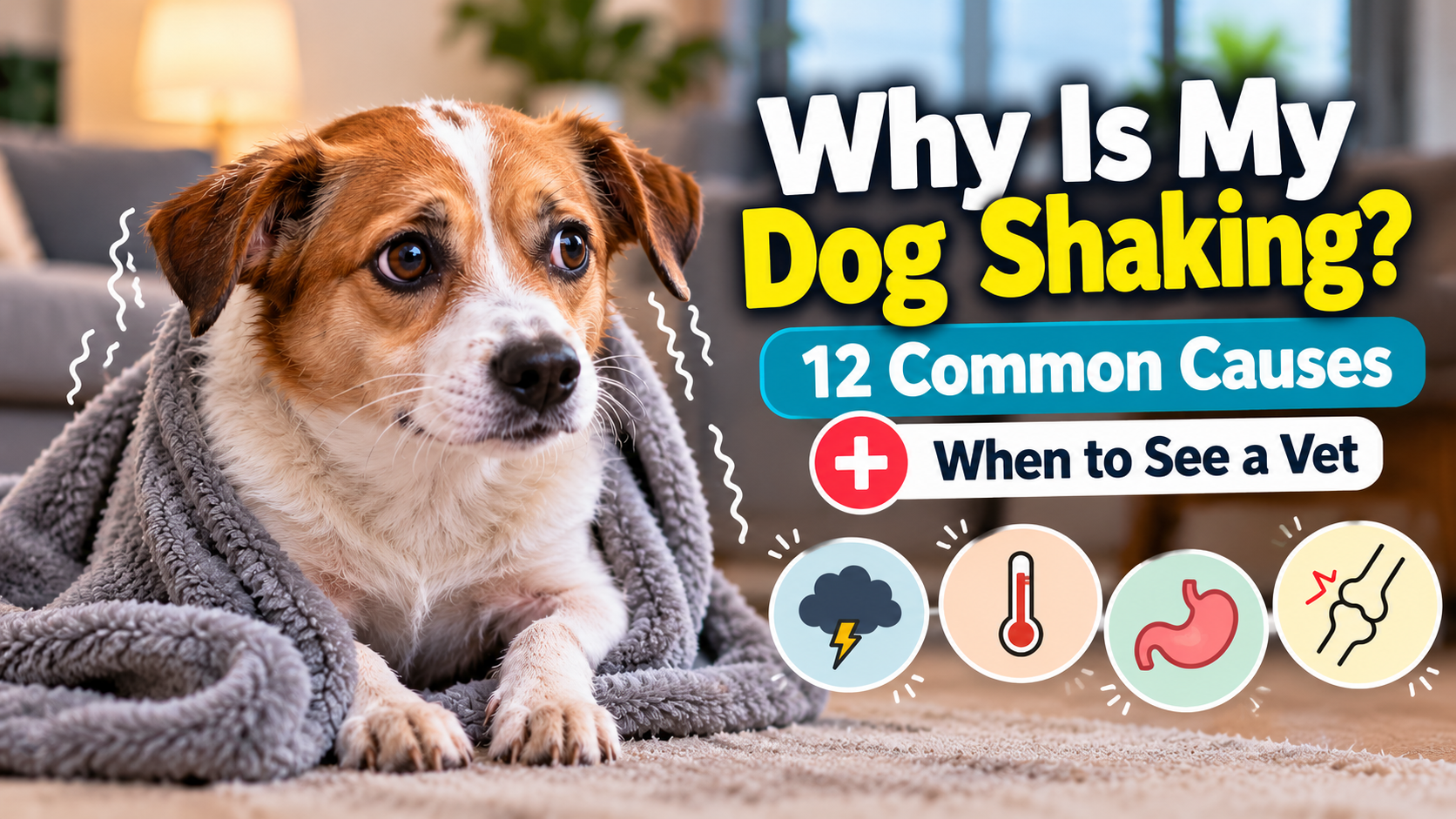
Seeing your dog shake or tremble can be alarming. One minute they’re fine, the next their whole body is quivering. The good news? Most of the time it’s harmless. The not-so-good news? Sometimes it’s a sign something more serious is going on.
This guide breaks down the most common reasons dogs shake, how to tell the difference between normal and worrying shaking, and exactly when you should call the vet.
Why Do Dogs Shake? The Most Common Causes
Dogs shake for many of the same reasons humans do — and a few unique ones. Here are the top reasons veterinarians see:
1. Cold or Wet
Shivering is the body’s way of generating heat. Small breeds, short-coated dogs, puppies, and seniors are especially prone to this. A wet dog after a bath or rainy walk will often shake until dry.
2. Excitement or Anticipation
Many dogs vibrate with pure joy when you pick up the leash, open the treat jar, or come home from work. This is completely normal and usually stops once the exciting thing happens.
3. Anxiety, Fear, or Stress
Thunderstorms, fireworks, car rides, vet visits, or being left alone can all trigger trembling. You’ll often see other stress signals too: panting, pacing, tucked tail, or trying to hide.
4. Pain or Discomfort
This is one of the most overlooked causes. Arthritis, back pain, dental pain, abdominal discomfort, or an injury can all make a dog tremble. The shaking is often subtle and paired with stiffness, reluctance to move, or guarding a body part.
5. Nausea
Just like people, dogs can feel queasy. Motion sickness, an upset stomach, or something they ate can cause trembling along with lip licking, drooling, or swallowing repeatedly.
6. Low Blood Sugar (Hypoglycemia)
Especially common in toy breeds and young puppies. Their small bodies don’t store much energy, so skipping a meal or burning through calories quickly can drop blood sugar and cause shaking, weakness, or a glassy-eyed look.
7. Poisoning or Toxin Exposure
Sudden, intense shaking (often with vomiting, drooling, or restlessness) can signal something toxic was eaten — chocolate, xylitol (in sugar-free gum), grapes/raisins, certain mushrooms, snail bait, marijuana, or human medications.
8. Aging & Muscle Weakness
Senior dogs sometimes develop mild tremors, especially in the hind legs, due to muscle loss or neurological changes.
9. Medication Side Effects
Some medications (including certain flea/tick preventives if given incorrectly) can cause tremors.
10. Neurological Conditions
These include idiopathic head tremors, “shaker syndrome” (more common in small white breeds), seizures, or other neurological issues. Seizures usually involve loss of awareness, paddling, or stiffening.
11. Fever or Illness
Infections or systemic illness can cause shivering as the body tries to regulate temperature.
12. Breed Tendencies
Some small or thin-coated breeds (Chihuahuas, Italian Greyhounds, etc.) simply tremble more easily as part of their normal behavior.
When Should You Worry? Red Flags
Most shaking that stops once the dog is warm, calm, or the exciting event is over is nothing to panic about. Contact your veterinarian promptly (or go to emergency care) if you notice any of these:
- Shaking that starts suddenly with no obvious reason
- Trembling that continues even after warming or calming your dog
- Vomiting, diarrhea, excessive drooling, or pale/blue gums
- Weakness, stumbling, collapse, or inability to stand
- Signs of a possible seizure (loss of awareness, paddling, stiffness)
- Known or suspected toxin ingestion
- Shaking paired with pain signals (limping, hunched posture, crying)
- A puppy or toy breed that seems weak or disoriented while shaking
Rule of thumb: If your dog is otherwise acting normal (eating, drinking, responsive, moving around), you can often monitor for a short time. If anything else seems “off,” call the vet.
What You Can Do Right Now
- Check the environment — Is it cold? Is your dog wet? Warm them up and dry them thoroughly.
- Look for triggers — Did something scary or exciting just happen?
- Observe the whole dog — Are they responsive? Can they walk normally? Any other symptoms?
- Offer a small meal (especially for small breeds or puppies) if low blood sugar is possible.
- Do not give human medications — Many are toxic to dogs.
- Call your vet or a pet poison hotline if you suspect toxins (ASPCA Animal Poison Control: 888-426-4435 — a fee may apply).
Frequently Asked Questions
Why is my dog shaking but not cold?
Anxiety, excitement, pain, nausea, low blood sugar, or a medical issue are the most common non-temperature reasons.
Why is my dog shaking and panting?
This combination often points to stress, anxiety, pain, or overheating. It can also occur with nausea or toxin exposure.
Why is my senior dog shaking?
Age-related muscle weakness, arthritis pain, or neurological changes are frequent causes. A vet check is a good idea to rule out treatable issues.
Why is my puppy shaking?
Puppies can shake from cold, excitement, fear, or low blood sugar. Persistent or severe shaking needs prompt veterinary attention.
Is it normal for small dogs to shake a lot?
Yes — many small and thin-coated breeds tremble more easily due to their size and metabolism. Context still matters.
Can dogs shake from nightmares?
Dogs can twitch or paddle lightly during REM sleep. Full-body intense shaking while awake is different and should be evaluated if concerning.
Final Thoughts
Most of the time, a shaking dog is simply cold, excited, or a little stressed. Paying attention to the context and any other symptoms will tell you whether it’s everyday behavior or something that needs professional help.
When in doubt, call your veterinarian. It’s always better to check and get peace of mind than to wait and worry.
References
- PetMD: Why Do Dogs Shake? (Updated 2026)
- The Vet Desk: Why is My Dog Shaking? Vet Explained Causes & Suggestions (Dr. Joanna Woodnutt, BVM BVS)
- Dogster: Why Do Dogs Shake? Vet-Reviewed Causes & How to Handle It
- PetPlace: Why Is My Dog Shaking? 10 Common Causes of Trembling in Dogs
- Vetster: Why is my dog shaking?
- WebMD: Dog Shivering or Trembling: Causes and Treatments