Last Updated on October 25, 2026 by Dogs Vets
Most dog owners are surprised when they learn the answer.
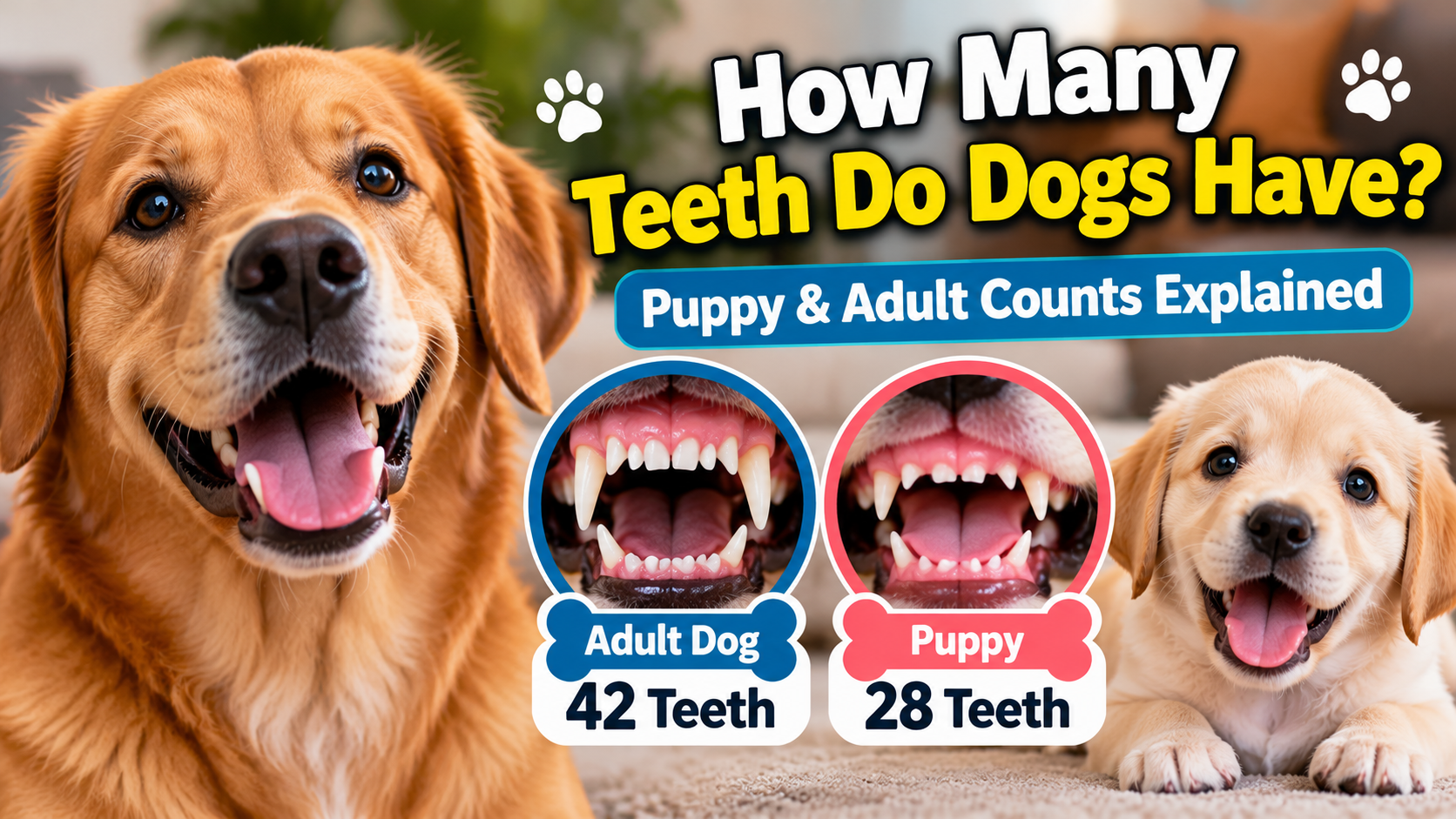
Adult dogs have 42 permanent teeth.
Puppies have 28 baby (deciduous) teeth.
That’s more than humans (who typically have 32 adult teeth). Here’s everything you need to know about dog teeth, from puppyhood through adulthood.
Puppy Teeth vs Adult Teeth
| Life Stage | Number of Teeth | Details |
|---|---|---|
| Puppy (baby teeth) | 28 | No molars |
| Adult dog | 42 | Full permanent set |
Puppies are born without visible teeth. Their baby teeth begin erupting around 3–4 weeks of age and are usually fully present by 6–8 weeks. These sharp little teeth are replaced by the permanent set between roughly 3 and 7 months of age. Most dogs have their complete adult set by 6–7 months old.
Types of Dog Teeth and What They Do
Adult dogs have four types of teeth:
- Incisors (12 total) – Front teeth used for nibbling, grooming, and picking up small items
- Canines (4 total) – The large “fang” teeth used for grasping and holding
- Premolars (16 total) – Shearing and crushing food
- Molars (10 total) – Back teeth used for grinding (puppies do not have baby molars)
The upper jaw has 20 teeth and the lower jaw has 22 teeth.
When Do Dogs Get Their Adult Teeth?
Approximate timeline:
- 3–5 months – Permanent incisors erupt
- 4–6 months – Canines and premolars come in
- 5–7 months – Molars erupt and the full set is usually complete
During this transition, you may find small white baby teeth on the floor or in toys. This is normal. Teething puppies often chew more and may have mild gum sensitivity.
Common Dental Issues Related to Tooth Count
Not every dog ends up with exactly 42 teeth.
Retained baby teeth
Sometimes a baby tooth doesn’t fall out when the adult tooth comes in. This is especially common in small breeds. Retained teeth can cause overcrowding, misalignment, and higher risk of dental disease. A vet may need to extract them.
Missing teeth
Some dogs (particularly certain breeds) are born without all their teeth, or they lose teeth later due to trauma or periodontal disease.
Extra teeth (supernumerary teeth)
Occasionally dogs develop more than 42 teeth, which can also lead to crowding.
Periodontal disease
This is the most common reason adult dogs lose teeth over time. Plaque and tartar build-up lead to gum inflammation and eventual tooth loss if left untreated.
How to Care for Your Dog’s Teeth
- Start brushing early (use a dog-safe toothpaste)
- Offer dental chews and toys approved by the Veterinary Oral Health Council (VOHC) when possible
- Schedule regular veterinary dental check-ups
- Watch for signs of problems: bad breath, red or bleeding gums, difficulty chewing, drooling, or pawing at the mouth
Early detection makes a big difference. Many dogs need professional cleanings under anesthesia at some point in their lives.
Frequently Asked Questions
How many teeth do small dogs have?
The same as large dogs — 42 adult teeth. Small and toy breeds are more prone to retained baby teeth and dental overcrowding because of their smaller jaws.
Do dogs lose their baby teeth?
Yes. Just like human children, puppies shed their 28 baby teeth as the adult teeth come in.
Can dogs have more or fewer than 42 teeth?
Yes. Missing teeth, extra teeth, or retained baby teeth can change the total number. A veterinary dental exam (sometimes with X-rays) is the best way to know for sure.
When should I worry about my dog’s teeth?
Contact your vet if you notice retained baby teeth past 6–7 months, bad breath, red gums, loose teeth, difficulty eating, or swelling around the mouth.
Do dogs get wisdom teeth?
No. Dogs do not have wisdom teeth.
Final Thoughts
Knowing that adult dogs have 42 teeth and puppies have 28 helps you track normal development and spot problems early. Regular home care plus professional veterinary dental check-ups give your dog the best chance of keeping a healthy mouth for life.
If your puppy is teething or your adult dog has bad breath or other dental concerns, a quick check with your veterinarian is always worthwhile.
References
- PetMD: How Many Teeth Do Dogs Have, and Can They Lose Them?
- Dogster: How Many Teeth Do Dogs Have? Vet-Verified Dental Facts
- Finch & Barker: Dog Teeth Chart: How Many Teeth Do Dogs Have?
- Canine Bible: How Many Teeth Do Dogs Have? Chart, Diagram & Dog Dental Facts
- Ask A Vet: How Many Teeth Do Dogs Have, and What Are They Called?
Would you like a version focused more on teething puppies, senior dog dental care, or retained baby teeth next?