Last Updated on November 11, 2026 by Dogs Vets
You’ve tried walking your reactive dog past the neighborhood park, only to find yourself in a tug-of-war when another dog appears. The barking, lunging, or growling makes outings stressful, and you’re searching for a way to help your dog change these behaviors quickly. The choice often comes down to two popular solutions: sending your dog away for a board-and-train program or working with a trainer in your own home. Each approach promises to address reactivity, but the structure and environment differ significantly. Understanding which option delivers noticeable behavioral improvement fastest depends on your dog’s needs, your goals, and the realities of how both programs are delivered.
Defining Reactive Dog Training And Behavioral Challenges
Reactive dog training targets behaviors like barking, lunging, or snapping when a dog feels overwhelmed by specific triggers, such as other dogs, strangers, or loud noises. These reactions are often rooted in fear or overstimulation, not aggression. Effective training focuses on teaching the dog alternative behaviors and helping them feel safer in challenging situations. For instance, a common goal is to teach a dog to look at their owner for a treat instead of reacting to a passing dog. The process requires a structured plan that addresses each dog’s unique triggers and gradually builds their ability to cope in real-world scenarios. As outlined in behavior modification for reactive dogs, consistency and controlled exposure are key to long-term progress.
Comparing Board And Train Programs For Reactivity
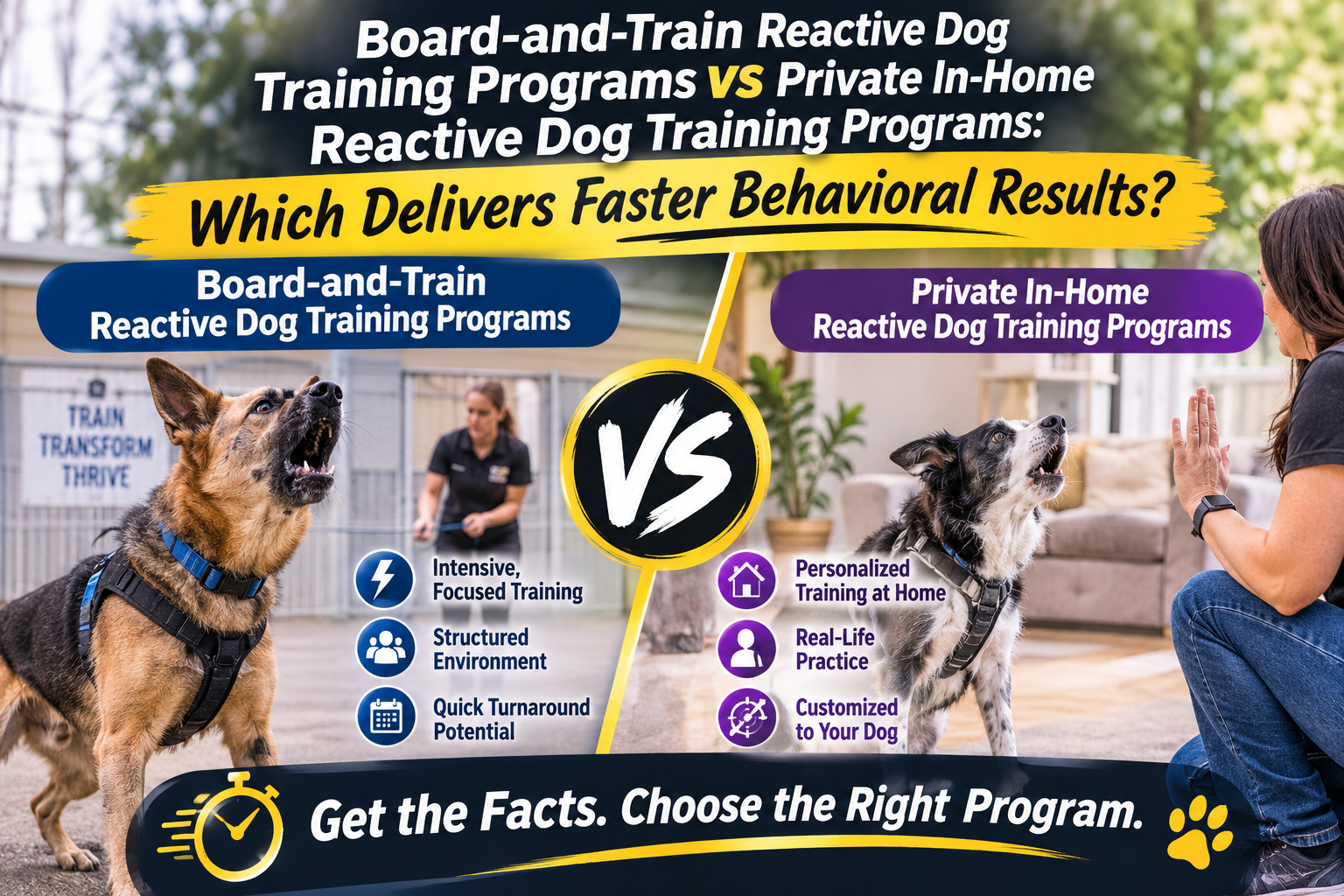
Board-and-train programs involve sending your dog to a professional facility for an intensive, multi-day or multi-week stay. During this time, trainers handle all aspects of your dog’s daily routine and focus on repeated exposure to triggers under controlled conditions. One concrete feature of these programs is the use of structured daily training sessions, which can accelerate the initial learning phase. The immersive environment helps dogs build new habits quickly, as trainers can monitor progress and make immediate adjustments. However, dogs may struggle to transfer these new skills back home, where distractions and family routines differ from the training facility. Comparing generalization of learned behavior in dogs highlights why some owners find that results plateau or require reinforcement once the dog returns home.
Evaluating Private In Home Training For Reactive Dogs
Private in-home Reactive Dog Training Programs bring a qualified trainer directly to your living space, allowing for personalized attention in the environment where your dog’s reactivity occurs most. This approach ensures that training addresses triggers as they happen in daily life, such as visitors arriving or passing dogs outside your own window. The trainer guides both the owner and the dog through real situations, providing immediate feedback and coaching. This method helps dogs generalize their new skills right where they need them, but progress can depend on the owner’s consistency between sessions. If you’re weighing board and train vs private Reactive Dog Training Programs, it’s important to consider your ability to practice assigned exercises between visits for the best results. Many Reactive Dog Training Programs emphasize the importance of involving the entire household in the learning process, so everyone responds to the dog’s behavior consistently.
Determining The Fastest Path To Behavioral Results
The speed of behavioral improvement often hinges on how the dog’s new skills are reinforced and maintained after initial training. Board-and-train options can deliver rapid progress in controlled settings, especially when the dog receives intensive daily practice. However, dogs sometimes require extra time to adapt these changes to their home environment, as new distractions or routines can trigger old habits. On the other hand, private in-home training may produce slower change in the early stages, but the improvements are more likely to stick because the training occurs where the behaviors happen. The decision between board and train vs private Reactive Dog Training Programs often comes down to the owner’s goals: immediate, intensive change or gradual, home-based progress that fits daily life. Owners who can commit to practicing skills between sessions may find in-home options deliver results that last.
Conclusion
If your priority is lasting change where you and your dog live and interact, start with private in-home sessions and commit to consistent practice between visits. For owners who need a quick reset and can follow up with reinforcement at home, board-and-train may jumpstart progress. Assess your daily routine, your dog’s triggers, and your own ability to maintain new behaviors before choosing the right program for your situation.