
There’s nothing quite like that first walk with your new puppy — until they turn into a rocket on a string, dragging you down the sidewalk. Leash pulling is one of the most common (and frustrating) puppy behaviors, but it doesn’t have to stay that way.
With positive reinforcement and consistent practice, you can teach your puppy to walk nicely on a loose leash. The result? Enjoyable walks, better manners, and a more confident dog who looks to you for guidance. Here’s a practical, step-by-step guide that works for most puppies.
Why Puppies Pull on the Leash
Puppies pull because it works — they get to go faster and explore more. They’re also excited by everything (smells, sounds, people, squirrels) and haven’t yet learned that walking beside you is more rewarding.
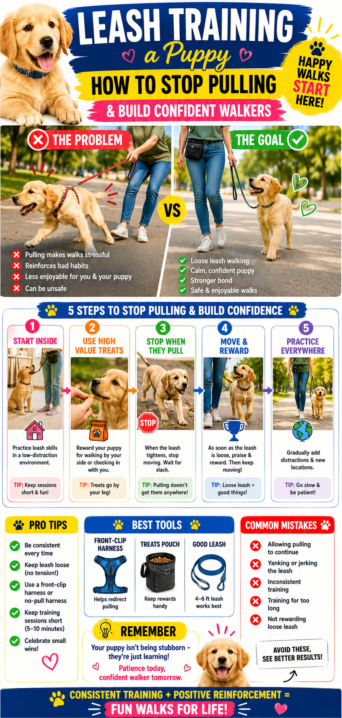
The goal isn’t perfect heeling like a show dog. It’s loose leash walking — a relaxed “J” shape in the leash where your puppy stays near you without constant tension.
Getting Started: Tools and Mindset
- Use a front-clip harness or flat buckle collar (avoid choke or prong collars for puppies).
- Choose a 4–6 foot leash (not retractable for training).
- Bring high-value treats (tiny pieces of chicken, cheese, or hot dogs).
- Keep sessions short and fun — 5–10 minutes at first.
Pro Tip: Start training indoors or in your backyard with minimal distractions before moving to the sidewalk.
For detailed equipment advice, the AKC’s guide to teaching a puppy to walk on leash is an excellent resource.
Step-by-Step Leash Training Plan
1. Introduce the Equipment Positively
Let your puppy drag a lightweight leash around the house (supervised) so they get used to the feeling. Reward calm behavior. Then pick up the leash and walk around indoors, treating whenever they stay close.
2. Teach the “Loose Leash” Concept
Start walking slowly. The second the leash goes tight, stop moving and stand like a tree. Wait for your puppy to turn back or create slack. The moment they do, praise and treat. Then continue walking. This teaches that pulling gets them nowhere, while a loose leash gets them forward.
3. Use Rewards Strategically
Mark and reward your puppy for walking beside you (the “cookie spot”). Use a marker word like “Yes!” or a clicker. Treat frequently at first — every few steps — then gradually space it out.
4. Change Direction
When your puppy forges ahead, calmly say “Let’s go!” and turn the other way. This keeps them paying attention to where you are.
5. Practice “Heel” or “With Me”
Once they’re doing well, add a cue. Practice in different environments, gradually increasing distractions.
6. Build Confidence
Allow some sniffing time on a loose leash (use a “Go sniff” cue). This prevents frustration and makes walks more enjoyable for both of you.
Common Mistakes to Avoid
- Letting them pull to get to smells, people, or other dogs (this reinforces the behavior).
- Inconsistent rules (sometimes allowing pulling, sometimes not).
- Long, overwhelming walks too early.
- Relying only on corrections instead of rewards.
- Expecting perfection right away — puppies have short attention spans.
5 Common Leash Training Questions (and Honest Answers)
1. At what age should I start leash training my puppy?
As soon as you bring them home (usually 8 weeks). Short, positive sessions from day one prevent bad habits from forming.
2. Should I use a harness or collar?
A front-clip harness is often best for puppies because it reduces pulling pressure on the neck and gives you better control.
3. My puppy still pulls after weeks of training — what am I doing wrong?
You might be moving too fast, not rewarding enough, or training in overly distracting places. Go back to easier environments and increase treat frequency.
4. Is it okay to let my puppy pull sometimes?
During dedicated training sessions, no. But you can have “free sniff” walks where you allow more freedom on a long line once they understand the rules.
5. What if my puppy is scared of the leash?
Go very slowly. Pair the leash and harness with treats and play. Never drag or force them. Desensitize one piece at a time.
Final Thoughts
Leash training takes time and patience, but the payoff is huge. You’ll end up with a confident, happy walker instead of a pulling machine. Celebrate small improvements — even a few steps with a loose leash is progress.
Consistency from every family member is key. Some days will be better than others, especially when your puppy is teething or going through a fear period. Stick with it.
How is leash training going with your puppy? What’s been your biggest challenge or success so far? Share in the comments below — I read every one and often feature real owner tips in future posts.
Professional trainers and behaviorists: I’m always looking for strong guest contributions on leash training and puppy manners. Reach out if you have proven methods to share!
This article is for general guidance only. Consult a certified positive reinforcement trainer or your veterinarian for personalized advice, especially if your puppy shows signs of fear, reactivity, or leash aversion.