Last Updated on June 3, 2026 by Dogs Vets
As millions of football fans prepare to travel across North America for the 2026 FIFA World Cup, a surprising concern is emerging among pet owners: What happens if your dog goes missing during the tournament?
With matches spread across the United States, Canada, and Mexico, the 2026 World Cup is expected to become the largest FIFA tournament in history. Massive crowds, unfamiliar environments, busy transportation hubs, and increased travel activity create the perfect conditions for pets to become separated from their owners.
For traveling dog owners, GPS tracking technology may be one of the most effective tools available for preventing a heartbreaking situation from becoming permanent.
Why Lost Pets Are a Growing Concern During Major Sporting Events
Large-scale international events create unique challenges for pet safety. Airports become crowded, hotels experience higher occupancy rates, and public transportation systems operate under increased pressure.
Dogs can become overwhelmed by unfamiliar sounds, fireworks, cheering crowds, and constant movement. Even well-trained pets may panic and run if startled by loud noises or unusual surroundings.
Animal welfare organizations consistently report spikes in lost pet cases during major public events. While most World Cup visitors focus on tickets, accommodations, and transportation, many overlook the importance of a pet recovery plan.
This is where GPS tracking devices are changing the game.
How GPS Dog Trackers Work
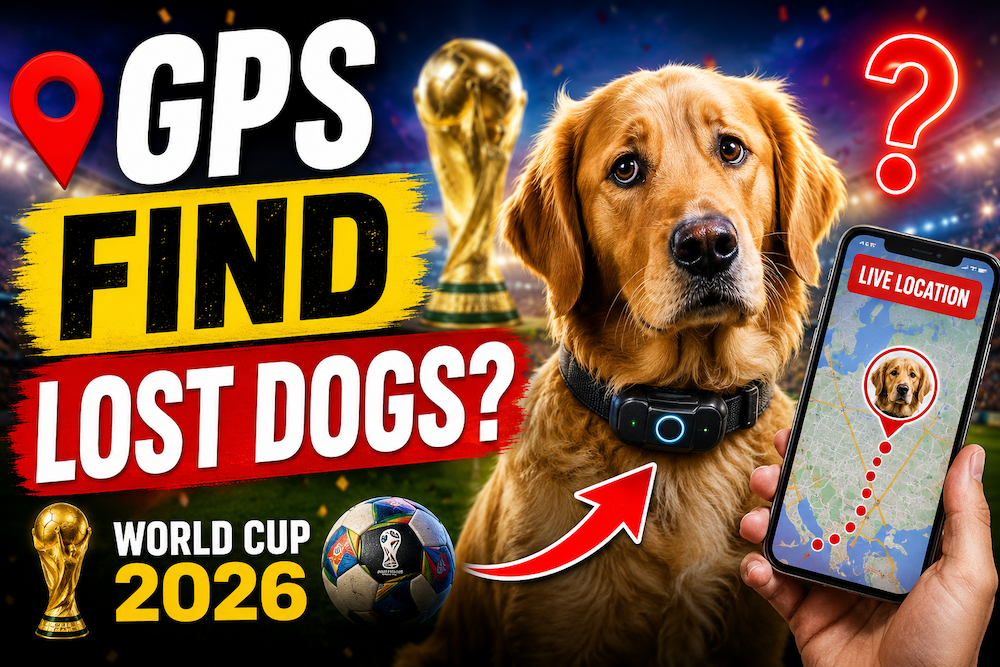
Modern GPS dog trackers attach directly to a dog’s collar and communicate with satellites and cellular networks to provide real-time location updates.
Unlike traditional identification tags or microchips, GPS trackers actively show a pet’s location while they are moving.
Most advanced devices offer features such as:
- Real-time location tracking
- Escape alerts
- Geofencing technology
- Activity monitoring
- Health tracking
- Route history
- Multi-user access for families
If a dog leaves a designated safe zone, the owner receives an instant notification through a smartphone app.
This rapid response can dramatically improve recovery chances.
The Difference Between GPS Trackers and Microchips
Many pet owners mistakenly assume that microchips and GPS trackers serve the same purpose.
They do not.
A microchip contains identification information that must be scanned by a veterinarian, shelter, or animal control officer. It does not provide location tracking.
GPS trackers actively transmit a dog’s location in real time.
Think of a microchip as a permanent ID card, while a GPS tracker functions like a live navigation system.
Experts generally recommend using both technologies together for maximum protection.
Why the 2026 World Cup Creates Unique Risks for Dog Owners
Several factors make the 2026 World Cup particularly challenging for traveling pet owners.
1. Increased Travel Stress
Dogs thrive on routine. Long-distance travel can disrupt feeding schedules, exercise habits, and sleeping patterns.
Stress can increase the likelihood of escape attempts.
2. Unfamiliar Environments
Hotels, vacation rentals, campgrounds, and temporary accommodations may contain unsecured exits, unfamiliar scents, and distractions.
A dog that never escapes at home may bolt in a new environment.
3. Massive Crowds
The World Cup is expected to attract millions of visitors across host cities.
Crowded streets can make visual searches for a missing pet extremely difficult.
4. Noise and Excitement
Celebrations, public watch parties, and fan festivals often generate loud sounds that can trigger anxiety in animals.
Some dogs may react unpredictably when exposed to large gatherings.
How GPS Trackers Improve Recovery Rates
The first few hours after a pet goes missing are often critical.
Without GPS technology, owners typically rely on:
- Printed flyers
- Social media posts
- Local shelters
- Neighborhood searches
- Community groups
While these methods remain valuable, they can take hours or days to produce results.
GPS trackers provide immediate location information.
Instead of wondering where a dog went, owners can often see movement patterns directly from their phones.
This significantly reduces search time and increases the likelihood of a successful reunion.
Features to Look for Before Traveling to the World Cup
Not all GPS pet trackers are created equal.
Before traveling, pet owners should consider the following features:
Real-Time Tracking
Location updates should occur frequently, ideally every few seconds.
Long Battery Life
A tracker is only useful if it remains powered.
Look for devices capable of lasting multiple days on a single charge.
International Coverage
Since the 2026 World Cup spans three countries, ensure the tracker supports cross-border functionality.
Waterproof Design
Travel exposes pets to unpredictable weather conditions.
A waterproof device provides additional reliability.
Geofence Alerts
This feature creates virtual boundaries around designated safe areas.
If a dog exits the zone, the owner receives an alert instantly.
Additional Pet Safety Tips for World Cup Travelers
GPS tracking should be part of a broader safety strategy.
Experts recommend:
Keep Identification Updated
Ensure collar tags contain current contact information.
Update Microchip Records
Many owners forget to update phone numbers after moving.
Verify all records before traveling.
Carry Recent Photos
Recent photos help shelters and volunteers identify a missing dog quickly.
Practice Recall Commands
Reliable recall training can prevent many escape situations.
Research Local Veterinary Clinics
Know where emergency veterinary services are located near your accommodations.
The Future of Smart Pet Technology
GPS tracking technology continues to evolve rapidly.
Newer devices incorporate artificial intelligence, health monitoring, activity analysis, and predictive behavior tracking.
Some systems can detect unusual movement patterns that may indicate stress, injury, or potential escape behavior.
As smart pet technology becomes more sophisticated, experts expect GPS tracking to become as common as microchipping.
For travelers attending major international events such as the 2026 FIFA World Cup, these tools provide an additional layer of security and peace of mind.
Final Verdict: Are GPS Trackers Worth It During the 2026 World Cup?
For dog owners planning to attend the 2026 FIFA World Cup, GPS trackers offer one of the most practical investments in pet safety.
While no technology can completely eliminate the risk of a lost pet, GPS trackers dramatically improve the chances of a fast recovery.
The combination of crowded venues, extensive travel, unfamiliar environments, and heightened excitement creates circumstances where even the most well-behaved dogs can become separated from their owners.
In those critical moments, knowing exactly where your dog is can make all the difference.
As the world’s biggest sporting event approaches, responsible pet owners are increasingly viewing GPS tracking not as a luxury, but as an essential travel companion.
The best World Cup memory should be celebrating your team’s victory—not searching for a missing dog.
You can add the following FAQ section near the end of the article. This helps target Google’s “People Also Ask” results and improves SEO performance.
Frequently Asked Questions (FAQs)
1. Can a GPS tracker really help find a lost dog?
Yes. GPS trackers provide real-time location data, allowing owners to see exactly where their dog is through a mobile app. This can significantly reduce search time and improve recovery chances compared to relying solely on flyers, social media posts, or shelter reports.
2. Are GPS dog trackers better than microchips?
GPS trackers and microchips serve different purposes. A microchip stores identification information that must be scanned by a veterinarian or shelter, while a GPS tracker actively shows your dog’s current location. For maximum protection, pet experts recommend using both.
3. Will GPS dog trackers work during the 2026 FIFA World Cup?
Most modern GPS dog trackers should work effectively during the 2026 FIFA World Cup, provided they have coverage in the United States, Canada, and Mexico. Before traveling, verify that your device supports international roaming and cross-border tracking.
4. How accurate are GPS trackers for dogs?
Many high-quality GPS dog trackers can pinpoint a dog’s location within a few meters under normal conditions. Accuracy may vary depending on satellite visibility, weather conditions, and cellular network coverage.
5. What should I do immediately if my dog goes missing during the World Cup?
First, check your GPS tracking app if your dog is wearing a tracker. Then notify local animal shelters, veterinary clinics, hotel staff, and nearby pet recovery groups. Acting quickly within the first few hours can greatly increase the likelihood of recovery.
6. Can GPS trackers send alerts when my dog leaves a safe area?
Yes. Most modern trackers include geofencing technology, which allows owners to create virtual boundaries. If a dog leaves the designated area, the owner receives an instant notification on their smartphone.
7. Are GPS dog trackers waterproof?
Many GPS dog trackers are designed to be water-resistant or waterproof. However, protection levels vary between brands, so always check the manufacturer’s specifications before purchasing.
8. How long does a GPS dog tracker battery last?
Battery life depends on the model and tracking frequency. Some devices last 24 hours, while others can operate for several days or even weeks on a single charge.
9. Is a GPS tracker worth buying for occasional travel?
Yes. Even if your dog is normally safe at home, travel introduces unfamiliar environments, crowds, and distractions that can increase the risk of pets becoming lost. A GPS tracker provides added peace of mind during trips.
10. What is the best way to protect my dog during the 2026 World Cup?
The best strategy combines multiple safety measures, including a GPS tracker, updated microchip information, identification tags, recent photographs, proper leash use, and awareness of local veterinary and animal shelter resources.