Last Updated on October 29, 2026 by Dogs Vets
Cold weather, rain, snow, and icy sidewalks can make a dog’s usual exercise routine harder to maintain. On days when outdoor walks need to be shorter or postponed, it helps to have a few activities ready at home.
Dogs still benefit from movement, opportunities to explore, training, and interaction with their owners. Indoor games can provide some of that stimulation without requiring a large house, expensive equipment, or hours of preparation.
The key is to choose activities that suit your dog’s age, health, energy level, and experience. A young, energetic dog may enjoy learning new tricks, while an older dog may prefer a gentle scent game that does not involve jumping or rushing around.
Here are 10 indoor activities for dogs in winter, along with a simple weekly plan to help you get started.
1. Play a hide-and-seek game
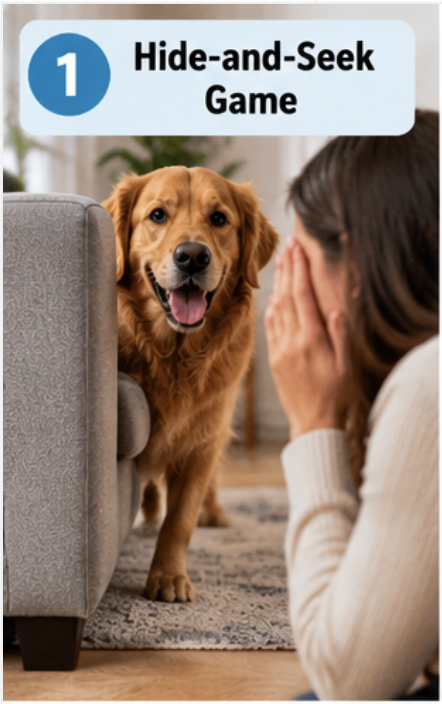
Hide-and-seek is an easy indoor game that encourages your dog to pay attention to you and use their senses.
Start by asking your dog to wait in one room while you hide somewhere easy to find, such as behind a doorway. Call your dog using a familiar cue and reward them when they locate you.
Keep the first few rounds simple. Once your dog understands the game, you can choose slightly less obvious hiding places, provided the space is safe and accessible.
Avoid hiding in areas where your dog could knock over objects, climb furniture, or become trapped.
Best for: Dogs that enjoy interacting with their owners and already respond to a recall cue.
2. Try a simple scent-search game
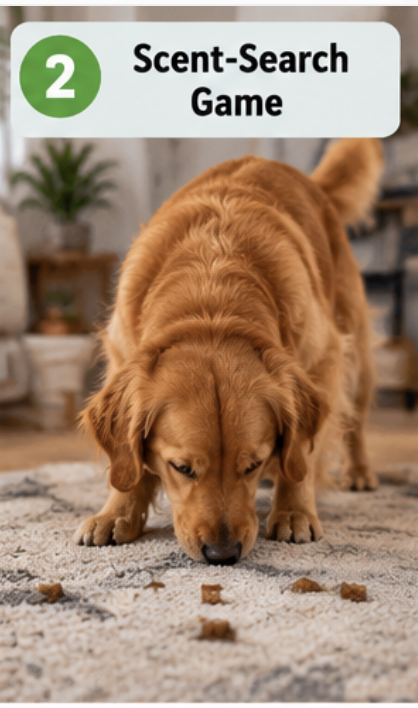
Dogs rely heavily on their sense of smell, making scent games a useful way to encourage exploration indoors.
Begin with a few small pieces of your dog’s regular kibble or suitable treats. Let your dog see you place one on the floor in an easy-to-find location. Use a cue such as “find it” and encourage them to search.
Once your dog understands the activity, hide the food in slightly more challenging but accessible places.
Keep the hiding spots away from electrical cords, cleaning products, houseplants, and small objects that could be swallowed. Supervise the game throughout.
Best for: Dogs that enjoy sniffing and searching, including many dogs that cannot safely engage in vigorous indoor play.
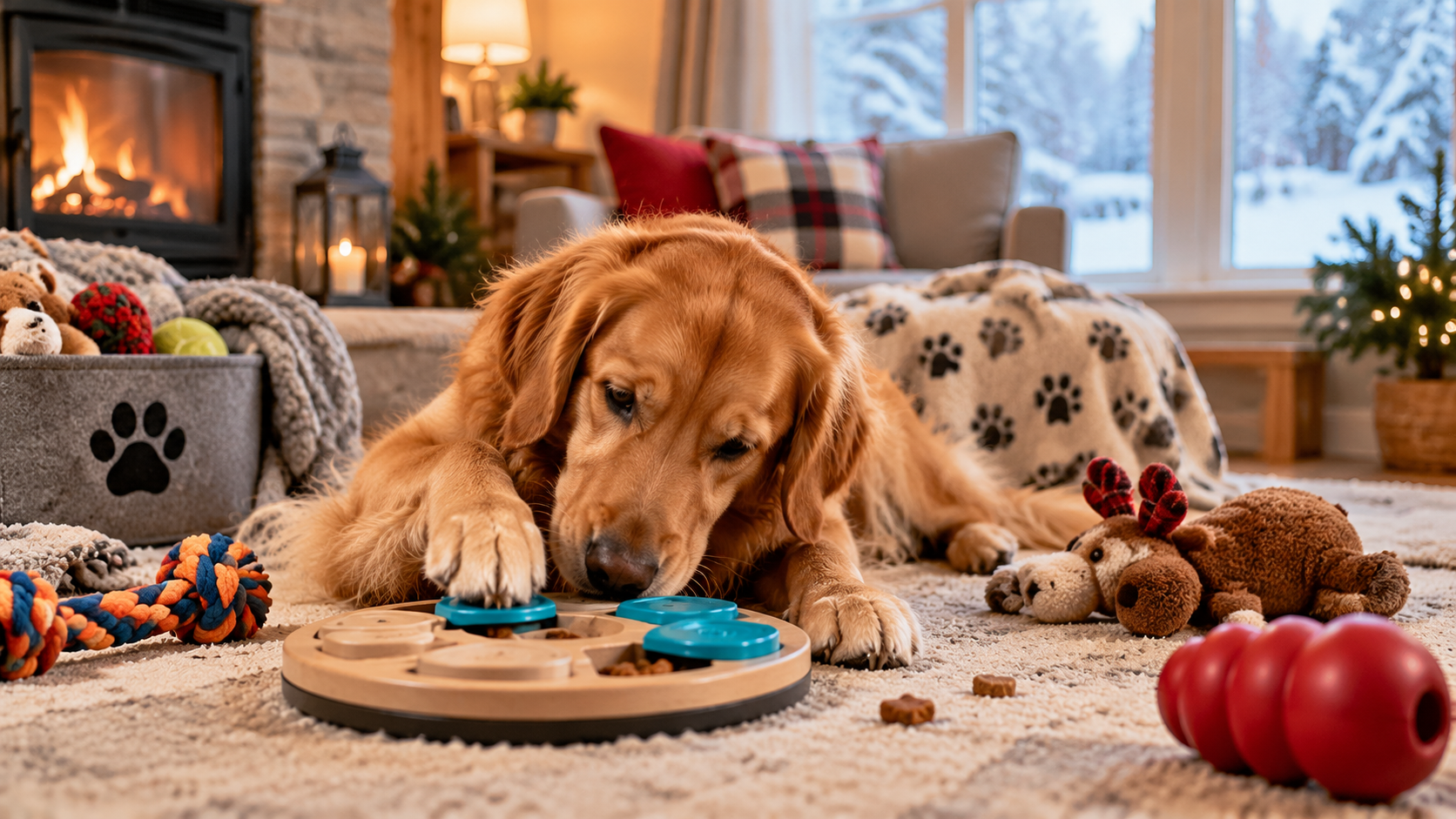
3. Introduce a puzzle feeder
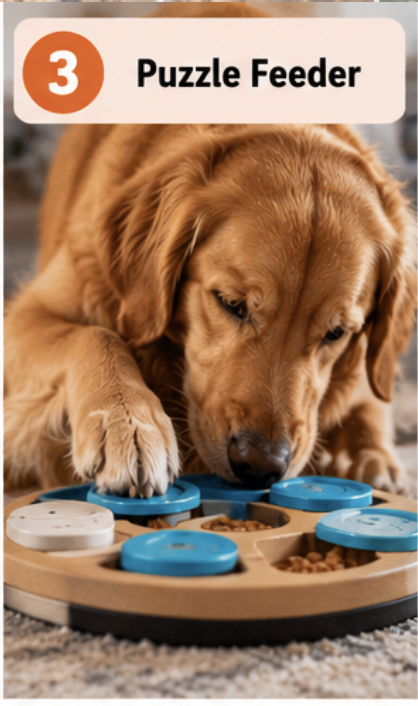
Puzzle feeders and food-dispensing toys encourage dogs to work for small portions of food rather than eating directly from a bowl.
Choose a design appropriate for your dog’s size, chewing habits, and experience. Begin with an easy setting so your dog can understand how the toy works.
Use part of your dog’s normal daily food allowance where possible, rather than adding lots of extra treats. Check the toy for damage before and after use, and supervise your dog, especially during the first few sessions.
A puzzle should be challenging enough to maintain interest without becoming so difficult that the dog gives up or starts chewing unsafe parts.
Best for: Dogs that enjoy food-based activities and benefit from a little extra engagement at mealtimes.
4. Teach a new trick
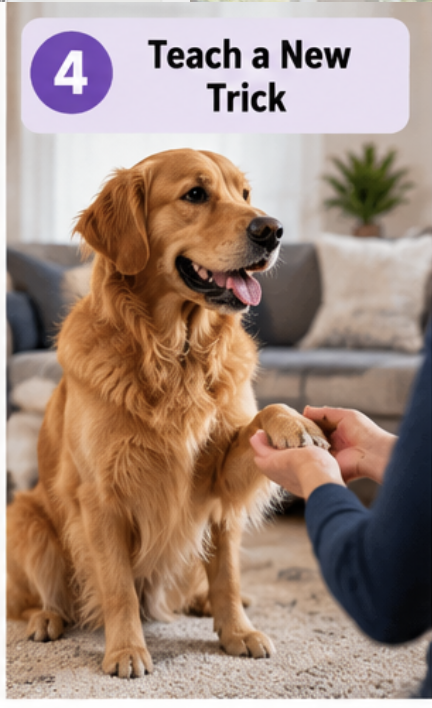
Winter is a convenient time to practise short training sessions indoors.
Choose one skill, such as touching your hand with the nose, settling on a mat, spinning slowly, or responding to a familiar cue. Break the skill into small steps and reward progress.
Keep sessions brief and finish while your dog is still interested. Use rewards that fit within their normal diet and avoid forcing a movement that causes discomfort.
For older dogs or dogs with mobility limitations, choose skills that can be practised comfortably without jumping, twisting sharply, or repeatedly standing up.
Best for: Dogs of many ages and experience levels, with the activity adapted to their physical abilities.
5. Build a simple indoor obstacle course
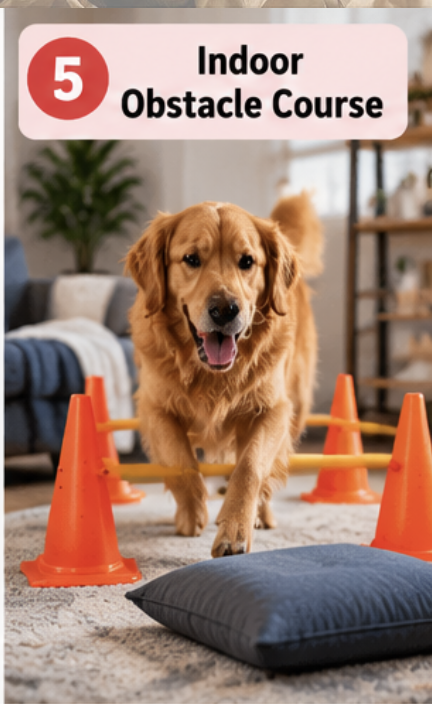
A small obstacle course can add movement to an indoor routine, provided there is enough safe space.
Use stable, low objects to create a simple route around the room. You might guide your dog around a chair, between two widely spaced objects, or onto a non-slip mat.
Keep the route clear of sharp corners, unstable furniture, slippery floors, and breakable items. Do not encourage your dog to jump over furniture or climb onto high surfaces.
For dogs with joint problems, balance issues, or other medical concerns, ask your veterinarian whether this type of activity is appropriate.
Best for: Healthy dogs that enjoy gentle movement and can navigate the space safely.
6. Play a supervised toy game
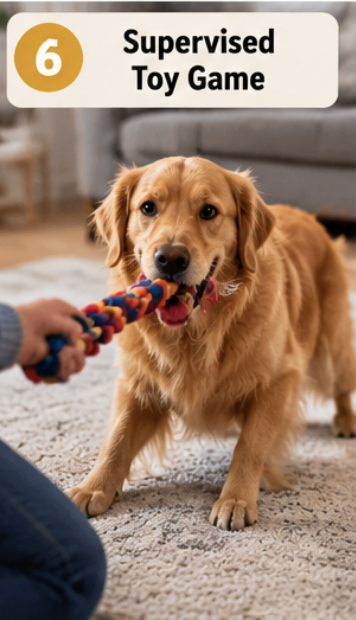
A familiar toy can provide an easy way to interact with your dog when outdoor activity is limited.
Try a short game of tug with a suitable toy, or roll a soft toy across a non-slip floor for your dog to retrieve. Use clear start and finish cues, and keep movements controlled.
Avoid throwing toys near stairs, slippery surfaces, glass furniture, or crowded areas. Choose toys that are appropriate for your dog’s size and chewing strength.
If your dog becomes overly excited, struggles to settle, or starts grabbing clothing and household objects, pause the game and switch to a calmer activity.
Best for: Dogs that enjoy interactive play and can participate without unsafe chasing or rough movement.
7. Practise settling on a mat
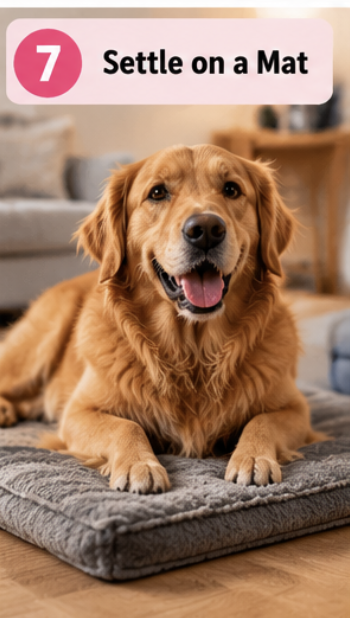
Not every useful indoor activity needs to be energetic.
Teaching your dog to relax on a mat can help create a predictable resting routine, particularly when visitors are coming over or the weather keeps everyone inside.
Place a comfortable mat in a quiet location. Reward your dog for approaching it, standing on it, sitting down, or lying comfortably. Gradually reward longer periods of relaxed behavior.
Do not use the mat as a punishment or force your dog to remain there when distressed. The goal is to help them associate the space with comfort and positive experiences.
Best for: Dogs that need help developing calm routines, including those living in busy households.
8. Make a simple food-search box
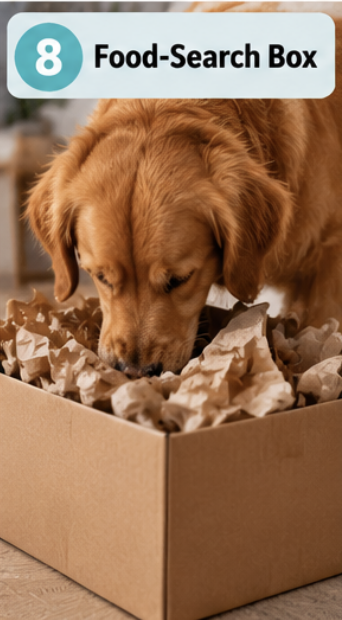
A shallow cardboard box can become a supervised search activity when used carefully.
Place a few pieces of kibble inside the box and allow your dog to sniff them out. Start with an open, mostly empty box so the activity remains easy.
Only use materials your dog can safely interact with. Remove staples, tape, plastic packaging, and other small parts. If your dog tends to shred and swallow cardboard, choose another activity.
Stay nearby throughout the game and remove the box when the session ends.
Best for: Dogs that enjoy sniffing and exploring, provided they do not ingest the materials.
9. Practise basic obedience cues
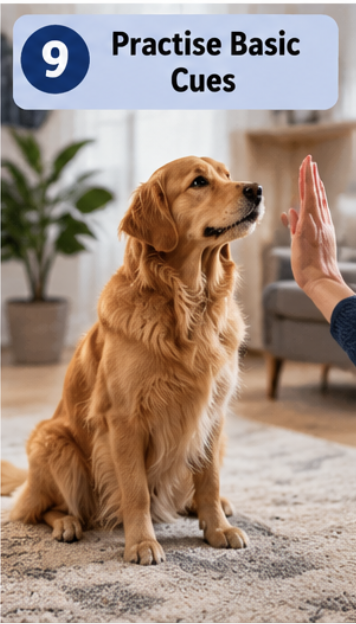
A short indoor training session can reinforce useful skills while giving your dog something constructive to do.
Choose one or two familiar cues, such as sit, down, stay, come, or touch. Practise in a quiet room before introducing more distractions.
Reward correct responses promptly and avoid repeating cues endlessly when your dog is confused or tired. If a skill is new, make the steps easier rather than expecting immediate perfection.
For dogs that become frustrated during training, take a break and return to an easier exercise.
Best for: Dogs of many ages, especially those that enjoy learning and working with their owners.
10. Rotate toys to keep things interesting
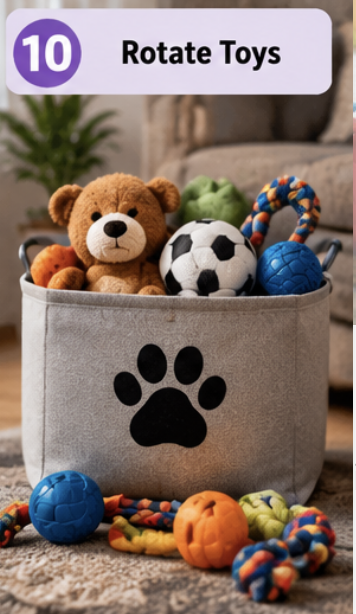
Dogs may lose interest when the same toys are always available in exactly the same way.
Instead of presenting every toy at once, keep a selection available and rotate appropriate toys periodically. Reintroduce a familiar toy in a new safe game, such as a short retrieval session or a supervised search.
Toy rotation does not mean leaving a dog alone with unfamiliar or damaged objects. Check each toy for loose parts, sharp edges, or damage that could create a choking or ingestion hazard.
Choose durable, suitable toys and supervise chewing when needed.
Best for: Households that already have several appropriate dog toys and want to make their routine more varied.
A simple seven-day indoor enrichment plan
You do not need to use every activity every day. A short, manageable routine is often easier to maintain than an elaborate schedule.
| Day | Suggested activity | Practical approach |
|---|---|---|
| Monday | Scent search | Hide a few pieces of kibble in easy locations |
| Tuesday | Trick training | Practise one skill for a few short sessions |
| Wednesday | Puzzle feeder | Use part of the dog’s regular meal |
| Thursday | Hide-and-seek | Start with obvious hiding places |
| Friday | Mat training | Reward calm, relaxed behavior |
| Saturday | Toy game | Keep movement controlled and supervised |
| Sunday | Favorite activity | Repeat the game your dog enjoys most |
Adjust the schedule to your dog’s needs. Puppies may need more frequent rest breaks, while senior dogs or dogs with health conditions may need lower-impact activities.
This plan is a starting point, not a substitute for an appropriate exercise routine or veterinary advice.
How much indoor activity does a dog need?
There is no single amount that suits every dog.
Breed, age, fitness, health, temperament, and the activity itself all influence what is appropriate. A scent game may be tiring for one dog, while another may need additional movement or outdoor exploration.
Pay attention to your dog’s behavior. If they seem uncomfortable, excessively excited, frustrated, or tired, stop or simplify the activity.
Indoor enrichment should complement appropriate exercise, rest, social interaction, and opportunities to explore the outside world. When the weather permits, safe outdoor walks and sniffing time remain valuable.
If your dog has a medical condition, mobility problem, or sudden change in behavior, consult your veterinarian before substantially changing their activity routine.
Common mistakes to avoid
Making games too difficult too quickly
A dog that cannot solve a puzzle or understand a new trick may become frustrated. Start with simple steps and increase difficulty gradually.
Using slippery floors
Fast turns and sudden stops on slippery surfaces can increase the risk of injury. Choose a non-slip area and avoid high-speed games in confined spaces.
Leaving toys unsupervised when they are unsafe
Some dogs chew and swallow pieces of toys, cardboard, or fabric. Choose suitable materials, inspect toys regularly, and supervise activities that carry a risk of ingestion.
Replacing all outdoor activity with indoor games
Indoor games are useful when conditions make outdoor exercise difficult, but they do not automatically meet every dog’s physical and behavioral needs. Resume safe outdoor activities when appropriate.
Ignoring the need for rest
More activity is not always better. Dogs need time to rest, and some become more excitable when activities are too intense or continuous.
Frequently asked questions
What are the best indoor activities for dogs in winter?
Scent searches, hide-and-seek, puzzle feeders, trick training, mat training, and supervised toy games are useful options. The best choice depends on the dog’s age, health, interests, and available space.
How can I entertain my dog indoors without buying toys?
Try hide-and-seek, basic training, or a supervised search using a few pieces of the dog’s normal food. You can also use a suitable cardboard box if your dog does not chew and swallow it.
Are indoor games enough exercise for a dog?
Not necessarily. Indoor games can supplement a dog’s routine, but exercise needs vary considerably. Consider your dog’s individual needs and ask your veterinarian for guidance if you are unsure.
How can I keep a high-energy dog occupied during bad weather?
Combine short training sessions, scent games, appropriate food puzzles, and safe interactive play. Adapt the activities to your space and your dog’s abilities, and maintain suitable outdoor exercise whenever conditions allow.
Make indoor days more rewarding
Winter weather may change your usual routine, but it does not have to mean that every day indoors becomes boring.
Choose a few simple activities, introduce them gradually, and pay attention to what your dog enjoys. Some dogs prefer searching for food, while others respond better to training, interactive play, or a quiet settling exercise.
The most useful routine is one that fits your dog’s needs and that you can maintain consistently.
Start with one activity today, keep it safe, and build from there.
Further reading
For additional guidance, explore the American Kennel Club’s resources on keeping dogs entertained indoors, indoor scent games, and winter dog training.