Last Updated on June 28, 2026 by Dogs Vets
7 Dangerous dog breeds banned in UK and US Dog Breeds That Are Banned in the UK and US Due to DANGER
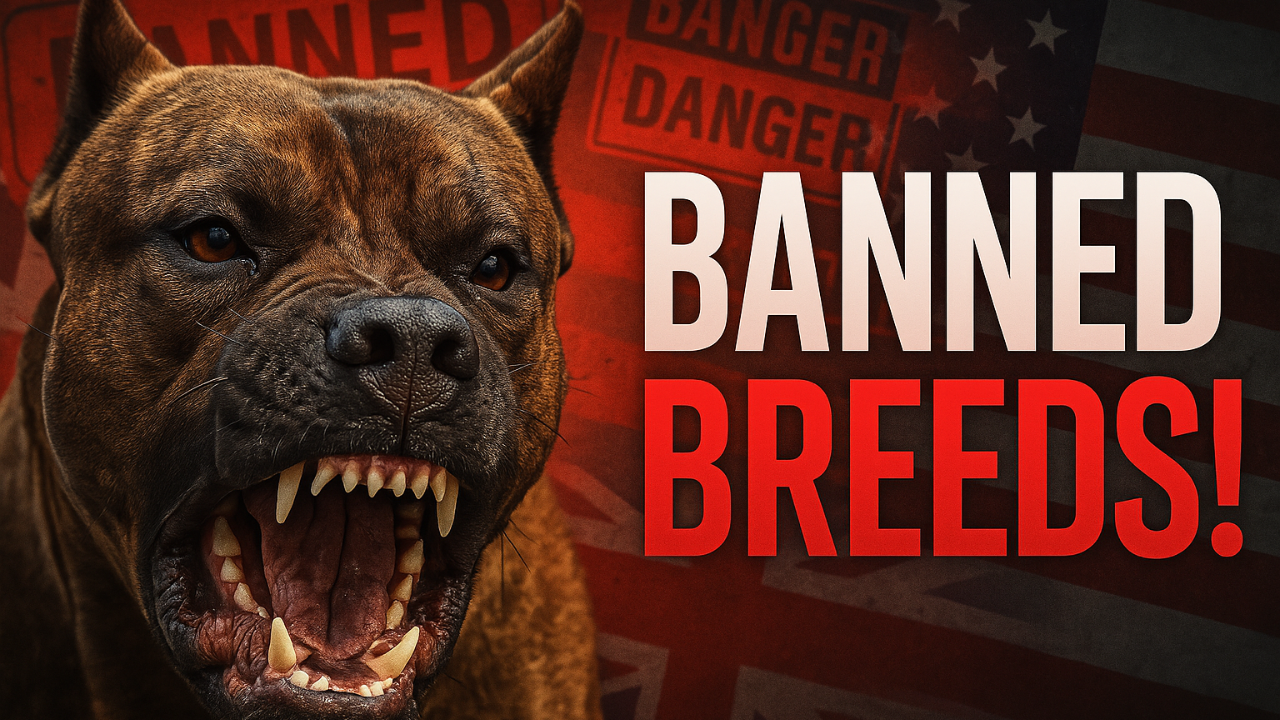
Beneath the wagging tails and soulful eyes lies a truth not often spoken aloud—some dog breeds are so powerful, so controversial, that they’ve been outright banned in several countries, including the United Kingdom and the United States. It’s not just fear driving these decisions; it’s a complex cocktail of history, genetics, human error, and devastating incidents.
In this article, we dive into seven dog breeds that are banned in the UK and parts of the US due to perceived danger. But we won’t just stop at the bans—we’ll explore why these dogs are feared, how media narratives fuel hysteria, and whether banning is the solution or a scapegoat.
1. Pit Bull Terrier (UK Ban, Restricted in Many US States)
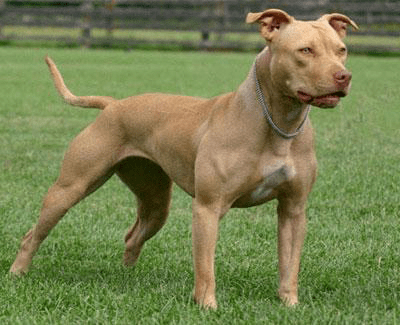
Few breeds have been as demonized—or misunderstood—as the American Pit Bull Terrier. Once America’s darling “nanny dog,” the pit bull has become a lightning rod for debates on public safety.
Why the Ban?
In the UK, the Dangerous Dogs Act of 1991 specifically names pit bulls as banned. The reason? A spate of fatal attacks in the 1980s and early ’90s, often sensationalized by tabloids.
U.S. Status
Not banned federally, but restricted in cities like Denver, Miami, and some military housing. Breed-specific legislation (BSL) targets them in over 700 municipalities.
The Truth?
Pit bulls aren’t inherently evil. But their jaw strength, muscular build, and protective instincts, when mixed with poor training or abuse, can become lethal.
2. Japanese Tosa (Banned in UK & Several U.S. Jurisdictions)
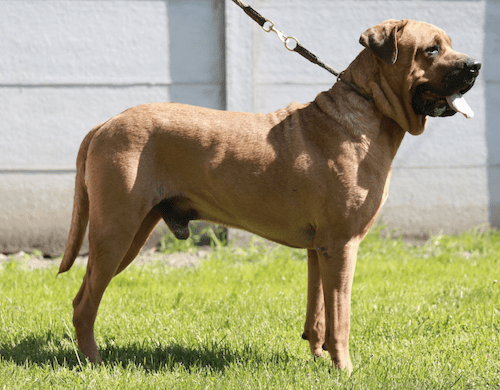
A towering, dignified breed originally bred for Japanese dog fighting, the Tosa Inu is an intimidating presence even in silence.
Why the Ban?
In the UK, it’s outright banned. In the U.S., it falls under dangerous dog laws in several counties due to its sheer size and aggression threshold.
The Reality
Tosas were designed to fight silently—no barking, no growling. This calm façade can mislead untrained owners. They require expert handling and firm, fair discipline.
3. Dogo Argentino (Banned in UK, Restricted in Some U.S. States)
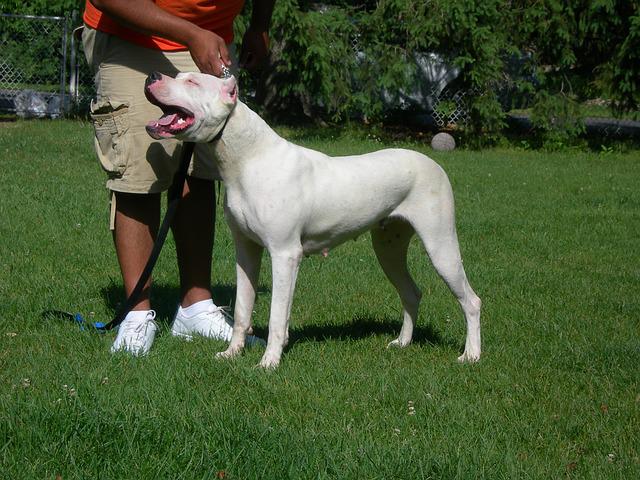
With a white, statuesque coat and a lion-hearted spirit, the Dogo Argentino is a hunting powerhouse—originally bred in Argentina to take down wild boars.
Why the Ban?
Their aggression toward other animals, coupled with their unrelenting drive, led to bans in the UK and restrictions in New York, Colorado, and other U.S. states.
What’s Misunderstood
Dogos are extremely loyal and trainable but must be socialized early and intensively. Without it, they may become territorial and reactive.
4. Fila Brasileiro (Brazilian Mastiff – Banned in UK, Rare in US)
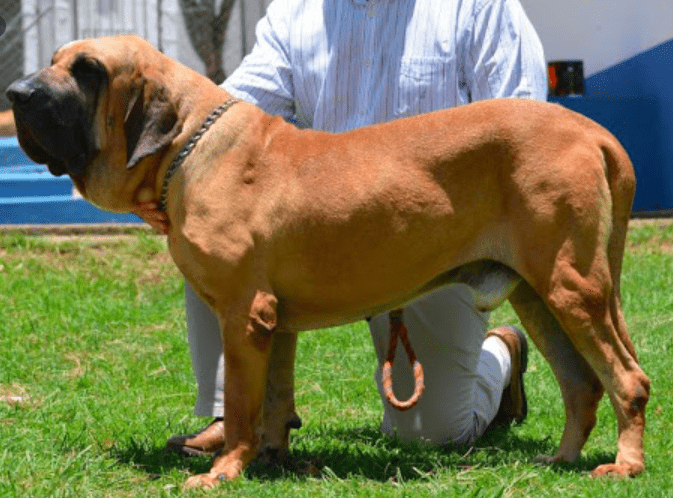
The Fila Brasileiro is a massive, guardian breed known for its natural distrust of strangers. The breed’s motto could well be “love the family, suspect everyone else.”
Why the Ban?
Its size, aggression potential, and deep-rooted suspicion of outsiders have made it unfit for urban settings. The UK lists it under the Dangerous Dogs Act, and many U.S. cities prohibit it under local bylaws.
Key Issues
Filas are not pets for the casual dog owner. Their strong-willed nature and protective instincts require ironclad leadership.
5. Perro de Presa Canario (Banned in Some U.S. States and UK)
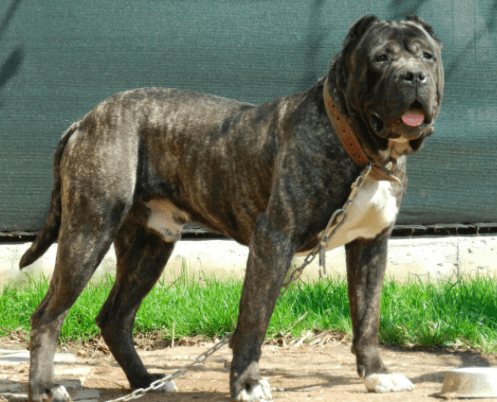
Known for a notorious 2001 fatal mauling in San Francisco, the Presa Canario became the face of deadly dog attacks in the early 2000s.
Why the Ban?
That infamous incident, involving a woman killed in her apartment hallway, triggered outrage. The UK classified it under dangerous breeds, and several U.S. states enforced ownership restrictions.
What People Don’t See
Presas are intelligent, confident, and naturally dominant. Poor training or unethical breeding can weaponize those traits.
6. Cane Corso (Restricted in the US, Banned in Some Housing Areas)
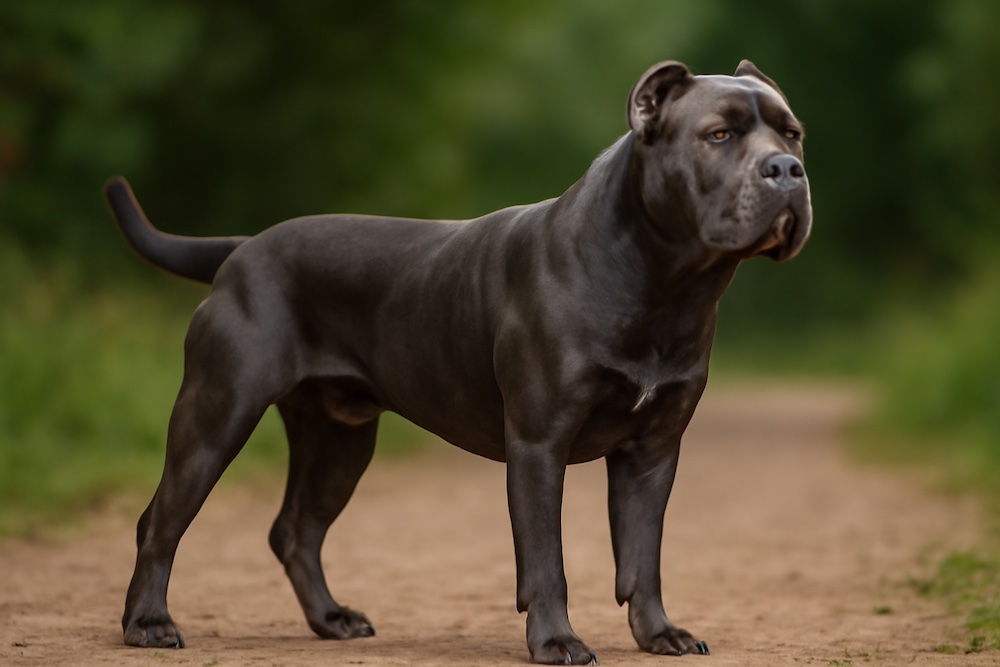
This Italian mastiff looks like it walked out of a gladiator film. With a broad skull, muscular frame, and an imposing stare, the Cane Corso is a natural protector.
Why the Restrictions?
While not banned nationwide, the Cane Corso faces bans in some military housing, condos, and apartments, especially where insurance companies flag them as high-risk.
Temperament Truth
With proper training and boundaries, they are loyal companions. But without structure, their assertiveness can become a threat.
7. American Bandogge (Banned in UK, Often Illegal in US Counties)
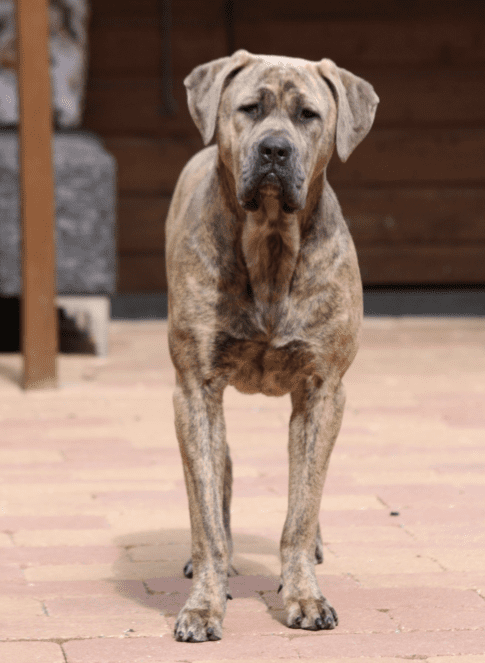
Not officially recognized by major kennel clubs, the Bandogge is a crossbreed often involving Pit Bulls and Mastiffs—a mix that amplifies both power and unpredictability.
Why the Ban?
Because there’s no standardized temperament, they’re considered a wild card—powerful, smart, and potentially uncontrollable. The UK includes them in its banned breed list.
Breeder Responsibility
Since Bandogges aren’t formally regulated, unethical breeders can easily create ticking time bombs by favoring aggression over temperament.
Why Bans Might Not Work
Banning a breed doesn’t ban irresponsible ownership. Studies show that breed-specific laws often fail to reduce dog attacks significantly. Training, socialization, and education are far more effective.
Plus, misidentification of breeds leads to unfair euthanasia of harmless dogs. In some U.S. shelters, over 50% of “pit bulls” identified by staff are wrongly labeled.
Who’s Really to Blame?
At the heart of many tragic dog attacks lies not the breed—but the human. Poor training, neglect, abuse, backyard breeding, and failure to understand animal psychology all play devastating roles. The dog becomes the scapegoat for a human error.
How to Stay Safe Without Bans
- Mandatory training for high-drive breeds
- Licensing tied to owner education
- Temperament testing before adoption
- Stricter breeder regulations
- Public education on dog behavior and warning signs
When dogs are understood, respected, and properly trained, they often thrive—even the so-called “dangerous” ones.
Conclusion: A New Way Forward
“Dangerous” is not a breed—it’s a behavior. And behavior is influenced by environment, genetics, and most of all, humans. The tragedy isn’t the dog; it’s the ignorance surrounding the dog. By replacing fear with education, and bans with better regulation, we can build safer, more compassionate communities.
These seven banned breeds aren’t villains. They are powerful beings in need of powerful leadership. Whether or not the laws change, our mindset must.
Here are 10 frequently asked questions “7 Dangerous Dog Breeds Banned in the UK and US.”
1. Which dog breeds are banned in the UK?
Answer: The UK currently bans four dog types under the Dangerous Dogs Act:
- Pit Bull Terrier
- Japanese Tosa
- Dogo Argentino
- XL Bully
These breeds are restricted due to concerns over public safety and severe attacks.
2. Are the same dog breeds banned across the entire United States?
Answer: No. The United States does not have a nationwide ban on specific dog breeds. Instead, some states, cities, and counties have their own breed-specific laws, often targeting breeds such as the Pit Bull Terrier.
3. Why are certain dog breeds considered dangerous?
Answer: Some breeds are considered dangerous because of their size, strength, bite force, and history of involvement in serious attacks. However, experts also point out that training, socialization, and responsible ownership play a major role in a dog’s behavior.
4. Is owning a banned dog breed illegal in the UK?
Answer: In many cases, yes. Some owners can keep certain banned dogs only if they meet strict legal requirements, including registration, insurance, neutering, and keeping the dog muzzled in public.
5. What happens if someone owns an illegal dog breed?
Answer: Authorities can seize the dog, and owners may face fines, restrictions, or even criminal charges depending on the circumstances and local laws.
6. Are Pit Bulls banned everywhere in the United States?
Answer: No. While some cities and counties restrict or ban Pit Bulls, many states have prohibited local governments from enforcing breed-specific bans.
7. Can banned dog breeds still be good family pets?
Answer: Yes. Many owners report that these breeds can be loving and loyal companions when properly trained, socialized, and cared for responsibly.
8. Which dog breed is involved in the most attacks?
Answer: Statistics vary by country and study. Reports often mention the Pit Bull Terrier because of the number and severity of incidents, but experts caution that data can be influenced by reporting methods and breed misidentification.
9. Why was the XL Bully banned in the UK?
Answer: The UK government introduced restrictions on the XL Bully following several high-profile attacks and growing concerns about public safety.
10. What should you consider before getting a powerful dog breed?
Answer: Consider:
- Local laws and restrictions.
- Training and socialization requirements.
- The dog’s exercise needs.
- Insurance and financial responsibilities.
- Whether your lifestyle is suitable for a large, powerful breed.
The 7 Dog Breeds Commonly Mentioned in UK and US Restrictions
- Pit Bull Terrier
- American Bully XL
- Japanese Tosa
- Dogo Argentino
- American Staffordshire Terrier
- Rottweiler
- Presa Canario
Note: Not all of these breeds are banned nationwide in either country; laws vary by jurisdiction, especially in the United States.
References
- UK Government. (n.d.). Banned dogs. GOV.UK. Retrieved from https://www.gov.uk/control-dog-public/banned-dogs
- City of London Police. (n.d.). Banned Dogs Advice. Retrieved from https://www.cityoflondon.police.uk/advice/advice-and-information/ac/animal-crime/banned-dogs
- ASPCA. (n.d.). What is Breed-Specific Legislation (BSL)? Retrieved from https://www.aspca.org/improving-laws-animals/public-policy/what-breed-specific-legislation
- AVMA (American Veterinary Medical Association). (n.d.). Why breed-specific legislation is not the answer. Retrieved from https://www.avma.org/resources-tools/pet-owners/dog-bite-prevention/why-breed-specific-legislation-not-answer
- National Canine Research Council. (n.d.). Breed Specific Legislation. Retrieved from https://www.nationalcanineresearchcouncil.com/breedspecificlegislation
- The U.S. Sun. (2023). Dogo Argentino – Dogs illegal in the UK explained. Retrieved from https://www.the-sun.com/news/7597657/dogo-argentino-dogs-illegal-uk
- Hepper. (2023). Where Are Cane Corsos Banned in the US?. Retrieved from https://www.hepper.com/where-are-cane-corsos-banned-in-the-us