Those sharp little teeth can turn your sweet, fluffy puppy into a tiny land shark in seconds. One moment they’re cuddling, the next they’re latched onto your hand, pant leg, or furniture. If you’re covered in bite marks and wondering what happened to the dream puppy you brought home, you’re definitely not alone.
Puppy biting and nipping is completely normal. They use their mouths to explore the world, play, and relieve teething pain. The good news? With consistent positive techniques, you can dramatically reduce the biting within days and teach better bite inhibition that lasts into adulthood.
Why Puppies Bite So Much
- Teething discomfort (usually peaks around 3–6 months)
- Overstimulation or tiredness
- Play behavior (they learn it from littermates)
- Attention-seeking
- Lack of bite inhibition (they haven’t learned yet how hard is too hard)
The goal isn’t to stop all mouth play — it’s to teach them to be gentle and redirect that energy to appropriate things.
Positive Techniques That Actually Work
1. The “Ouch” or “Too Bad” Method
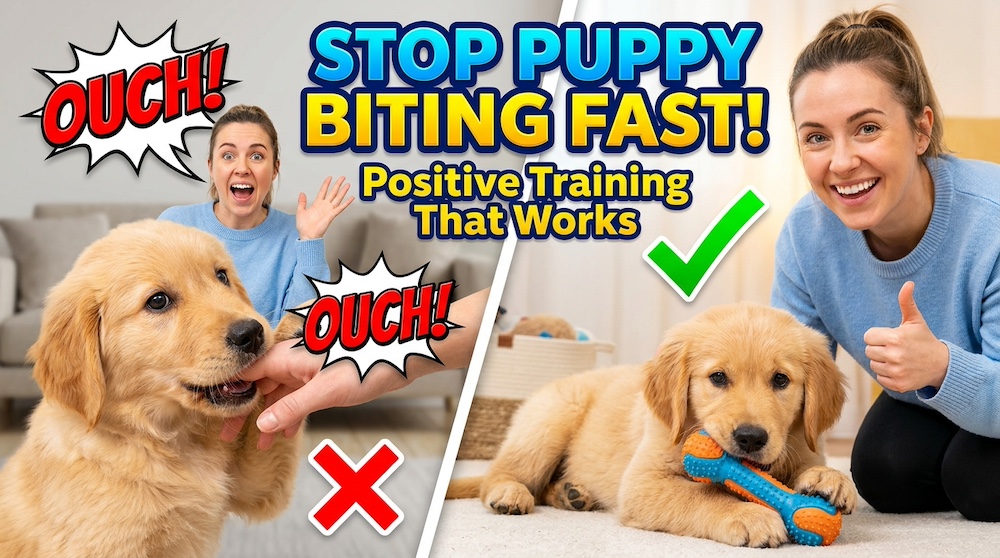
When your puppy bites too hard, let out a high-pitched “Ouch!” or “Too bad!” and immediately walk away for 10–30 seconds. This mimics how littermates react and teaches them that rough play ends the fun. Only use this for hard bites at first.
2. Redirection is Your Best Friend
The moment you see them going for your hand, redirect to a suitable chew toy. Keep toys scattered around the house and praise excitedly when they choose the toy instead. Make the toy more interesting by squeaking it or stuffing it with treats.
3. Teach “Leave It” and “Drop It”
These two commands are lifesavers. Start with low-value items and reward heavily for releasing. Once reliable, you can use them during play biting.
4. Enforce Time-Outs
If redirection fails, calmly remove attention for a short time. No eye contact, no talking, no touching. Puppies quickly learn that nipping = game over.
5. Provide Appropriate Outlets
- Frozen washcloths or rubber toys for teething relief
- Long-lasting chews (bully sticks, stuffed Kongs)
- Daily mental stimulation and exercise to reduce frustration biting
Pro Tip: Tired puppies bite more. Enforce short naps in the crate every 1–2 hours during the day.
For more structured training advice, the AKC’s guide to stopping puppy biting is very helpful.
What Not to Do
- Never yell, hit, or pin your puppy down — this creates fear and often makes biting worse.
- Avoid rough play with your hands or feet (it teaches them hands are toys).
- Don’t give attention (even negative) for nipping.
5 Common Puppy Biting Questions (and Honest Answers)
1. At what age does puppy biting usually stop?
Most puppies significantly reduce biting by 6–8 months when teething ends, but consistent training can make big improvements much earlier — often within 2–4 weeks.
2. Is my puppy being aggressive?
Almost certainly not. True aggression in young puppies is rare. Most biting is playful or teething-related. If you see stiff body language, growling with no play context, or resource guarding, consult a professional trainer or behaviorist.
3. Should I use bitter apple spray or other deterrents?
They can help as a temporary aid, but they don’t teach the puppy anything. Positive redirection and teaching proper behavior work much better long-term.
4. My puppy only bites the kids — what should I do?
Kids move fast and squeal, which excites puppies. Supervise closely, teach kids to stay calm and use redirection toys. Have the child leave the room calmly when biting starts.
5. What if nothing seems to be working?
Some breeds (herding breeds especially) are mouthier. If biting remains intense after consistent effort for 2–3 weeks, get help from a certified positive reinforcement trainer. Medical issues like pain can also increase biting.
Final Thoughts
Stopping puppy biting takes patience and consistency, but it’s very doable. The key is teaching your puppy that gentle mouths get attention and play, while teeth on skin ends the fun immediately.
Celebrate small wins — the first day with fewer bites, the moment they choose a toy instead of your fingers. Those add up fast.
You’re not raising a monster. You’re raising a dog who’s still learning how to live in our world. Stay calm and consistent, and you’ll both come out the other side just fine.
Have you dealt with a super bitey puppy? What techniques worked (or didn’t) for you? Share your stories in the comments — I read every single one and often pick the best tips to feature in future articles.
Trainers and behaviorists: I’m always looking for quality guest posts on puppy issues like this. Feel free to reach out if you have strong methods to share!
This article is for general information only. Consult your veterinarian if biting seems related to pain, or a professional trainer for personalized behavior support.