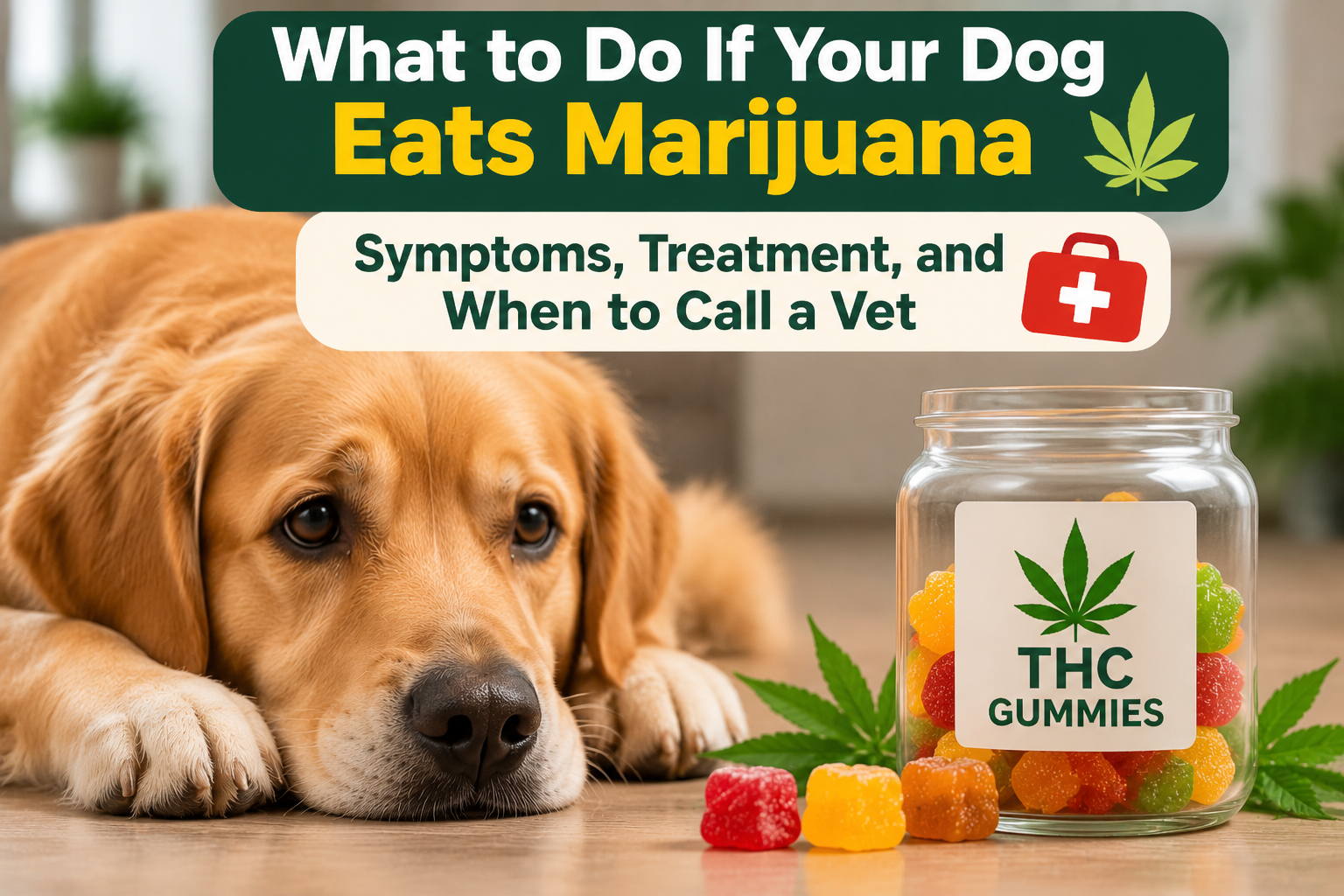
A dog that eats marijuana may become disoriented, unusually sleepy, unsteady on its feet, or unable to control its bladder. Although many dogs recover with appropriate veterinary care, cannabis exposure should never be ignored. THC—the compound responsible for marijuana’s intoxicating effects—can cause significant neurological and physical symptoms in dogs.
The risk can be even greater when marijuana is consumed in an edible. Brownies, cookies, gummies, and other cannabis-infused foods may contain additional ingredients that are toxic to dogs, including chocolate or xylitol.
If your dog has eaten marijuana, contact your veterinarian or an emergency veterinary hospital immediately. Do not wait for symptoms to appear before seeking advice.
This guide explains what to look for, what steps to take, how veterinarians treat marijuana toxicity, and how to prevent another accidental exposure.
Is Marijuana Toxic to Dogs?
Yes. Marijuana is toxic to dogs because it contains tetrahydrocannabinol (THC), a psychoactive compound that affects the nervous system.
Dogs are particularly sensitive to THC because of differences in their endocannabinoid systems. Even a relatively small exposure can cause noticeable changes in behavior, coordination, and body function. The concentration of THC varies considerably between products, so there is no single amount that can be considered safe for every dog.
Dogs may be exposed to THC by:
- Eating marijuana leaves, flowers, or plant material.
- Consuming marijuana-infused brownies, cookies, or other baked goods.
- Eating cannabis gummies, chocolates, or candies.
- Swallowing THC oils, tinctures, or concentrates.
- Chewing discarded cannabis products.
- Inhaling secondhand marijuana smoke.
Concentrates and some edible products can contain much higher amounts of THC than ordinary plant material. Products marketed as CBD may also contain THC, particularly when they are poorly regulated or inaccurately labeled.
The Cornell University College of Veterinary Medicine’s guide to cannabis intoxication in dogs explains the different ways dogs can be exposed and why edible products deserve particular attention.
What Should You Do If Your Dog Eats Marijuana?
The most important step is to contact a veterinarian as soon as you suspect marijuana exposure. Prompt advice helps your veterinarian determine whether your dog needs emergency treatment, examination, or supervised monitoring.
Follow these steps:
1. Contact Your Veterinarian Immediately
Call your regular veterinarian or the nearest emergency veterinary hospital. Explain that your dog may have consumed marijuana or a THC-containing product.
Be honest about what happened. Veterinary professionals need accurate information to choose the safest treatment. Hiding or delaying information about cannabis exposure can make diagnosis and treatment more difficult.
If you cannot reach a veterinarian, contact an animal poison control service for guidance.
2. Identify What Your Dog Ate
Try to determine exactly what your dog consumed.
Was it marijuana plant material, a THC gummy, a brownie, an oil, or another cannabis product? Check the packaging for the THC concentration and other ingredients.
This information is especially important if your dog ate an edible. Chocolate, xylitol, raisins, and other ingredients may create additional poisoning risks.
Keep the packaging or take a photograph of the label so you can show it to the veterinarian.
3. Estimate the Amount and Time of Exposure
Tell the veterinarian approximately how much your dog may have eaten and when it happened.
If you do not know the amount, say so. Do not guess simply to provide an answer.
Your dog’s weight, age, health, the type of product, and the estimated exposure all help the veterinary team assess the situation.
4. Keep Your Dog in a Safe, Quiet Place
A dog affected by THC may have difficulty walking, reacting normally, or judging distances.
While arranging veterinary advice:
- Keep your dog away from stairs and balconies.
- Prevent access to furniture your dog might fall from.
- Reduce loud noises and excessive activity.
- Keep your dog somewhere comfortable and supervised.
- Avoid forcing food, water, or medication.
If your dog is severely drowsy, struggling to breathe, having seizures, or unable to stand, seek emergency veterinary care immediately.
5. Do Not Try Home Remedies
Do not attempt to make your dog vomit unless a veterinarian specifically instructs you to do so.
A dog affected by THC may become drowsy or lose normal swallowing and protective reflexes. Inducing vomiting in that situation can cause vomit to enter the lungs, leading to a potentially serious complication called aspiration pneumonia.
Do not give activated charcoal, milk, oils, salt, or other home treatments without veterinary direction.
The Cornell University College of Veterinary Medicine specifically warns against inducing vomiting or giving activated charcoal to dogs that are already showing signs of cannabis intoxication.
Symptoms of Marijuana Toxicity in Dogs
Signs of THC toxicity can begin within approximately 30 minutes to several hours after exposure. The timing and severity depend on the product, amount consumed, and individual dog.
Some dogs develop mild symptoms, while others require hospitalization and intensive monitoring.
Common symptoms include:
- Loss of coordination: Your dog may stumble, wobble, or struggle to walk normally.
- Unusual sleepiness: Your dog may appear extremely tired, weak, or difficult to engage.
- Disorientation: Your dog may seem confused, dazed, or unaware of its surroundings.
- Dilated pupils: The pupils may look unusually large, and the eyes may appear glassy.
- Urinary incontinence: Your dog may dribble urine or lose control of its bladder.
- Excessive drooling: Some dogs produce more saliva than usual.
- Vomiting: Gastrointestinal upset may occur after exposure.
- Sensitivity to sound or touch: Ordinary noises or gentle contact may cause an exaggerated reaction.
- Changes in heart rate or body temperature: THC can affect cardiovascular function and temperature regulation.
More serious signs can include tremors, seizures, dangerously low body temperature, severe depression of the nervous system, and coma.
The ASPCA’s marijuana toxicity information lists several recognized clinical signs, including incoordination, vomiting, dilated pupils, excessive salivation, and seizures. Merck Veterinary Manual also describes the neurological and physical effects of THC exposure in dogs.
Important: Do not assume your dog is safe because it looks normal immediately after eating marijuana. Signs may take time to develop. Contact a veterinarian even if symptoms have not started.
How Long Does Marijuana Stay in a Dog’s System?
The effects of marijuana can last longer in dogs than many owners expect.
Some dogs begin showing signs within 30 minutes to several hours after exposure. Symptoms may continue for 24 to 72 hours, depending on the amount consumed, THC concentration, and the dog’s individual response.
Dogs can also reabsorb THC through the digestive system, which may contribute to prolonged effects.
A dog that appears to be improving should still be monitored according to veterinary instructions. Do not assume that sleeping or becoming quieter means the toxin has completely cleared.
The University of California, Davis School of Veterinary Medicine discusses the duration of marijuana toxicity and the supportive treatment that may be required.
Can a Dog Die From Eating Marijuana?
Death from ordinary marijuana exposure is uncommon, but severe poisoning can be life-threatening.
The risk depends on factors such as the THC concentration, amount consumed, the dog’s size and health, and whether other toxic substances were eaten at the same time.
Highly concentrated products can cause more serious effects. Cannabis edibles may be particularly dangerous because they can contain other harmful ingredients.
For example:
- Chocolate: Can cause a separate form of poisoning that affects the heart and nervous system.
- Xylitol: A sugar substitute that can cause dangerous low blood sugar and liver injury in dogs.
- Raisins: Can cause serious kidney injury in some dogs.
- High-fat ingredients: May contribute to gastrointestinal problems, including pancreatitis.
A marijuana brownie, for instance, may expose a dog to both THC and chocolate toxicity. That is why it is essential to tell the veterinarian about every ingredient in the product.
If your dog has eaten a cannabis edible containing chocolate, xylitol, or raisins, treat the situation as an urgent veterinary concern.
How Do Veterinarians Treat Marijuana Toxicity in Dogs?
There is no specific antidote that reverses THC poisoning in dogs. Treatment generally focuses on controlling symptoms, supporting normal body functions, and keeping the dog safe while the effects wear off.
The treatment plan depends on the dog’s condition and the details of the exposure.
Veterinary Examination and Monitoring
The veterinarian may assess your dog’s neurological condition, heart rate, breathing, blood pressure, and body temperature.
Dogs with moderate or severe symptoms may need close observation or hospitalization.
Inducing Vomiting in Selected Cases
If ingestion happened recently and the dog is not showing symptoms, a veterinarian may consider inducing vomiting to reduce further absorption.
This is not appropriate for every dog. It can be dangerous when a dog is already drowsy, disoriented, or neurologically impaired.
Never attempt this procedure at home without veterinary instructions.
Intravenous Fluids and Supportive Care
Some dogs need intravenous fluids to support hydration and circulation.
Veterinarians may also provide treatment to manage vomiting, abnormal body temperature, agitation, tremors, or seizures.
Temperature and Neurological Support
THC can interfere with a dog’s ability to regulate body temperature and normal nervous system function.
A veterinary team may provide controlled warming or cooling, a quiet recovery area, and medication when necessary.
Hospitalization for Severe Cases
Dogs with serious symptoms may need extended monitoring and more intensive support. In rare, severe cases, breathing assistance or other advanced treatment may be required.
Most dogs recover with appropriate care, but recovery time varies. Some improve within a day, while others need up to 72 hours or longer.
For more information about veterinary treatment, see the Merck Veterinary Manual’s overview of THC toxicosis.
What If Your Dog Eats a Marijuana Edible?
Marijuana edibles deserve special attention because their THC concentration can be high and their other ingredients may be toxic to dogs.
Common examples include:
- THC brownies and cookies.
- Cannabis-infused gummies.
- Marijuana chocolates.
- THC candies.
- Cannabis-infused butter or oils.
- THC beverages or liquid products.
If your dog eats an edible, do not focus only on the marijuana content. Read the ingredient list and tell your veterinarian about everything in the product.
A sugar-free gummy, for example, may contain xylitol. A brownie may contain chocolate or raisins. These substances require separate veterinary assessment and may make the situation more serious.
Keep the original packaging whenever possible.
Can Dogs Get High From Secondhand Marijuana Smoke?
Yes. Dogs can develop signs of cannabis exposure after inhaling marijuana smoke.
The risk depends on the level of exposure, ventilation, and the amount of THC involved. Direct ingestion is a common source of significant exposure, but inhalation should not be dismissed.
Avoid smoking marijuana around your dog. If your dog has been exposed to smoke and develops unusual behavior, breathing problems, disorientation, or other concerning symptoms, contact a veterinarian.
Keep your dog in a separate, well-ventilated area away from cannabis smoke.
How to Prevent Marijuana Poisoning in Dogs
Preventing accidental exposure is safer than trying to manage poisoning after it happens.
Use these precautions:
- Store cannabis securely. Keep marijuana, THC oils, gummies, and other products in locked cabinets or secure containers.
- Keep edibles out of reach. Do not leave brownies, cookies, chocolates, or gummies on counters, tables, or bedside furniture.
- Protect your dog from visitors’ products. Ask guests to keep cannabis products and medications safely stored.
- Avoid smoking near pets. Keep dogs away from areas where marijuana is being smoked or vaped.
- Check your dog’s surroundings. Watch for discarded cannabis products during walks and outdoor activities.
- Read product labels. Some CBD and hemp products may contain THC or other ingredients that are unsuitable for dogs.
- Never give human cannabis products to your dog. Do not use marijuana or THC products to treat pain, anxiety, or other conditions without veterinary guidance.
If you are considering a cannabis-derived product for your pet, discuss it with your veterinarian first. Products intended for people are not automatically safe for animals.
Frequently Asked Questions
1. What happens if my dog eats a small amount of marijuana?
Even a small amount can cause symptoms because dogs are sensitive to THC. The effects depend on the product’s potency, the amount consumed, and your dog’s size and health. Contact your veterinarian rather than assuming a small amount is harmless.
2. How soon will my dog show symptoms after eating weed?
Signs may begin within 30 minutes to several hours after exposure. Some dogs develop symptoms later, so a lack of immediate signs does not mean your dog is safe.
3. Should I make my dog vomit after eating marijuana?
No—not unless a veterinarian specifically tells you to. THC can cause drowsiness and impaired coordination, increasing the risk of aspiration if vomiting is induced.
4. Can a dog recover from marijuana poisoning?
Yes. Most dogs recover fully with appropriate veterinary care. However, recovery time varies, and severe exposures may require hospitalization and intensive monitoring.
5. Can marijuana brownies be more dangerous than marijuana leaves?
Yes. Brownies may contain concentrated THC and additional ingredients such as chocolate, raisins, or xylitol. These ingredients can cause separate types of poisoning and make treatment more complicated.
6. Is CBD safe for dogs?
CBD is not the same as THC, but that does not mean every CBD product is safe for dogs. Some products may contain THC or other unwanted ingredients. Consult your veterinarian before giving your dog any CBD product.
7. Will my dog sleep off the effects of marijuana?
Do not rely on sleep as a treatment. A dog that appears unusually sleepy may be experiencing nervous system depression. Contact a veterinarian and follow their instructions about monitoring and care.
8. Who should I call if my dog eats marijuana?
Contact your veterinarian or an emergency veterinary hospital immediately. You can also contact either of these animal poison control services in the United States:
- ASPCA Animal Poison Control Center: 888-426-4435. A consultation fee may apply.
- Pet Poison Helpline: 855-764-7661. A consultation fee may apply.
These services can help assess the exposure, but they do not replace emergency veterinary care when your dog has serious symptoms.
Final Thoughts
If your dog eats marijuana, the safest response is to contact a veterinarian immediately, identify the product, and provide as much information as possible about the exposure.
Watch for stumbling, unusual sleepiness, disorientation, dilated pupils, urinary incontinence, vomiting, and other changes in behavior. Never induce vomiting or try home remedies without veterinary direction.
Most dogs recover with appropriate supportive care, but early veterinary advice is important—especially when the marijuana was consumed in an edible that may contain chocolate, xylitol, or other dangerous ingredients.
The best prevention is secure storage. Keep every cannabis product, including gummies, oils, and baked goods, completely out of your dog’s reach.
Authoritative external references:
- Cornell University College of Veterinary Medicine — Cannabis (THC) Intoxication in Dogs
- Merck Veterinary Manual — THC Toxicosis in Dogs and Cats
- ASPCA — Marijuana Toxicity
- UC Davis School of Veterinary Medicine — Marijuana Toxicosis
- VCA Animal Hospitals — Marijuana Intoxication in Dogs and Cats
Before publication: Have a qualified veterinarian review the medical guidance, especially the emergency instructions and treatment discussion. Verify internal URLs and add the site’s author and reviewer information only when those details are accurate.