Last Updated on July 16, 2026 by Dogs Vets
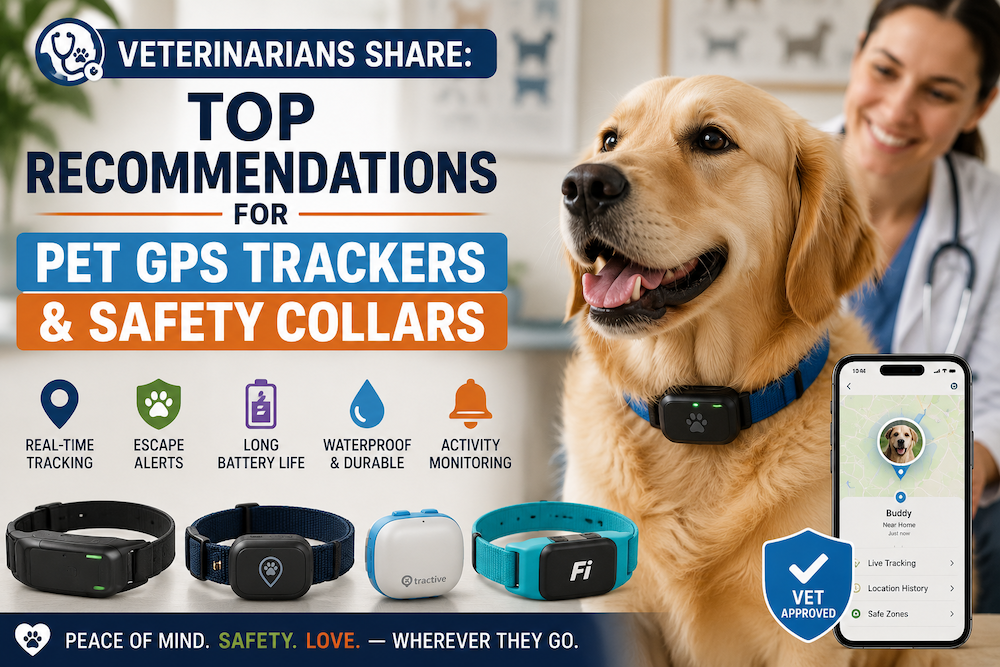
Losing a pet is one of the most stressful experiences a dog or cat owner can face — and it happens far more often than most people expect. Veterinarians and animal-safety researchers increasingly recommend GPS trackers as a critical layer of protection alongside microchipping and ID tags, precisely because the numbers on lost pets are so sobering. This guide breaks down what the data says about lost-pet risk, how the leading GPS tracker and safety-collar brands actually perform, and what vets and pet-recovery specialists recommend you look for before buying one.
The Scale of the Problem: Why Vets Recommend GPS Trackers
The statistics behind lost-pet risk are the real reason GPS trackers have moved from novelty gadget to standard safety recommendation. According to ASPCA data, approximately 10 million pets go missing in the United States every year, and only about 15% of dogs without any form of ID are ever reunited with their owners. source: Best GPS Dog Collars 2026 — PawBench: the ASPCA, approximately 10 million pets are lost in the United States each year, and only about 15% of dogs without ID are reunited with their owners]]
The risk isn’t a rare, one-time event either. A 2025 pet-reunification study found that nearly a quarter (23%) of all dog owners had lost their dog at least once in the past five years, and separate research cited in the same report found roughly 14% of pet owners had lost a dog in the prior year alone. source: Leading the Way Home — DocuPet Reunification Insights: Nearly a quarter (23%) of all owners had lost their dog at least once in the past 5 years]] The same research found that 77% of dog owners rated tags as their most-used identification method, and 94% of people who found a lost dog said they would look for a tag first — underscoring that visible, real-time identification tools consistently outperform passive ones like a microchip alone, which only helps after a dog has already been found and brought to a vet or shelter.
This is the core reason veterinarians frame GPS trackers as a complement to, not a replacement for, microchipping: a microchip confirms identity once someone has your pet in hand, but only a GPS collar tells you where your pet is right now, during the critical first hours after an escape when recovery odds are highest.
How GPS Trackers Actually Work
Modern pet GPS trackers fall into two categories. True GPS/cellular trackers (Tractive, Fi, and the now-discontinued Whistle, which was acquired by Tractive in 2025) use GPS plus a cellular network (LTE-M or standard LTE) to report your pet’s location in near-real-time over an essentially unlimited range, provided there’s cell coverage. Bluetooth-based finders (like Apple AirTag) are a fundamentally different technology — they have no GPS chip at all and rely on relaying location only when they pass near another Apple device, which makes them a decent budget backup but not a substitute for true GPS in rural or low-density areas.source: Fi vs Whistle vs Tractive: 2026 GPS Collar Comparison — PawBench: An AirTag does not have GPS hardware. It uses Bluetooth to communicate with nearby Apple devices]]
Top-Recommended GPS Trackers Compared
1. Fi Series 3+ / Fi Mini — Best Overall for Battery Life and Accuracy
Independent testers consistently rank Fi at or near the top for real-world reliability, largely because of one number: battery life. The Fi Series 3+ lasts up to three months on a single charge in normal use — dramatically longer than any major competitor — because it uses a low-power mode inside the home “safe zone” and only activates full GPS tracking once a pet leaves it. source: Fi vs Whistle vs Tractive: 2026 GPS Collar Comparison — PawBench: The Fi Series 3 battery lasts up to 3 months on a single charge in normal use… I consistently got 8-10 weeks of battery life]] Independent field testing recorded location accuracy within roughly 10–30 feet in open areas, with escape/geofence alerts arriving in as little as 15–20 seconds.
The tradeoff is cost and a slightly less detailed travel path than Tractive during live tracking, plus a collar attachment some testers found less secure for skittish or fearful dogs who could potentially slip out of it. Fi Mini is purpose-built for smaller breeds needing a lower-profile collar.
Best for: dogs prone to escaping, owners who want to minimize charging frequency, and larger or urban/suburban dogs.
2. Tractive GPS / Dog 6 — Best Overall Accuracy and Value
Tractive frequently earns “best overall” or “best value” recognition in independent gear testing, thanks to fast, accurate live tracking (updating every 2–3 seconds in “LIVE” mode) and the broadest global coverage of any major brand, working across more than 175 countries. source: 7 Best GPS Dog Collars of 2026 — Treeline Review: Top Pick: The Tractive GPS & Health Tracker earns our Best Overall award… long battery life… accurate and fast tracking]] Newer Tractive Dog 6 models have significantly closed the historic battery gap, with testers reporting 25–35 days of battery life versus older Tractive models’ 2–7 days, and pricing that undercuts Fi by roughly half.
Tractive also acquired Whistle in mid-2025, discontinuing the Whistle app and offering existing Whistle customers a device swap — meaning Whistle is no longer purchasable as a standalone product.
Best for: budget-conscious owners, international travelers, and anyone prioritizing tracking precision over ultra-long battery life.
3. Whistle GO Explore (Legacy) — Best for Health Monitoring (Where Still Supported)
Before its 2025 acquisition by Tractive, Whistle’s standout feature was health and behavior monitoring — tracking licking, scratching, sleep quality, and activity levels to flag potential health issues (like an emerging skin condition or allergy) before they became visually obvious. This kind of behavioral data remains valuable for breeds prone to allergies or joint issues, but Whistle devices are discontinued and no longer supported, so new buyers should look to Fi (which offers a “strain score” and automatic activity tracking) for comparable insight.source: How to Select the Best Dog GPS Tracker — Lost Pet Research and Recovery: Whistle is now discontinued… All existing Whistle users were contacted by Tractive to swap to a Tractive device]]
4. Garmin Alpha T 20 — Best for Rural and Working Dogs
For hunting dogs, farm dogs, or anyone working in areas without reliable cell coverage, Garmin’s Alpha system uses satellite/Iridium connectivity rather than cellular, avoiding the “dead zone” problem that affects LTE-based trackers in remote terrain. It requires no monthly subscription, though the upfront hardware cost is substantially higher and the collar is bulkier, making it a specialist rather than everyday-use choice.
5. Apple AirTag — Budget Backup Only
Testing consistently shows AirTags perform reasonably in dense urban areas (locating a pet within 1–3 minutes) but degrade sharply in suburban or rural settings, sometimes showing “no location found” for 30+ minutes or more in wooded or low-Apple-device-density areas. Pet-safety specialists are clear that an AirTag should be treated as a low-cost supplementary tag, never a primary safety device, particularly for dogs at risk of running into open country. source: Fi vs Whistle vs Tractive: 2026 GPS Collar Comparison — PawBench: Rural area / park: AirTag frequently showed “no location found” for 30+ minutes. If your dog escapes into the woods, the AirTag is functionally useless]]
Quick Comparison Table
| Tracker | Battery Life | Subscription | Best Accuracy | Best For |
|---|---|---|---|---|
| Fi Series 3+/Mini | ~10–12 weeks | ~$99/yr+ | ~10–30 ft | Escape-prone, low charge frequency |
| Tractive Dog 6 | ~25–35 days | ~$5–13/mo | ~15–30 ft | Value, global coverage, accuracy |
| Whistle GO Explore | Discontinued | N/A | ~20 ft (legacy) | Legacy health monitoring users |
| Garmin Alpha T20 | 68 hrs | None | High (satellite) | Rural/working/hunting dogs |
| Apple AirTag | Months (passive) | None | Poor outside cities | Urban backup tag only |
What Vets and Pet-Safety Experts Recommend Before You Buy
- Never treat a GPS collar as a substitute for microchipping. A tracker can fail, lose charge, or be removed; a microchip is permanent proof of ownership once a pet is recovered. Use both together.
- Match the device to your dog’s risk profile. A skittish, easily spooked, or newly adopted dog benefits most from the longest possible battery life (Fi), since recovery of a panicked dog can take days. A dog that roams rural land benefits more from satellite coverage (Garmin) than an LTE tracker that may lose signal.
- Check real subscription costs, not just hardware price. Nearly every true GPS tracker requires an ongoing monthly or annual plan to cover cellular data — budget for that recurring cost, not just the upfront device.
- Prioritize geofence/escape-alert speed. In an actual escape, the seconds between your dog leaving a safe zone and your phone alerting you matter — look for alert speeds in the 15–45 second range, which top-tier trackers now deliver.
- Fit matters as much as features. A tracker that a dog can slip out of, or that irritates sensitive skin, provides zero protection. Use a properly fitted collar and check it regularly, especially for dogs with thick or double coats.
- Use visible ID as your first line of defense. Studies show the vast majority of good Samaritans check for a visible tag before anything else — a simple ID tag with a phone number remains one of the fastest routes home, even with a GPS tracker as backup.
Bottom Line
For most owners in 2026, the Fi Series 3/3+ and Tractive Dog 6 represent the strongest, most consistently recommended options — Fi for best-in-class battery life and accuracy for escape-risk dogs, Tractive for accuracy, global coverage, and value at a lower price point. Rural and working-dog owners should look to satellite-based systems like Garmin, and an Apple AirTag can serve as a cheap backup tag but should never be relied on as a primary safety device. Whatever you choose, pair it with a microchip and a visible ID tag — together, these layers give your pet the best realistic chance of a fast, safe return home.
References & Links
- How to Select the Best Dog GPS Tracker — Lost Pet Research and Recovery
- 7 Best GPS Dog Collars of 2026 (Tested and Reviewed) — Treeline Review
- Fi vs Whistle vs Tractive: 2026 GPS Collar Comparison — PawBench
- Best GPS Dog Collars 2026: Fi vs Whistle vs Tractive — PawBench
- Leading the Way Home: 2025 Reunification Insights — DocuPet