Last Updated on November 11, 2026 by Dogs Vets
Dry kibble is one of the most popular types of pet food because it is convenient, easy to store, and provides balanced nutrition. Many pet owners prefer dry food because it is simple to serve and does not require special storage. However, one common challenge for pet food manufacturers is making sure that dogs and cats actually enjoy eating it. Even high-quality kibble may be rejected if it does not have an appealing taste, smell, or texture.
Palatability plays an important role in the success of any pet food product. Manufacturers need to focus on ingredients, production methods, and product quality to create food that pets enjoy. Improving these factors can help businesses build customer trust and develop products that stand out in a competitive market.
Understanding Dry Kibble Palatability
Palatability refers to how attractive and enjoyable food is to an animal. It mainly depends on taste, smell, texture, and overall eating experience. Dogs and cats use their senses differently from humans, so manufacturers must understand their preferences when developing new products.
For example, smell is especially important for many pets because they rely heavily on their sense of smell when choosing food. Texture and size also influence how easily animals can chew and consume kibble.
A product that provides good nutrition but lacks an appealing flavor may not receive positive responses from pets. Therefore, manufacturers should consider both nutritional value and eating experience during product development.
Choosing High-Quality Ingredients
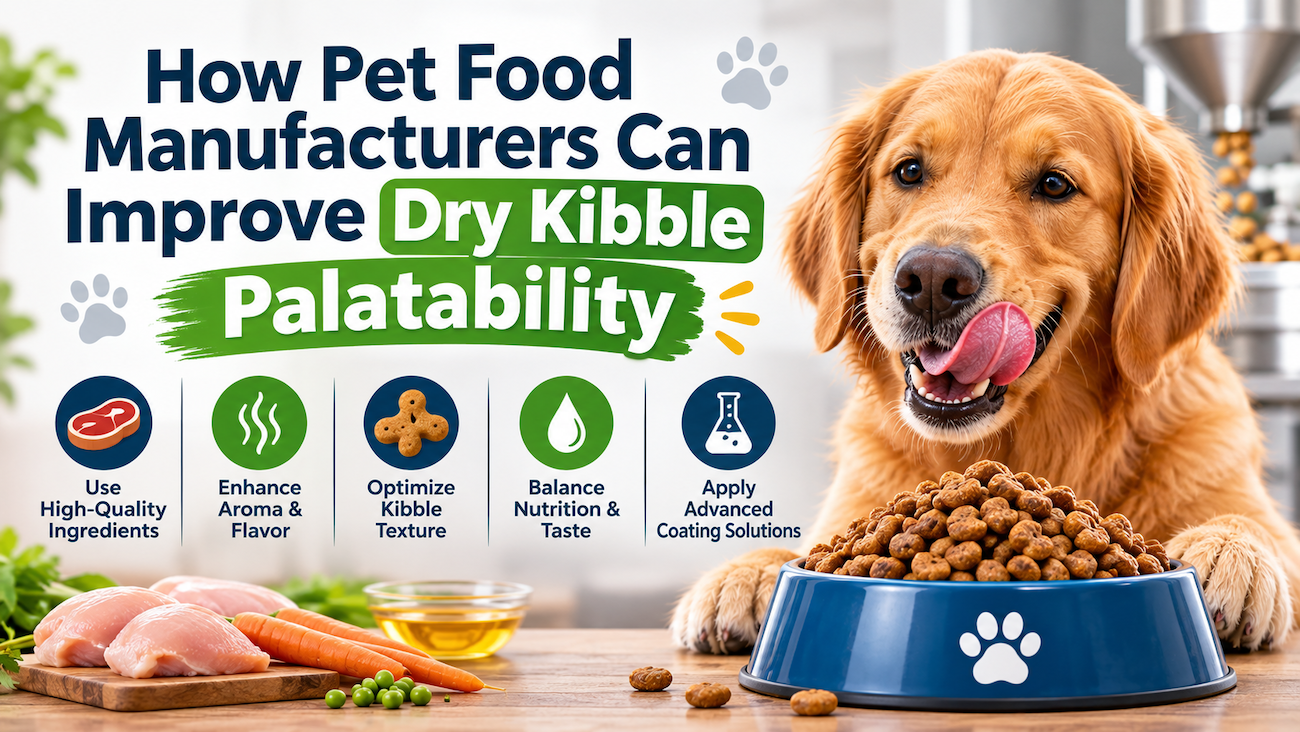
The quality of ingredients has a direct impact on the taste and smell of dry kibble. Manufacturers should select fresh, reliable, and nutritious raw materials to maintain consistent product quality.
Animal proteins such as chicken, beef, fish, and lamb are commonly used in pet food because they provide essential nutrients and attractive flavors. The selection of fats and oils is also important because they contribute to aroma and improve the overall taste experience.
Using poor-quality or inconsistent ingredients can affect the final product. Manufacturers should work with trusted suppliers and regularly check raw materials before production. This helps maintain a consistent flavor profile and ensures that each batch meets quality standards.
Using Pet Food Palatants to Improve Flavor
One effective way to improve the appeal of dry kibble is by adding ingredients that enhance its taste and aroma. Pet food palatants are specially developed ingredients that help make pet food more attractive to dogs and cats.
These ingredients can improve the sensory experience by creating appealing aromas and flavors. They are commonly applied to kibble after the cooking and extrusion process, often alongside fats and oils.
Palatants can be made from different sources, including animal-based proteins and other flavor-enhancing ingredients. The right choice depends on the type of pet food, target animal, and desired flavor profile.
Manufacturers should test different formulations to understand which combinations receive the best response from pets. A suitable palatant can encourage animals to eat their food more willingly while helping brands develop products that meet consumer expectations.
Improving Kibble Texture and Size
Taste is not the only factor that affects how much pets enjoy their food. The physical structure of dry kibble also plays an important role.
Kibble that is too hard, too large, or difficult to chew may create problems for certain pets. Small dogs and older animals, for example, may prefer smaller pieces that are easier to eat.
Manufacturers can experiment with different shapes, sizes, and textures to suit various breeds and age groups. Some pets prefer crunchy kibble, while others may respond better to a different texture.
Testing different product designs can help manufacturers identify the most suitable options for their target customers.
Maintaining Freshness and Aroma
Freshness is another important factor in dry pet food quality. Even a well-formulated product can lose its appeal if it is exposed to moisture, heat, or air for long periods.
Fats and oils can become oxidized over time, which may produce unpleasant smells and reduce food quality. Proper packaging helps protect kibble from environmental conditions and maintains its original aroma.
Manufacturers should use suitable packaging materials that provide protection against moisture and oxygen. They should also follow proper storage and handling procedures throughout the supply chain.
Clear expiration dates and appropriate storage instructions can further help customers maintain product freshness after purchase.
Conducting Regular Palatability Testing
Testing is essential when developing or improving dry kibble products. Manufacturers should not depend only on ingredient quality or personal opinions when deciding whether a product is appealing.
Palatability trials allow companies to observe how pets respond to different food formulations. Two common approaches are the single-bowl test and the two-bowl test.
In a single-bowl test, researchers observe how willingly an animal consumes a particular food. In a two-bowl test, pets are offered two different food options to understand their preferences.
These tests provide useful information about flavor acceptance and overall food appeal. Regular testing also helps manufacturers identify problems and make improvements before launching a new product.
Following Proper Manufacturing Standards
Production methods can influence the final taste, smell, and texture of dry kibble. Temperature, moisture levels, cooking time, and extrusion conditions all affect the quality of the finished product.
Manufacturers should carefully monitor these factors to avoid unnecessary changes in flavor and texture. Consistent production standards also help ensure that every batch provides a similar eating experience.
Working with experienced food technologists and maintaining strict quality control procedures can make product development more effective.
Understanding Pet Owners’ Expectations
Although pets are the ones eating the food, pet owners make the purchasing decisions. They usually look for products that offer good nutrition, quality ingredients, safety, and reasonable prices.
Manufacturers should understand these expectations when developing new kibble products. Providing clear ingredient information, proper nutritional details, and reliable packaging can help build confidence among customers.
Listening to customer feedback is also useful. If pet owners frequently report that their animals refuse a particular product, manufacturers can investigate the possible causes and improve the formulation.
Conclusion
Improving dry kibble palatability requires attention to several important factors, including ingredient quality, flavor, aroma, texture, freshness, and manufacturing standards. Pet food manufacturers should focus on creating products that are both nutritious and enjoyable for animals.
Using suitable flavor-enhancing ingredients, conducting regular palatability tests, and maintaining consistent production processes can help improve product acceptance. By understanding the needs of pets and the expectations of their owners, manufacturers can develop better dry kibble products, strengthen brand reputation, and compete more successfully in the growing pet food industry.