Last Updated on November 11, 2026 by Dogs Vets
The pet product industry has experienced significant growth as more people become interested in providing better care for their dogs. Pet owners are paying closer attention to the quality, ingredients, and safety of the products they purchase. This growing demand has created new opportunities for businesses looking to introduce their own branded pet products.
Dog chews are particularly popular because they provide an enjoyable chewing experience and can help keep dogs occupied. For pet brands and retailers, launching a private-label product range can be a good way to build brand recognition and increase revenue. However, successful production requires careful planning, reliable suppliers, and a clear understanding of customer expectations.
Understand Your Target Market
Before starting production, brands should identify their target customers and understand what they expect from dog chews. Different pet owners have different preferences depending on their dogs’ ages, sizes, chewing habits, and dietary requirements.
Some customers prefer natural chews with simple ingredients, while others look for longer-lasting options or products made for smaller dogs. Understanding these preferences helps businesses select suitable products and develop a range that meets market demand.
Researching competitors is also useful. Look at popular products, customer reviews, packaging styles, and price ranges to identify opportunities for your brand.
Select the Right Type of Dog Chews
Choosing the right products is an important part of private-label development. There are many types of dog chews available, and each offers a different experience.
Some popular options include natural animal-based chews, dental chews, soft chews, and long-lasting chewing products. Brands should consider the intended purpose of each product before making a final selection.
It is also important to offer products suitable for different dog sizes. A chew designed for a large breed may not be appropriate for a small dog. Providing clear size recommendations can help customers make better purchasing decisions.
Focus on Ingredient Quality
Ingredient selection directly affects product quality and customer confidence. Pet owners increasingly prefer products with clear ingredient information and reliable sourcing.
Brands should work with manufacturers who can provide detailed information about their raw materials. Ingredients should be suitable for animal consumption and handled according to relevant food safety requirements.
Natural ingredients can be an attractive selling point, but businesses should avoid making unsupported claims about nutritional or health benefits. Clear labeling and honest product descriptions help build long-term trust.
Find a Reliable Manufacturing Partner
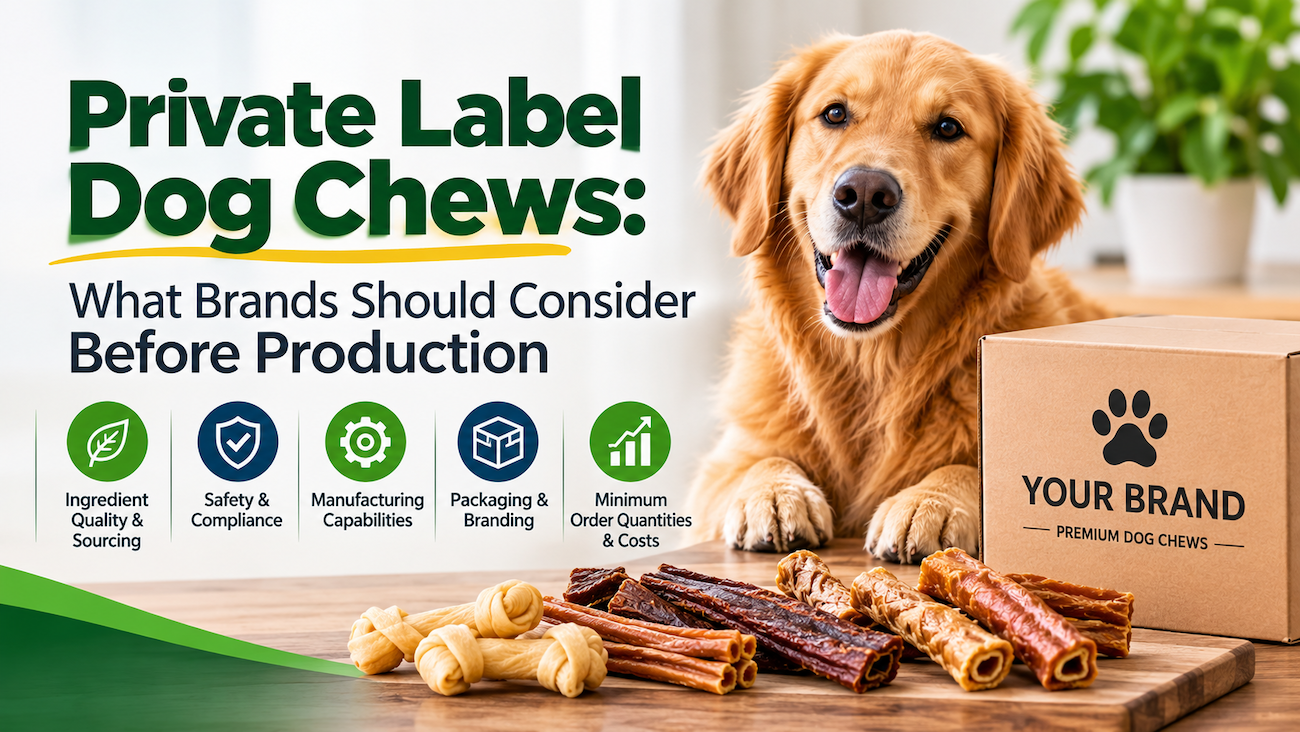
Selecting the right manufacturing partner is one of the most important decisions when launching a private-label range. A good manufacturer should have relevant industry experience, suitable production facilities, and effective quality control procedures.
Before choosing a supplier, brands should ask about production capacity, minimum order quantities, ingredient sourcing, packaging options, and delivery schedules.
It is also a good idea to request samples before confirming a large production order. This allows businesses to evaluate the product’s appearance, texture, smell, and overall quality.
Strong communication with the manufacturer can prevent misunderstandings and make the production process easier to manage.
Consider Product Safety and Quality Control
Safety should always be a priority when producing dog chews. Poorly manufactured products can damage a brand’s reputation and create risks for pets.
Brands should ensure that their manufacturing partners follow appropriate hygiene practices, ingredient handling procedures, and quality testing standards.
Depending on the product and target market, businesses may also need to consider applicable regulations, labeling requirements, and product testing obligations.
Quality checks should take place throughout production rather than only at the final stage. This helps identify potential problems early and ensures greater consistency between batches.
Decide on Packaging and Branding
Packaging is often the first thing customers notice when choosing a product. Professional packaging can help a new brand compete with established names and create a positive impression.
Brands should select packaging that protects the chews from moisture, contamination, and damage during transportation and storage.
Important details such as product ingredients, net weight, feeding guidance, storage instructions, and manufacturer information should be clearly displayed where required.
The design should also match the brand’s identity. Consistent colors, readable fonts, and attractive product images can make the range easier for customers to recognize.
Calculate Production Costs and Pricing
Financial planning is essential before placing a production order. Businesses should calculate all expenses, including raw materials, manufacturing, packaging, shipping, storage, marketing, and distribution.
Minimum order quantities are another important consideration. Ordering too much stock at the beginning can increase storage costs and create financial pressure if sales are slower than expected.
A smaller initial order, where available, can help brands test customer demand before expanding production.
Pricing should remain competitive while providing enough profit to support future business growth. Brands should also consider the prices of similar products in their target market.
Test Products Before Launch
Product testing can help businesses avoid expensive mistakes. Before launching a full range, brands should evaluate samples and collect feedback from suitable testers.
Pay attention to product consistency, packaging quality, customer preferences, and how easily the product can be stored and handled.
Feedback from retailers and pet owners can reveal areas that need improvement. Making adjustments before a wider launch can improve customer satisfaction and reduce the chances of receiving negative reviews.
Conclusion
Launching private label dog chews can be a valuable opportunity for pet brands looking to expand their product range and build a stronger market presence. However, success depends on several important factors, including market research, ingredient quality, manufacturing standards, product safety, packaging, and pricing.
By choosing a reliable manufacturing partner and testing products before launch, businesses can reduce production risks and develop products that meet customer expectations. Careful planning and consistent quality control can help brands establish customer trust, encourage repeat purchases, and achieve long-term growth in the competitive pet product industry.