
Last Updated on July 27, 2026 by Dogs Vets
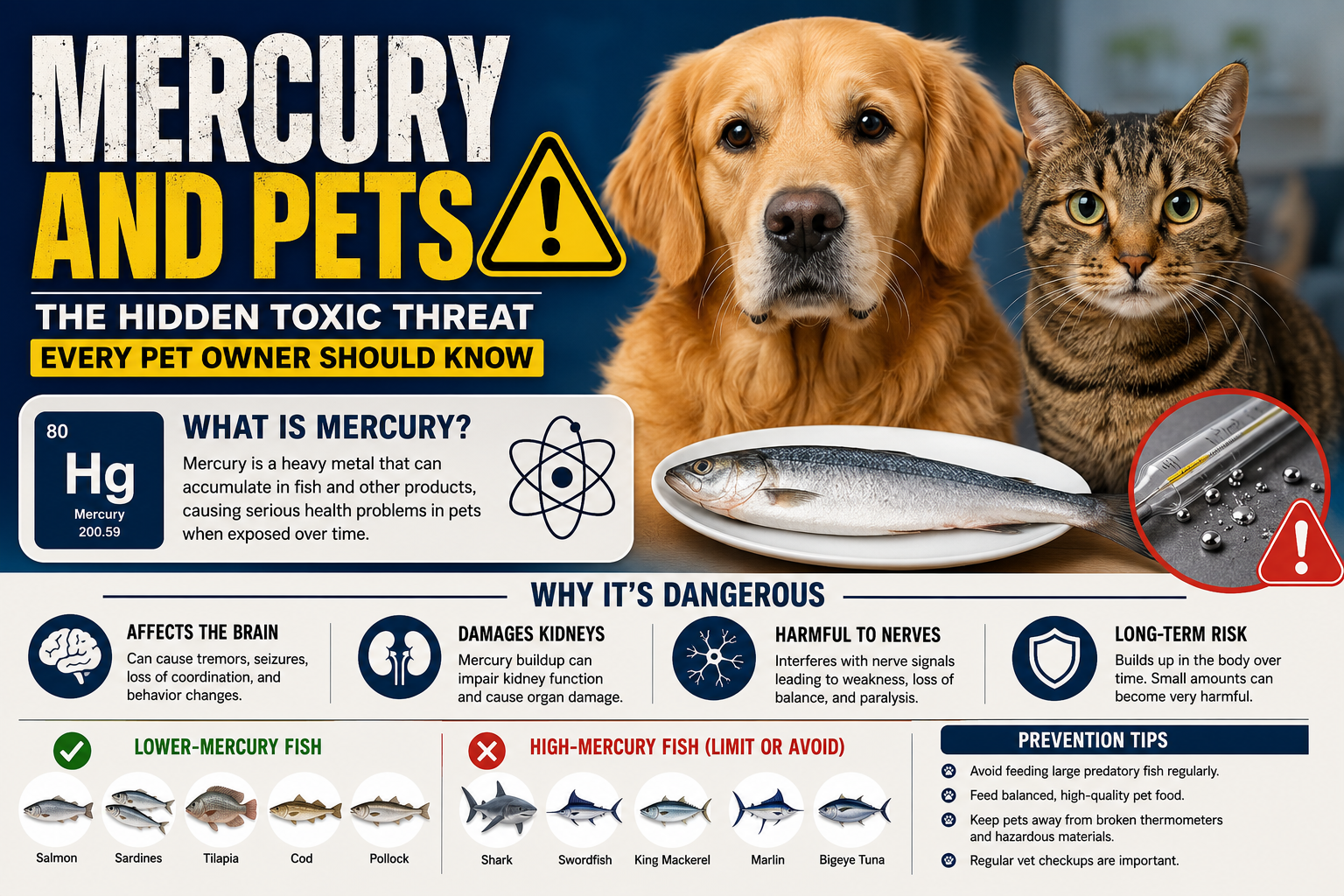
Mercury and Pets: The Hidden Toxic Threat Every Pet Owner Should Know
Most pet owners know that chocolate, grapes, onions, and xylitol can be dangerous for dogs and cats. However, very few realize that mercury exposure is another hidden threat that can seriously affect pets.
Mercury poisoning isn’t common in household pets, but when it happens, it can damage the brain, kidneys, and nervous system. The risk increases when pets regularly consume fish high in mercury or accidentally come into contact with mercury-containing products.
This comprehensive guide explains everything you need to know about mercury and pets, including symptoms, causes, research findings, treatment options, and practical ways to protect your furry family members.
What Is Mercury?
Mercury is a naturally occurring heavy metal found in air, water, and soil. Human activities such as coal burning, mining, and industrial manufacturing have significantly increased mercury levels in the environment.
The most dangerous form is methylmercury, which accumulates in fish and seafood through a process called bioaccumulation. Larger, longer-lived predatory fish tend to contain the highest concentrations because they consume many smaller fish over their lifetime.
Can Dogs and Cats Get Mercury Poisoning?
Yes.
Dogs, cats, birds, and even reptiles can develop mercury poisoning if exposed to excessive amounts over time.
Unlike food poisoning, mercury often builds up slowly in the body. A single meal rarely causes problems, but repeated exposure may eventually become harmful.
Common exposure sources include:
- Large predatory fish
- Contaminated raw fish diets
- Industrial pollution
- Broken mercury thermometers
- Certain laboratory chemicals
- Environmental contamination around mining areas
Research Statistics About Mercury Exposure
Although comprehensive veterinary statistics are limited, environmental monitoring provides valuable insight into mercury exposure.
Key Facts
- Nearly all fish and shellfish contain measurable amounts of methylmercury, although levels vary greatly by species.
- Large predatory fish—including shark, swordfish, king mackerel, and some tuna—generally contain the highest mercury concentrations because mercury accumulates up the food chain.
- The U.S. EPA identifies fish consumption as the primary route of methylmercury exposure for most people, illustrating why fish choice matters for pets that eat seafood regularly.
- Biomonitoring data show that mercury exposure in humans has declined over time in some populations, but environmental mercury remains widespread, making continued monitoring important.
While pets are not routinely monitored like humans, veterinarians recognize chronic dietary exposure as a potential concern, particularly in animals fed large amounts of high-mercury fish.
Which Pets Are Most at Risk?
Some pets are naturally more vulnerable than others.
Cats
Cats love fish, and some owners feed tuna almost every day.
Although occasional tuna is usually not harmful, relying on tuna or other large fish as a staple diet may increase long-term mercury exposure.
Dogs
Dogs eating homemade fish diets may consume excessive mercury if the fish source is not carefully selected.
Birds
Pet birds are extremely sensitive to heavy metals.
Even relatively small exposures can produce serious neurological symptoms.
Reptiles
Certain aquatic reptiles may consume contaminated fish or aquatic prey, particularly in polluted environments.
Symptoms of Mercury Poisoning in Pets
Symptoms often develop gradually.
Watch for:
- Difficulty walking
- Loss of balance
- Muscle tremors
- Weakness
- Vision problems
- Hearing changes
- Seizures
- Loss of appetite
- Weight loss
- Excessive drooling
- Kidney dysfunction
- Behavioral changes
- Depression
- Confusion
Advanced mercury poisoning can permanently damage the nervous system.
How Does Mercury Affect the Body?
Mercury attacks several organs simultaneously.
Brain
Mercury damages nerve cells responsible for:
- Coordination
- Memory
- Movement
- Reflexes
Kidneys
The kidneys filter toxins from the bloodstream.
High mercury exposure may lead to kidney damage and reduced filtration capacity.
Nervous System
Mercury interferes with normal nerve signaling, causing:
- Tremors
- Muscle weakness
- Loss of coordination
- Paralysis in severe cases
Fish With Higher Mercury Levels
Pet owners should limit frequent feeding of fish known to accumulate more mercury, including:
- Shark
- Swordfish
- King mackerel
- Marlin
- Bigeye tuna
These fish tend to have higher mercury levels because they are large predators higher on the food chain.
Lower-Mercury Fish Choices
If feeding fish occasionally, lower-mercury options generally include:
- Salmon
- Sardines
- Tilapia
- Pollock
- Cod
- Herring
Even these foods should complement a balanced pet diet rather than replace it.
Can Pet Food Contain Mercury?
Commercial pet foods undergo ingredient sourcing and quality control, and mercury contamination is not considered common. However, fish-based diets can naturally contain trace amounts because mercury is present in the aquatic environment.
Quality manufacturers monitor contaminants, making reputable brands a safer choice than poorly balanced homemade diets.
How Veterinarians Diagnose Mercury Poisoning
Diagnosis usually includes:
- Medical history
- Diet review
- Physical examination
- Blood testing
- Urine testing
- Kidney function tests
- Neurological assessment
Because symptoms resemble those of other diseases, diagnosis may require ruling out several conditions first.
Treatment Options
Treatment depends on severity.
Veterinarians may recommend:
- Removing the mercury source
- Intravenous fluids
- Supportive care
- Medications for seizures or tremors
- Chelation therapy in selected cases to help remove certain heavy metals
Early treatment offers the best chance of recovery.
Prevention Tips
Keeping pets safe is much easier than treating mercury poisoning.
1. Avoid feeding large predatory fish regularly.
2. Feed complete and balanced commercial pet food.
3. Do not let pets play with old mercury thermometers or similar items.
4. Store hazardous materials securely.
5. Follow fish consumption guidance if preparing homemade pet diets.
6. Schedule regular veterinary checkups.
When Should You Call a Veterinarian?
Contact your veterinarian immediately if your pet:
- Eats a large amount of potentially contaminated material
- Shows tremors
- Cannot walk normally
- Experiences seizures
- Suddenly becomes weak or disoriented
If you suspect your pet has ingested something toxic, prompt veterinary advice is recommended because early intervention can be critical.
Frequently Asked Questions
Can cats safely eat tuna?
Occasional tuna is generally acceptable as a treat, but it should not become the primary food source because some tuna species contain more mercury than smaller fish.
Is canned tuna dangerous for dogs?
Small amounts are unlikely to cause harm, but frequent feeding is not recommended.
Are fish-based pet foods safe?
Most commercial fish-based pet foods are formulated to meet safety standards and are generally considered safe when fed as directed.
Can mercury poisoning be cured?
Many pets improve with early diagnosis and treatment, though severe neurological damage may be permanent.
Final Thoughts
Mercury poisoning is uncommon but entirely preventable. By choosing lower-mercury fish, feeding a nutritionally complete diet, and avoiding unnecessary exposure to mercury-containing products, pet owners can greatly reduce the risk.
If your pet develops unexplained neurological symptoms or has consumed a questionable source of mercury, seek veterinary care promptly. Early recognition and treatment can make a significant difference.
SEO Keywords
- mercury and pets
- mercury poisoning in dogs
- mercury poisoning in cats
- can dogs eat tuna
- mercury in pet food
- heavy metal poisoning pets
- fish toxicity in dogs
- tuna for cats
- safe fish for dogs
- symptoms of mercury poisoning in pets
Suggested Internal Links
- Foods Dogs Should Never Eat
- Is Tuna Safe for Cats?
- Best Fish for Dogs
- Heavy Metal Poisoning in Pets
- Homemade Pet Food Safety Guide
Authoritative References
- U.S. Environmental Protection Agency – Mercury and methylmercury overview.
- U.S. Food and Drug Administration – Mercury in food and fish consumption guidance.
- U.S. Food and Drug Administration – Potentially dangerous items for pets and emergency guidance.