Last Updated on June 6, 2026 by Dogs Vets
Left Gaze Bias
Research psychologist Paul Ekman has spent decades focusing on emotions. He even consults for animated and CGI films to help get emotional nuance correct. But he made his first breakthrough studying the micro-expressions of couples coming to therapy. Micro-expressions are subtle, fleeting facial reactions. A slight rise of the eyebrow, perhaps a downturned smile, or even a narrowing of one’s eyes. The context of what couples said turned out not to be as important as the subtle facial cues that signal, among other things, contempt or dislike for one another. While these micro-expressions may last only a fleeting moment, their impact is, by contrast, long-lasting. In the context of a relationship, they may signal the beginning of the end of love.
Part of Ekman’s research on emotions also focuses on the micro-expressions that occur as we attempt to mask our emotions. Part of us knows that the context is not right to let what we feel be obvious. Maybe we even feel badly for feeling what we feel. A counter maneuver involves trying to hide or mask what we really feel. But our reactions are not entirely under our conscious control. Sometimes what we try to disguise leaks out in unexpected ways. Findings suggest that a less filtered, more honest version of emotional expression shows up on our right (from an observer’s perspective, left) side of the face, even when we try to conceal it. If you are the observer trying to figure out what is going on, we have, over our evolution, unwittingly learned to orient toward the left side of our friends, family members, and partner’s faces. In tense moments, we bias our gaze toward that side of the face, looking for clues. This is called the “left gaze bias.”
It may come as little surprise that dogs also utilize the left gaze bias when staring at humans, but not when gazing at other animals or inanimate objects. It could have been very evolutionarily adaptive to corner the market on reading human emotions over the past millennia. Dogs even outshine man’s closest genetic cousins on this essential step in reading emotions. The left side of a human’s face (from the observer’s perspective) gives much more unfiltered information about how people feel. When a dog looks at a human face, this includes scanning the same place for tell-tale signs of emotional cues.
In the same vein, dogs have shown evidence of taking note of their person’s facial expressions when encountering novel situations, using the gaze as a means to process information and subsequently direct behavior. Like “Is this new person who just showed up at the dog park friend or foe?” In other instances, “Is my human upset or angry with me?” A dog’s ability to discriminate the emotional expressions of human faces adds to their ability to attune to human mood states. This ability sets the stage for a sense of emotional attunement that can help in many situations, especially when the human is out of sorts.
Emotion Regulation
An additional aspect of attachment bond maintenance and growth involves emotional regulation. It concerns how we deal with intense, overwhelming internal experiences (emotions) and difficult external events, such as interacting with others. We benefit from having others with us who help us decompress from the day. We sit and chat about a difficult moment. We share with an interested listener. It helps. Our bodies may have been in fight/flight mode from the stress of dealing with a grumpy boss, family member, or a significant work setback. But being in the presence of someone’s calm, we slowly come back to our normal baseline. In one version, emotional regulation is about someone lending their calm to us. Another version involves lending ourselves some calm. A type of self-care involves taking the accumulation of the good experiences of others being there for us and applying it to ourselves. It could be an affirmation, a mantra, or just a wide berth of personal grace as we are gentle with ourselves in a difficult moment.
The nature of having someone present for us in a moment of distress is rooted in how we start our first relationships in the world. In the best situations, a caregiver helps manage what we feel. For young infants and children, so many occurrences carry the possibility of being too much, beyond our ability to really grapple with things on our own. Hunger, thirst, and being on our own, even for short periods of time, are just a shortlist of potentially triggering events. A sensitive parent sees how the events are overwhelming to a child. They absorb the intensity by being present and attuned. They offer soothing and lend their calm to the child. Slowly, the child’s cloud of feeling overwhelmed begins to pass, and everything resets back to normal.
In secure attachments and safe, predictable family environments, it becomes second nature over time to reach out to trusted others in moments of feeling out of sorts. With the help of another we can also gain more of a sense of mastery that we can perform some of the regulating of our emotions by oneself. We learn to calm our own emotions from the experiences of someone helping us. That in turn sets the stage for offering the same care to others.
While dogs can be a social catalyst helping us be more at ease interacting with others, they also act as a prompt and an emotional anchor in the process of emotional regulation. They lend us their calm. Allowing us to dialogue with our inner world. Learning to self-correct when we are tempted to follow the old ways of wanting to burn the barn down with others or ourselves.
Given that the art of loving is also about being of service to others, we also lend our calm to our animal companions. One example of this occurs when dogs are taken out of familiar surroundings. Research suggests that more than half of dogs are in fight/flight mode when they go to the vet. There is an overabundance of external happenings like unfamiliar dogs, new scents, even sensing other’s anxiety. Companion dogs are easily susceptible in these moments, especially if they have a history of their own developmental trauma. When neglect or abuse is part of their early experience. They can be triggered into anxiety, provoking moments that can turn into aggression. Lending our calm in these moments offers support to our dogs. I have seen how humans and animal companions co-regulate difficult emotions together. Each leaning on the other in this special bond. The dialogue goes back and forth. Situations include when a client brings their dog to session, when they interact with my own animal companions. The presence of a dog helps absorb difficult moments. We reach out to stroke the dog’s fur to find grounding. We hold them close. We do the work of facing a difficult past or triggering current circumstances and know we are not alone.
Attachment Through the Senses- dogs Bonding with Us
It is important to consider that like humans, dogs also utilize their senses to navigate the world. Which also includes forming and maintaining emotional bonds. Dogs predominately experience the world through their noses. This is their most powerful sense, being 10,000 to 100,000 times more powerful than that of human olfaction. The olfactory bulb or the olfactory cortex is very well developed in dogs. The Olfactory bulb accounts for one eighth of the dog’s brain. The average dog has more than 100 million sensory receptor sites in the nasal cavity compared to a mere 6 million in people. Research has shown that under ideal circumstances, certain dogs can sniff their human up to twelve miles away.
Part of the underlying abilities of a dog’s superpower is they have two olfactory systems. One similar to our own. When we inhale various scents that are transported via airstream to smell receptors. Then dogs also have something known as a Jacobson organ situated in the back of their palates. It’s believed that the Jacobson organ may be involved in picking up pher-omones. Which becomes a way to track what is going on with fellow ca-nines (like are they an available mating partner). We will see if future research regarding the Jacobson organ is also involved with tracking human scents.
Dogs utilize their nose in a number of powerful ways with humans. This includes how they are trained to do specific tasks. They are the first choice for a search and rescue teammate because of their ability to pick up on a scent. Dogs are utilized in drug/ bomb detection at airports. They can smell the body changes that occur when a person is about to have a seizure, migraine, or panic attack. There is even support for dogs picking up on the smallest micro levels detecting cancer cells in humans. So, it would make sense that dogs also utilize their nose in interacting with humans on a normal day-to-day basis as well.
First there was anecdotal evidence that suggested canines use their noses in detecting human emotion. Later research suggests they can differentiate human happiness, stress, anxiety, and fear through scent alone. Underarm samples of humans are collected, ones while they are happy, stressed, etc. Dogs when tested can differentiate between mood states based entirely on scent. How this works is through picking up on very subtle smells (chemical changes or chemosignals) humans produce. When under stress, the body produces neurochemicals cortisol and epinephrine which is released into the bloodstream. We have changes in our heart rate, breathing, and even the electrical conductivity of skin. The changes prompt the body to create Volatile Organic Compounds (VOC) that show up in chemical ways released through our skin and breath. You might have experienced your dog leaning in for a good sniff after you come home from a difficult day. They are tracking your well-being. Sometimes I wonder if dogs are overwhelmed by the scent of our human Potpourri. Or when they meet us at the door, they experience a wave of our stressed collective humanity.
Dogs also utilize their sight with humans. Remember the left gauze bias that naturally orients dogs to the left side of our faces displaying our unfiltered emotional micro expressions. It provides another means of reading and reacting to their humans.
Sound is also a part of the dogs’ bonding repertoire. A dog’s sense of hearing is much more powerful at the high range than that of humans. Humans hear sounds in the range of 20-20,000 Hz, but dogs can hear sounds up to 65,000 Hz. This involves tones. It allows dogs to hear things we cannot like a dog whistle. But decibels are also important- that is, the intensity or what we would experience as how loud a sound is. Dogs can hear negative decibels, sounds so faint they are beyond human notice. The structure of a dog’s ear also plays a part. They are bigger than ours and can move their ears allowing for an accurate triangulation of sound. Dogs also hear sounds from much farther away than humans. These skills are utilized in interacting with humans in daily exchanges. In one study dogs recognize their human’s voice solely from a recording 82% of the time without any other cues. Or, how your dog picks up on the sound of your vehicle heading home.
I am reminded of these unique hearing skills when Tex bursts with excitement through the dog door into our yard. He is noting the arrival of some potential visitors. This is not always a human passerby. We live in the mountains where bears, mountain lions, and other critters that go bump in the night are only a few steps away. Or when the temperature turns cold, we sometimes have a mouse use the crawl space under the house as a winter Air B&B. Tex will pivot his ears tracking the faint sounds I cannot hear.
And of course, animal companions utilize touch. Dogs have more sensory receptors in their skin than humans. That, along with whiskers on their face, allows for sensing the slightest changes in the environment and navigating their surroundings. It is no wonder I can not quietly sneak past my animal friends when they are at rest.
Touch is also sometimes paired with taste. Dogs have fewer taste buds than humans and their sense of taste is not their strongest sensory ability. For instance, dogs have a weaker sense of sweetness. However, they have a stronger sense of saltiness and bitterness. Somehow that seems most appli-cable being in the company of salty and perhaps bitter humans. When your dog licks you, one might consider the taste of our skin as part of a dog’s grooming ritual. Their taste buds being on the tip of their tongues as well as in the back of their throat. These skills evolved in order to know the quality and safety of water or meat in the wild. But dogs may not be doing a taste test when they lick our skin, but rather it prompts bonding and soothing when we are under distress. This licking action can include face, hands, or feet. Dogs instinctively utilize the combination of taste and touch in grooming/soothing their young as well as their human friends.
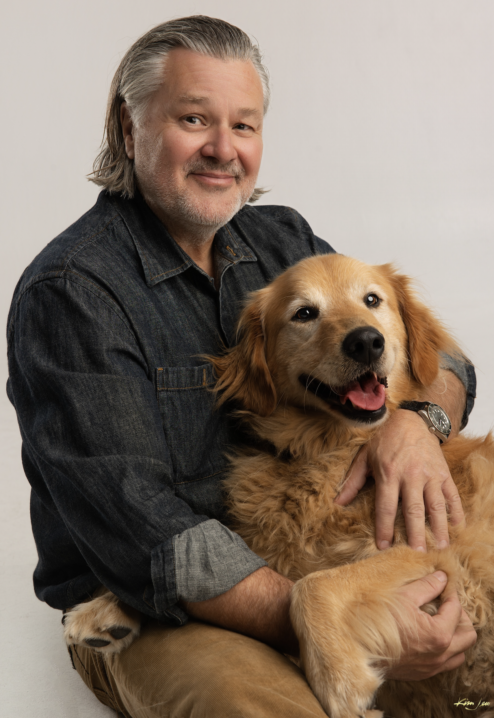
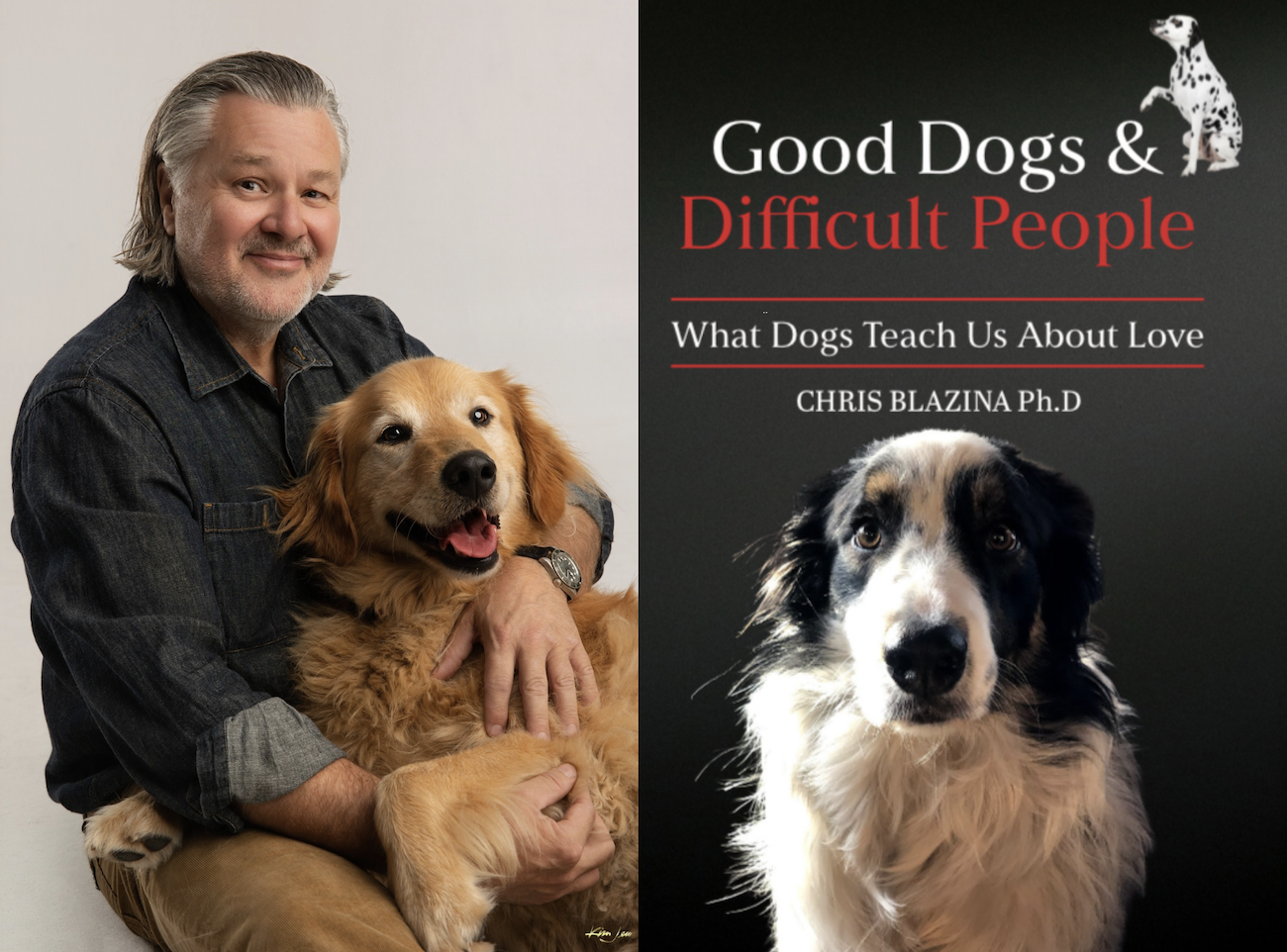
About the Author: Dr. Chris Blazina draws on extensive professional experience, including 30 years as a practicing psychologist, as well as being an award-winning author, professor, and researcher. Good Dogs & Difficult People: What Dogs Teach Us About Love is his 9th book. He has been widely interviewed across the US, the UK, Canada, and Australia on radio, in magazines, and in newspapers.
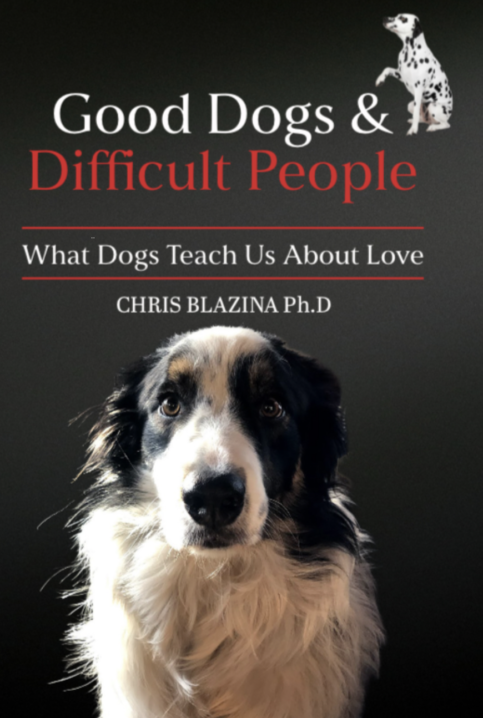
About the Book: Good Dogs & Difficult People: What Dogs Teach Us About Love
Dr. Chris Blazina.
Merlinuspublishers.co.uk
ISBN: 978-1-9192953-2-9
June 16th, 2026
$33.99
Permission Line: ……. Adapted the above excerpt from Good Dogs & Difficult People: What Dogs Teach Us About Love by Dr. Chris Blazina, Copyright by Dr. Chris Blazina. Printed with permission of Merlinus Publishers. https://www.merlinuspublishers.co.uk
Press Release:
Why Dogs May Be Better at Love Than We Are
By Dr. Chris Blazina.
A groundbreaking new book reveals what our relationships have been missing—and how dogs quietly show us the way back.
In a world facing a growing crisis of loneliness, disconnection, and emotional burnout, a powerful new book argues that the answers we’re searching for may already be at our feet.
In Good Dogs & Difficult People: What Dogs Teach Us About Love (Merlinus Publishers, June 16th, 2026, $33.99), psychologist Chris Blazina, Ph.D., offers an original and compelling exploration of the human–dog bond, revealing not only why dogs matter but also what they uniquely teach us about how to love.
Blazina draws on more than thirty years of clinical experience, personal stories, and scientific research. He reframes dogs not as companions or helpers but as emotional experts. Where humans struggle with inconsistency, miscommunication, and fear of vulnerability, dogs offer something different: presence, honesty, and an unwavering capacity to connect.
Good Dogs & Difficult People goes deep into the psychology of attachment, trauma, and emotional development. Blazina shows how many of our struggles in relationships stem from early disruptions in connection and how dogs, through their instinctive, transparent way of relating, model a more functional, more authentic form of love. The book investigates why dogs succeed where humans often fail at forming stable, honest, and lasting emotional connections. At its heart is a simple but profound idea: we don’t just love dogs; we can learn from them.
For animal and dog-focused media, Good Dogs & Difficult People offers a fresh, captivating angle. It moves beyond the familiar narrative about why dogs are good for us and poses a more provocative question: what if they are showing us how to be better humans?
About the Author: Dr. Chris Blazina draws on extensive professional experience, including 30 years as a practicing psychologist, as well as being an award-winning author, professor, and researcher. Good Dogs & Difficult People: What Dogs Teach Us About Love is his 9th book. He has been widely interviewed across the US, the UK, Canada, and Australia on radio, in magazines, and in newspapers. www.chrisblazinaphd.com
About the Book: Good Dogs & Difficult People: What Dogs Teach Us About Love by Dr. Chris Blazina. Merlinuspublishers.co.uk
ISBN: 978-1-9192953-2-9, June 16th, 2026. $33.99