
Last Updated on August 8, 2026 by Dogs Vets
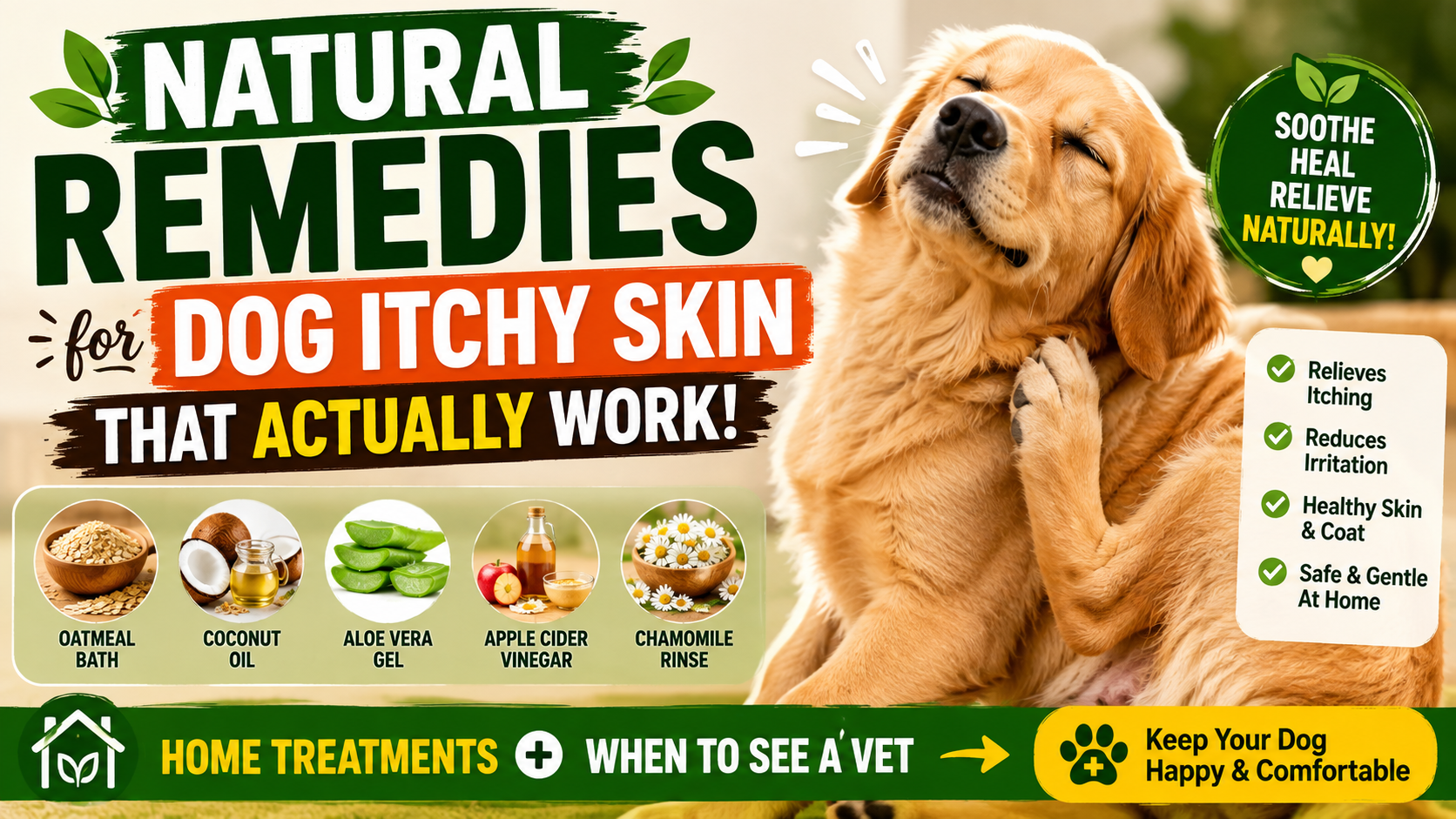
Constant scratching, licking, chewing, and red or flaky skin can make life miserable for both dogs and their owners. Many pet parents search for natural remedies for dog itchy skin that provide real relief without immediately turning to medications. While home treatments can soothe mild cases and support overall skin health, they do not replace veterinary diagnosis—especially when allergies, infections, parasites, or other underlying issues are involved.
This 2026 guide covers the most effective and commonly recommended home treatments for dog itchy skin, how to use them safely, what to avoid, supportive care tips, and clear signs that it’s time to see a vet. Always consult your veterinarian before starting new remedies, particularly if your dog has open sores, severe symptoms, or other health conditions.
Common Causes of Itchy Skin in Dogs
Itching (pruritus) can stem from:
- Flea allergy dermatitis (even one flea bite can trigger intense reaction)
- Environmental allergies (pollen, dust mites, mold)
- Food sensitivities
- Dry skin or poor coat condition
- Bacterial or yeast infections secondary to scratching
- Contact irritants or hot spots
Identifying and addressing the root cause is essential for lasting relief.
Top Natural Remedies and Home Treatments That Help
1. Colloidal Oatmeal Baths (Most Recommended for Immediate Relief)
Oatmeal is one of the best-supported natural options for soothing itchy, inflamed skin. It has anti-inflammatory properties, helps retain moisture, and forms a protective barrier.
How to do it:
Grind 1 cup of plain, unflavored oatmeal into a fine powder. Add it to a tub of lukewarm (not hot) water until the water turns milky. Let your dog soak for 10–15 minutes, focusing on affected areas. Rinse thoroughly and pat dry completely.
Use 1–2 times per week or as needed for mild itching. Commercial dog oatmeal shampoos make this even easier.
Recommended products: Look for colloidal oatmeal dog shampoos or bath treatments on Chewy (search “oatmeal dog shampoo”).
2. Omega-3 Fatty Acid Supplementation (Fish Oil)
Marine-sourced omega-3s (EPA and DHA) help reduce inflammation from the inside and support a healthier skin barrier. Benefits often appear after several weeks of consistent use.
Choose a high-quality dog-specific fish oil or algal oil supplement. Dosage should be guided by your veterinarian based on your dog’s weight.
Many owners report reduced itching and improved coat quality with regular use. Pair with a balanced diet for best results.
Shop options: Dog fish oil supplements are widely available on Chewy and major pet retailers.
3. Rinse Away Allergens After Outdoor Time
For dogs with environmental allergies, simply rinsing paws, belly, and legs with plain lukewarm water after walks removes pollen and other triggers. This is one of the simplest and most effective daily habits.
Follow with thorough drying to prevent moisture-related issues.
4. Pure Aloe Vera Gel (for Localized Relief)
Pure, additive-free aloe vera gel can cool and soothe minor red or irritated patches and hot spots. Apply a thin layer and prevent excessive licking (aloe can be toxic if ingested in large amounts). Use only pure gel without alcohol, fragrance, or other additives.
5. Coconut Oil (Limited, Cautious Use)
Virgin coconut oil may offer mild moisturizing benefits for dry skin when applied sparingly to intact areas. It has some antimicrobial properties, but evidence for treating allergic itching is limited, and excess can lead to greasy coats or digestive upset if licked in quantity. Use sparingly and monitor closely.
6. Diluted Apple Cider Vinegar (Use with Caution)
Some owners use a 50/50 mix of raw apple cider vinegar and water as a rinse or spray on intact skin for mild yeast concerns or to help balance pH. Never apply to broken, raw, or open skin—it will sting and can worsen irritation. Test a small area first and discontinue if redness increases.
Supportive Care Tips for Itchy Dogs
- Maintain strict, year-round flea prevention—this alone resolves many “mystery” itching cases.
- Brush regularly to remove allergens and distribute natural oils.
- Keep the coat clean and completely dry after baths or swimming.
- Consider a high-quality diet rich in omega fatty acids or a vet-recommended limited-ingredient/hydrolyzed formula if food sensitivities are suspected.
- Provide cool environments and avoid overheating, which can worsen itching.
What to Avoid
- Tea tree oil and most essential oils (toxic to dogs)
- Human creams, lotions, or hydrocortisone without veterinary guidance (risk of ingestion toxicity)
- Garlic or other “natural antibiotic” pastes
- Undiluted vinegar or any remedy on open wounds
- Over-bathing, which strips natural oils and can increase dryness
When to See a Veterinarian
Home remedies are appropriate for mild, intermittent itching. Seek professional care promptly if you notice:
- Persistent or worsening itching lasting more than 1–2 weeks
- Open sores, hot spots, crusting, or foul odor (possible infection)
- Hair loss, scabs, or skin thickening
- Ear infections, paw chewing, or face rubbing
- Lethargy, reduced appetite, or other systemic signs
- Sudden onset in a previously healthy dog
Your vet can diagnose the cause (allergy testing, skin scrapings, diet trials) and recommend targeted treatments such as prescription shampoos, antihistamines, immunotherapy, or medications when needed. Natural remedies work best as supportive care alongside proper veterinary management.
Product Suggestions for Relief
- Colloidal oatmeal dog shampoos and conditioners
- High-quality fish oil or omega-3 supplements formulated for dogs
- Soft, fragrance-free wipes for quick paw and belly clean-ups
- Flea prevention products recommended by your veterinarian
Many of these are available with convenient Autoship options on major pet retailers like Chewy.
Frequently Asked Questions
What is the best natural remedy for dog itchy skin?
Colloidal oatmeal baths provide the most reliable short-term soothing for many dogs. Combined with omega-3 supplementation and allergen control, they form a strong foundation of home support.
Can I use human oatmeal bath products on my dog?
Plain, unflavored colloidal oatmeal is generally fine, but avoid products with added fragrances, essential oils, or other ingredients. Dog-specific formulas are safer and better matched to canine skin pH.
How often can I give my dog an oatmeal bath?
1–2 times per week is typical for most dogs. Over-bathing can dry the skin further, so adjust based on response and your vet’s advice.
Does coconut oil really help itchy dogs?
It may moisturize dry skin for some dogs when used sparingly, but it is not a strong anti-itch treatment for allergies and is not a substitute for proper diagnosis.
Is apple cider vinegar safe for dogs with itchy skin?
Only when properly diluted and applied to intact skin. Avoid completely on broken or inflamed areas. Many vets prefer other options due to the risk of stinging.
How long should I try home remedies before seeing a vet?
If itching is mild and improving within a few days to a week with consistent care, continue monitoring. See a vet sooner for moderate-to-severe cases or if there is no improvement after 7–14 days.
Can diet changes help dog itchy skin?
Yes—especially if food sensitivities are involved. Omega-3-rich diets or elimination trials under veterinary guidance can make a significant difference for some dogs.
Natural remedies for dog itchy skin can offer meaningful comfort when used correctly and safely. Pair them with good hygiene, flea control, and professional veterinary care for the best long-term results. Your dog’s skin health is worth the effort—relief is possible with the right approach.
(This article is for informational purposes only and is not a substitute for professional veterinary advice. Always consult your veterinarian for diagnosis and treatment tailored to your individual dog.)