Last Updated on November 4, 2026 by Dogs Vets
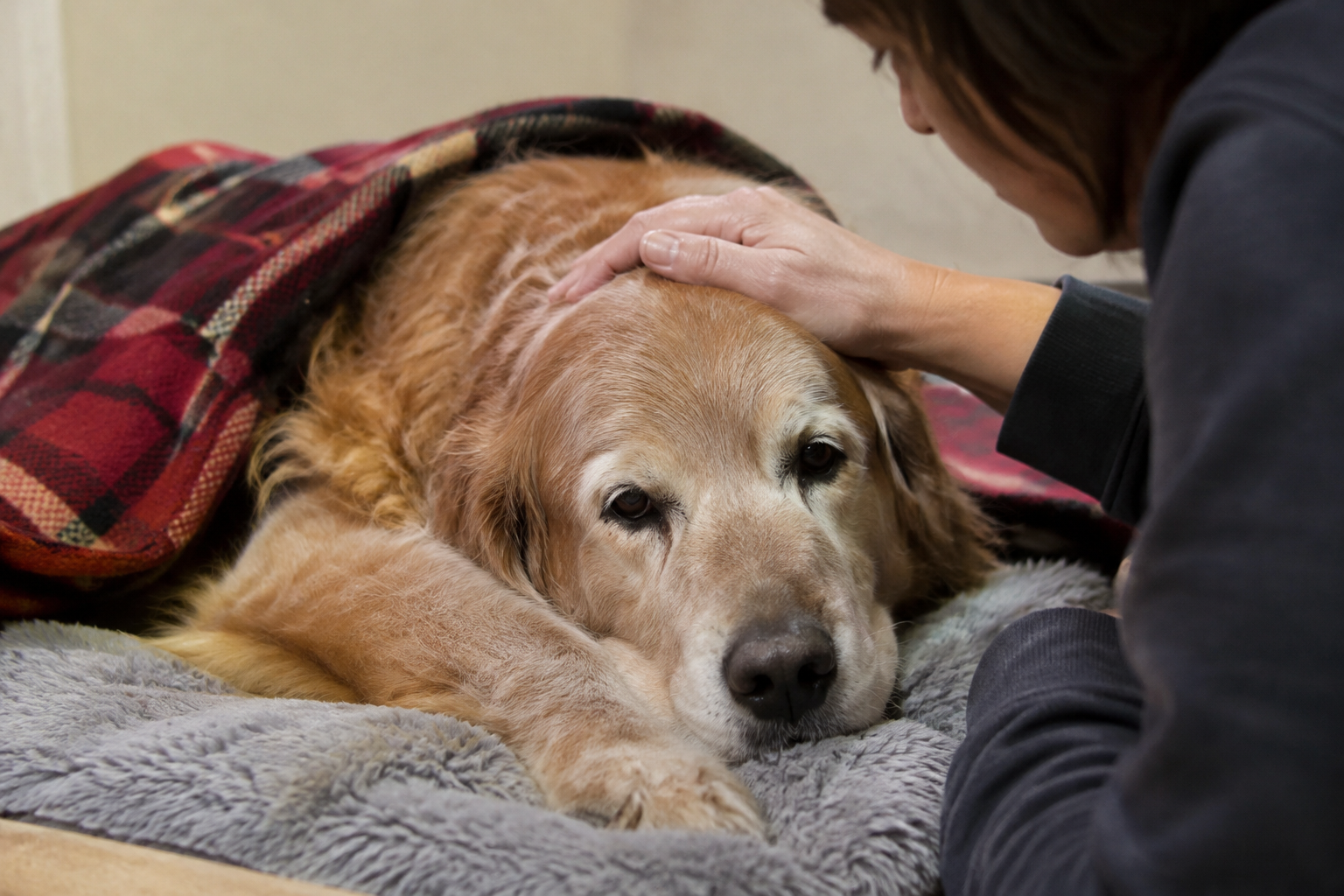
There are little changes you notice before you know what to make of them. Your dog doesn’t get up when you reach for the leash. The bowl you used to refill twice a day is still half full. You find yourself checking on them in the middle of the night, just to see whether they’re breathing comfortably.
When a dog is elderly or living with a serious illness, it’s hard not to wonder: Is this the beginning of the end?
The eight changes below can happen as a dog’s health declines. But none of them, on its own, tells you that death is near. Pain, infections, heart problems, and other treatable conditions can cause similar symptoms. The most useful thing you can do is notice what has changed and tell your veterinarian.
Important: Trouble breathing, blue or very pale gums, collapse, or sudden inability to stand can be emergencies. Seek urgent veterinary care rather than assuming these are normal signs of dying.
1. Accidents or Loss of Bladder and Bowel Control
Maybe your dog has always been house-trained, but now you find a wet patch on their bedding. Or they try to get outside and simply can’t make it in time.
Incontinence can occur in dogs with advanced illness, weakness, or neurological problems. Sometimes it’s less about losing control and more about being too sore or unsteady to get up. Urinary infections and other treatable problems can also cause accidents.
Don’t scold them. Keep bedding clean and dry, place washable pads nearby, and gently clean any soiled skin. If your dog spends most of the day lying down, ask your veterinary team how to help them change position and protect their skin. New or worsening accidents deserve a call to the vet.
2. A Noticeable Change in Breathing
This is one change not to watch and wait on.
You may see your dog’s belly working harder with each breath, their neck stretched forward, or their breathing becoming unusually fast or noisy while they’re resting. In the final phase of dying, some animals develop irregular breathing or pauses between breaths. But breathing changes can also signal an urgent, potentially treatable crisis.
Cornell University’s College of Veterinary Medicine identifies rapid breathing, increased abdominal effort, bluish gums, and weakness or collapse among signs of respiratory distress. [1]
If your dog is struggling for air, gasping, or unable to settle because of their breathing, go to an emergency veterinary hospital. If possible, call ahead. Don’t assume a difficult breathing episode is simply a peaceful part of dying.
3. Hiding Away—or Suddenly Wanting You Close
Some dogs retreat to a quiet spot when they’re ill. Others seem to want someone beside them every minute.
You might find your usually sociable dog tucked under a table, or your independent dog following you from room to room. Both can happen with pain, anxiety, exhaustion, or confusion. Neither is proof that your dog has decided to say goodbye.
In a PetMD article written by veterinarian Dr. Mary Gardner, she explains that we don’t know whether dogs understand their own approaching death in the human sense. Their behavior may reflect what they’re feeling physically, rather than a conscious farewell. [2]
For a closer look at that difficult question, there’s also this guide on whether dogs know when they are dying. Meanwhile, watch what makes your dog comfortable. Sit with them if they seek you out. Give them a quiet, accessible place if they prefer to rest alone.
4. Sleeping Much More, or Becoming Hard to Rouse
Older dogs often sleep longer than they once did. But there’s a difference between a dog enjoying an afternoon nap and one who barely responds to a familiar voice or gentle touch.
As serious illness progresses, dogs may become exhausted, less interested in their surroundings, or increasingly difficult to engage. Medication effects, pain, dehydration, and other medical problems can contribute too.
Notice whether your dog still wakes normally for food, a trip outside, or a favorite person’s arrival. If they become unusually difficult to wake, appear disoriented, or lose consciousness, seek veterinary help immediately.
5. Refusing Food or Water
The dog who used to appear the instant you opened a treat bag may suddenly turn away from dinner. Perhaps they sniff the bowl and walk off. Perhaps even their favorite food no longer interests them.
Appetite and thirst often decrease during advanced illness, and they may decline during the active dying process. But nausea, dental pain, medication side effects, and many treatable diseases can look the same. A dog who stops eating or drinking needs veterinary advice promptly; don’t wait for an arbitrary 24- or 48-hour deadline.
If your dog is alert and able to swallow comfortably, you can offer food or water in small amounts according to your vet’s advice. Never force food or squirt water into the mouth of a weak, drowsy, or poorly responsive dog. It can enter the airway and cause choking or aspiration. Lap of Love’s veterinary hospice guidance discusses this risk. [3]
6. Weakness, Stumbling, or Being Unable to Stand
One day the walk to the garden takes a little longer. Then your dog needs help getting up from the floor. Some dogs stumble, slip, or struggle to turn themselves over in bed.
Severe weakness can occur with progressive disease, muscle loss, or pain. It can also happen suddenly during an emergency. Collapse or a new inability to stand should always be assessed urgently.
For a dog already receiving hospice or palliative care, ask your veterinarian about nonslip rugs, supportive harnesses, padded bedding, and ways to help them move without causing pain. Keep food and water within easy reach, and avoid asking them to walk farther than they comfortably can.
7. Cold Paws, Ears, or Changes in Body Temperature
Sometimes an owner notices that their dog’s paws or ears feel cooler than usual. Poor circulation and trouble regulating body temperature can occur in advanced illness, including near the end of life.
But cool paws alone are not a reliable sign that a dog is dying. Room temperature, damp fur, and many other factors can change how the skin feels. You cannot judge a dog’s core temperature just by touching their feet.
Keep their resting area comfortably warm and dry, without overheating them. Avoid placing heating pads or hot-water bottles directly against a weak dog who may be unable to move away from the heat. If your dog seems abnormally cold or hot, especially with lethargy or breathing changes, contact a veterinarian promptly.
8. Pale, Gray, or Blue-Tinged Gums
Healthy gums are usually pink, although some dogs naturally have dark pigmentation. What matters is a marked change from your dog’s normal color.
Very pale or white gums can be associated with anemia, bleeding, or poor circulation. Blue or gray-tinged gums may indicate inadequate oxygen. These are not signs to monitor at home while you wait for the end.
VCA Animal Hospitals explains that pale gums can signal anemia or circulation problems. If you notice pale, blue, or gray gums—particularly alongside weakness or abnormal breathing—seek emergency veterinary care. [4]
Don’t delay treatment to inspect the mouth if your dog is distressed or struggling to breathe.
What Can You Actually Do for Your Dog Right Now?
You don’t need to turn the house into a hospital. But a few practical changes can help:
- Give them a quiet resting place with soft, clean bedding and a nonslip route to food and water.
- Clean accidents gently and keep their skin dry.
- Ask the vet about pain, nausea, anxiety, and whether the current medications are still helping.
- Let them choose whether to be stroked, held, or left to rest nearby.
- Keep a short record of eating, drinking, movement, breathing, and the things they still seem to enjoy.
- Make an after-hours plan with your veterinary team before an emergency happens.
The American Animal Hospital Association (AAHA) recommends individualized end-of-life care that considers comfort, breathing, mobility, eating and drinking, hygiene, and interaction with family. These are useful questions for a veterinary appointment—not boxes you have to check alone. [5]
How Do You Know When It’s Time to Talk About Saying Goodbye?
There may be days when your dog still enjoys a treat or lifts their head when you come into the room. There may also be nights when they can’t get comfortable at all.
Try looking at the pattern rather than a single good or bad moment. Are they comfortable most of the time? Can pain or breathing problems be controlled? Can they rest? Are they still able to enjoy anything familiar?
A 2026 Dog Aging Project study analyzed end-of-life reports from 646 dog owners. Owners’ perceptions of pain, suffering, and quality of life played an important role in end-of-life decisions. The research is not a test that predicts when a dog will die, but it reinforces why honest conversations about comfort matter. [6]
Veterinary hospice care can sometimes help a dog remain comfortable with a serious diagnosis. Humane euthanasia may need to be discussed when suffering cannot be adequately relieved. The AAHA/IAAHPC End-of-Life Care Guidelines emphasize minimizing suffering and making these decisions together with a veterinary team. [7]
You can ask these questions before a crisis. You don’t have to wait until your dog is in severe distress.
And When the Time Comes
It can feel disloyal to think about what happens after your dog dies while they’re still beside you. But learning your options in advance can spare you some difficult decisions later.
Your veterinarian can explain cremation and aftercare arrangements, including the difference between individual and communal cremation. If ashes will be returned to you, you don’t have to decide immediately where they will stay. This practical guide to what to do with your dog’s ashes after cremation covers several possibilities, from keeping them at home to scattering or burial where permitted.
Some families keep the original container. Others later choose a memorial space or a personalized dog urn that reminds them of a familiar face. None of those choices needs to be made today.
For now, what matters is the dog in front of you. Let them rest. Notice what has changed. Call the vet when something worries you. And if all they’re asking for is a quiet place and your company, that may be enough for this afternoon.
Veterinary Sources and Research
- Cornell University College of Veterinary Medicine. Recognizing and Responding to Canine Respiratory Distress.https://www.vet.cornell.edu/departments-centers-and-institutes/riney-canine-health-center/canine-health-topics/recognizing-and-responding-canine-respiratory-distress
- Gardner M, DVM. Do Dogs Know When They’re Dying? PetMD, March 2026.https://www.petmd.com/dog/general-health/do-dogs-know-when-they-are-dying
- Lap of Love Veterinary Hospice. What Happens When a Pet Is Dying? Physical Signs Explained.https://www.lapoflove.com/blog/end-of-life-care-and-euthanasia/what-happens-when-pet-is-dying
- VCA Animal Hospitals. Testing for Pallor.https://vcahospitals.com/know-your-pet/testing-for-pallor
- American Animal Hospital Association. 12 Things Pet Owners Should Know About End-of-Life Care for Dogs and Cats. Updated 2026.https://www.aaha.org/resources/end-of-life-care-for-pets/
- McNulty KE, et al. The Dog Aging Project End of Life Survey reveals owners’ perceptions of canine death and highlights areas to improve client education. Journal of the American Veterinary Medical Association, 2026. DOI: 10.2460/javma.25.12.0863.https://pubmed.ncbi.nlm.nih.gov/41812328/
- AAHA / International Association of Animal Hospice and Palliative Care. End-of-Life Care Guidelines.https://www.aaha.org/resources/2016-aaha-iaahpc-end-of-life-care-guidelines/
Educational information only. Signs of illness and end-of-life changes can overlap. This article is not a substitute for veterinary examination, diagnosis, or treatment.